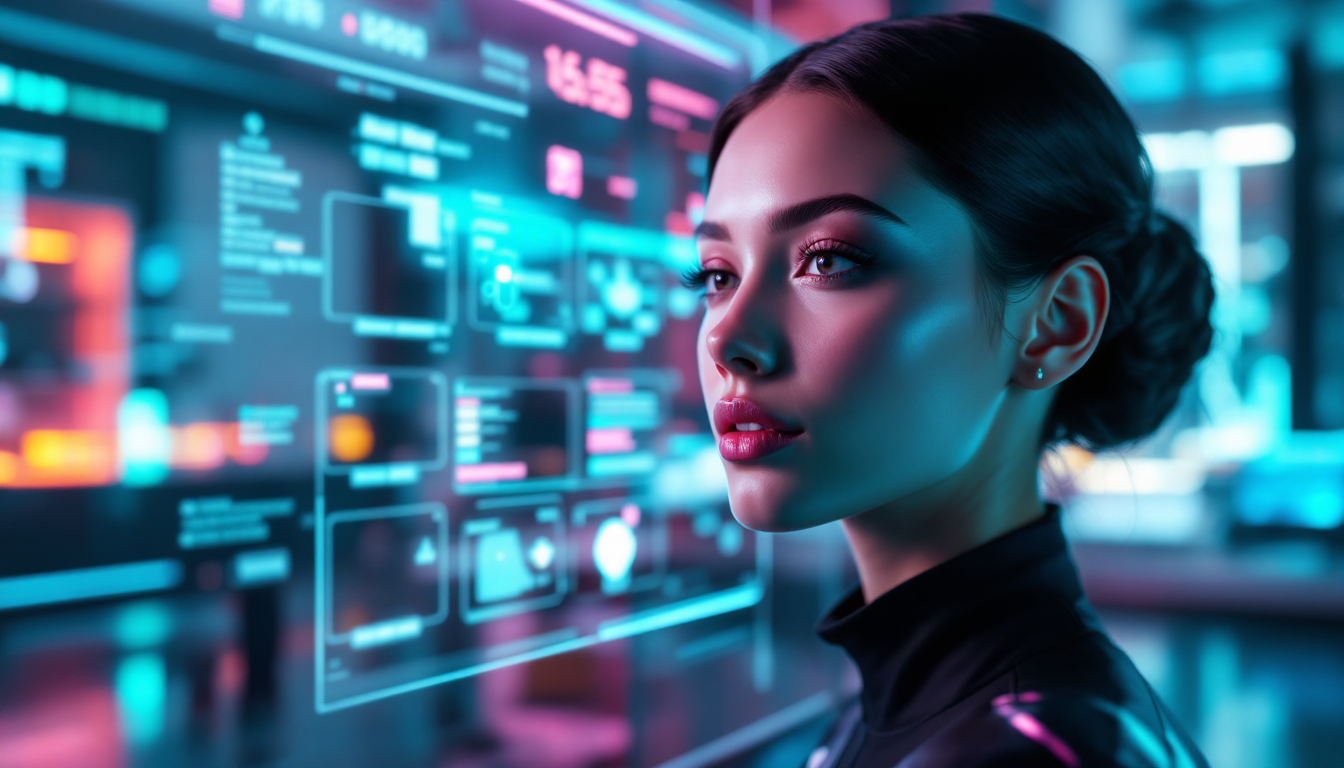
Virtual Hair Extensions: How AI Is Changing the Game
Today’s beauty landscape is being reshaped by artificial intelligence. Virtual hair-extension tools let you preview length, volume, color and texture before you commit—transforming how consumers shop, stylists consult and brands sell. Below, we explore the technology driving this revolution, the tangible benefits it delivers and where it’s headed next.
-
Introduction to AI in Hair Styling
Artificial intelligence and augmented reality (AR) have unlocked “try-before-you-buy” experiences across fashion and beauty. In hair styling, AI analyzes your facial features, skin tone and existing hair to generate hyper-realistic previews of new looks—no dye, no tape-in extensions, no commitment. Apps like YouCam Makeup (1 billion+ downloads as of October 2025) and Facetune have mainstreamed virtual beauty, priming consumers for sophisticated hair-extension trials that once existed only in salons. -
The Rise of Virtual Hair Extensions
While early virtual hair-color try-ons focused on flat overlays, next-gen platforms simulate three-dimensional volume and movement.
• HeyBeauty’s AI engine renders hair texture, thickness and flow in real time, with 360° rotation and personalized style recommendations (heybeauty.ai).
• Pixelcut AI’s free Virtual Wig Try-On lets anyone upload a selfie and generate a “long straight black wig with bangs” in seconds—ideal for daily styling whims, cosplay or hair-loss solutions (pixelcut.ai).
• AI Hair Lens delivers 100+ hairstyles and colors under 30 seconds, boasting a 99.5% user-satisfaction rate through face-shape analysis (aihairlens.com).
Meanwhile, salon-focused solutions like ModernizeByAI offer white-label virtual-extension systems that integrate into booking workflows, boosting consultations and revenues (modernizebyai.com). Beauty e-commerce is also integrating virtual hair-extensions: REstyle.ai provides photorealistic texture and tone matches on product pages to reduce uncertainty (restyle.ai).
-
How AI Tools Work: A Brief Overview
Under the hood, virtual-extension platforms leverage advances in generative modeling and computer vision:
a. Hair segmentation: The system isolates your existing hair and constructs a “bald” base.
b. Style extraction & mapping: Research such as Stable-Hair (July 2024) uses diffusion-based pipelines to extract high-fidelity hairstyles and transfer them with minimal color deviation, preserving identity (arxiv.org/abs/2407.14078).
c. Real-time rendering: Encoder-based models like HairFastGAN (April 2024) achieve sub-second transfer on high-end GPUs, enabling near-instantaneous, high-resolution previews under varied poses (arxiv.org/abs/2404.01094).
d. Personalization: AI analyzes face shape, hair density and skin undertones to recommend extensions—lengths, textures and colors—that flatter each user’s unique features. -
Benefits of Using AI for Hair Extensions
Brands and consumers alike reap measurable gains:
• Conversion uplift: Virtual hair-color and extension try-ons boost online conversions by up to 2.5× (gitnux.org).
• Increased engagement: Shoppers linger 360% longer on sites with virtual-try-on (VTO) features; Aveda saw a 112% rise in session time after launching color-try-on (gitnux.org).
• Reduced returns: Up to 20% fewer wig and extension returns when customers preview virtually (gitnux.org).
• Traffic & confidence: AR filters drive 15–20% more website visits, and 56% of shoppers report greater confidence in their hair decisions (gitnux.org).
• Gen Z adoption: 32% of Gen Z have used virtual hair-makeover tools, and 92% want AR-powered shopping experiences (gitnux.org).
For salons, AI consults translate to higher booking rates—Ulta Beauty’s GLAMlab Hair Try On, powered by NVIDIA StyleGAN2, processes a first style in ~5 seconds, subsequent looks in ~1 second, and correlates tool use with increased in-store and online purchases (blogs.nvidia.com).
- Exploring Different Looks with AI
Virtual-extension technology empowers experimentation freely and fearlessly:
• Length and volume: Try clip-ins, tape-ins or halo extensions at various lengths to preview dramatic mermaid waves or subtle shoulder-skimming bobs.
• Color layering: Blend highlights and lowlights seamlessly; platforms like HueTryOn deliver instant color previews without app installs (huetryon.com).
• Texture swaps: Go from poker-straight to bouncy curls; HeyBeauty’s texture-aware engine captures light reflection and strand movement.
• 360° viewpoint: Rotate your head to see extensions from every angle, ensuring blending with your natural hairline and volume distribution.
Stylists can also share branded extension galleries via white-label APIs to individualize at-home previews, or integrate product-recommendation modules that link directly to purchasing specific extension sets.
- User Experiences and Testimonials
Real users report high satisfaction and creative confidence:
• “I tried ten different extension styles in minutes and finally found the exact length and shade to match my balayage”—Jessica, 29.
• AI Hair Lens users report a 99.5% “happy” rate thanks to face-shape matching and quick processing (aihairlens.com).
• Salons using ModernizeByAI note a 30% uptick in consult bookings as clients arrive educated on their preferred extension style.
Gen Z influencers showcase virtual-extension transformations on social channels, driving viral engagement and peer-validated trust in the technology.
-
Potential Challenges and Limitations
Despite rapid advances, virtual extensions still face hurdles:
• Diverse hair textures: Fine-tuning models to represent kinky, coily and tightly curled hair accurately remains an ongoing challenge.
• Lighting & backgrounds: Poor selfies—backlighting or cluttered scenes—can degrade segmentation and color accuracy.
• Privacy & data security: Face and hair data must be stored and processed ethically, with clear user consent.
• Integration costs: High-fidelity real-time systems may require significant GPU resources or licensing fees for smaller salons and startups. -
Future Developments in AI Hair Technology
The next wave of innovation will push realism, personalization and interactivity even further:
• AR glasses & mirror-less try-ons: Imagine walking by a smart mirror and flipping through extension styles hands-free.
• Dynamic movement simulation: Extensions that sway, bounce and reflect light authentically in video calls and livestreams.
• AI-guided extension kits: End-to-end solutions where AI prescribes exact extension pieces and application sequences.
• Cross-modal beauty integration: Seamless transitions from hair-extension previews to full-makeup and outfit coordination.
Research into lighter, faster generative models promises sub-second extension swaps on mobile devices—no specialized hardware required.
- Conclusion: The Future of Hair Extensions
AI-powered virtual hair extensions are more than a novelty—they’re redefining consumer confidence, driving sales and empowering stylists with data-driven insights. As algorithms grow ever more adept at capturing texture, tone and movement, the line between virtual preview and real-world outcome will vanish. Whether you’re a beauty-brand marketer, salon owner or style enthusiast, embracing AI extension tools today means staying ahead in tomorrow’s beauty ecosystem.
The future of hair extensions is virtual, personalized and powered by artificial intelligence. Are you ready to try on the next you?