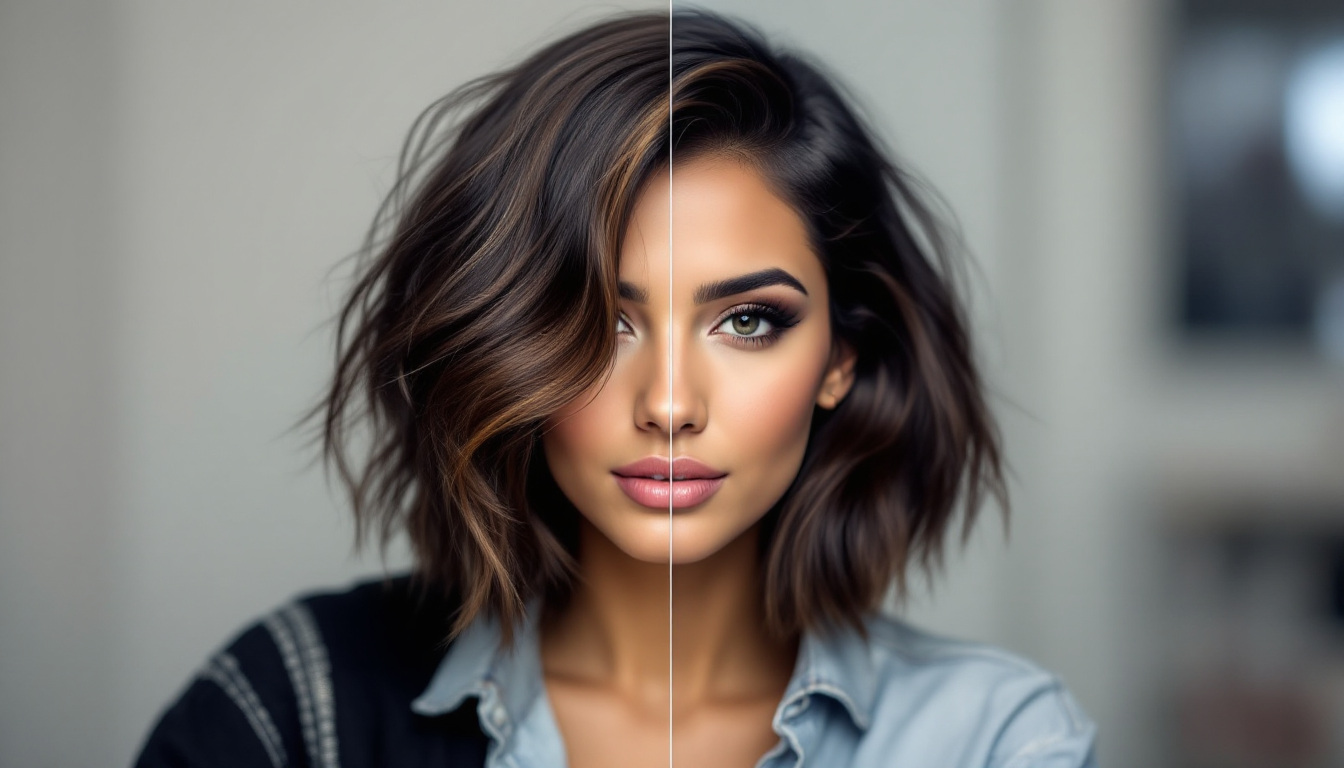
Introduction to AI in Beauty
The beauty industry is undergoing a digital renaissance, and at the heart of this transformation lies artificial intelligence. From personalized skincare regimens to virtual makeup try-ons, AI is redefining how consumers discover and interact with beauty products. One of the most exciting frontiers is hairstyle experimentation—no longer must you commit to a cut or color blindfolded. Thanks to AI-powered apps and generative models, you can virtually don Beyoncé’s signature curls, Kim Kardashian’s sleek straight look, or Jennifer Aniston’s iconic “Rachel” cut in seconds.
• Virtual try-on market projected to reach $4 billion by 2025, with AI-driven chatbots handling 60 % of customer inquiries and 65 % of cosmetic companies using AI for personalized recommendations (wifitalents.com).
• Makeup-sector AI virtual try-ons boost user engagement by 35 % and cut product returns by up to 20 % (wifitalents.com).
• In 2023 alone, AI beauty and virtual try-on apps were downloaded over 10 million times worldwide (gitnux.org).
This surge in adoption underscores a simple truth: consumers crave instant, risk-free experimentation. AI doesn’t just superimpose a photo filter; it uses advanced computer vision and machine learning to analyze your face shape, skin tone, hair texture, and even lighting conditions to generate lifelike hairstyle previews. Let’s pull back the curtain and explore how these tools work, the celebrity looks they decode, and what it means for your next salon appointment.
The Technology Behind AI Hairstyle Replication
At the core of AI hairstyle apps are several interconnected technologies:
- Facial Landmark Detection
• Algorithms pinpoint key facial features—eyes, nose, jawline—creating a “map” that guides hairstyle placement. - Image Segmentation and Hair Masking
• The model distinguishes hair from background and other facial regions, enabling realistic blending of new styles. - Generative Adversarial Networks (GANs) and Style Transfer
• GANs consist of a generator (which creates new images) and a discriminator (which evaluates realism). Through iterative training on thousands of celebrity hairstyle images, the generator learns to produce high-fidelity hair overlays that match your unique head shape and lighting. - Real-Time Rendering and Blending
• Optimized on-device neural networks or cloud-based GPUs render hairstyles in under five seconds. Apps like “Try On Celebrity Hairstyles AI” leverage this pipeline to let you switch from Beyoncé’s voluminous curls to Kim Kardashian’s sleek jet-black locks with a single tap (Try On Celebrity Hairstyles AI).
These technologies converge to deliver seamless, hyper-realistic results. Behind the scenes, millions of selfie images and celebrity hairstyle photos train the models, teaching them to adapt each look to diverse face shapes, ethnicities, and lighting conditions.
Popular Celebrity Hairstyles Analyzed by AI
AI platforms have cataloged and deconstructed dozens of iconic celebrity hairstyles. Here are a few fan favorites:
• Beyoncé’s Signature Curls
– AI captures the curl pattern density, root lift, and natural frizz, allowing you to preview a voluminous, textured look that frames your face.
• Kim Kardashian’s Sleek Center-Part
– High-contrast edge detection ensures ultra-smooth, glossy strands down the middle, replicating that ultra-straight, runway-ready finish.
• Jennifer Aniston’s “Rachel” Layered Cut
– Layer mapping algorithms recreate the feathered shape and mirror Jennifer Aniston’s ’90s defining look in customizable lengths.
• Rihanna’s Pixie or Bold Colors
– AI can swap in vibrant hues—electric blue, pastel pink—or super-short sassy cuts, testing bold statements before you commit.
• Zendaya’s Braids and Updos
– Sophisticated braid-weaving models overlay complex cornrow or box-braid patterns, showing you how protective styles suit your face shape.
Apps like “Try On Celebrity Hairstyles AI” detect your facial structure in under two seconds, then blend the hairstyle with realistic shadows and highlights. No green screens, no guesswork—just an instant preview of yourself channelling red-carpet glam.
Personalizing Iconic Looks for Everyone
Celebrity styles are aspirational, but AI makes them attainable and personalized. Here’s how:
• Face-Shape Adaptation
– Whether you have a round, oval, square, or heart-shaped face, AI adjusts the hairline, part width, and volume distribution to highlight your best features.
• Skin-Tone and Lighting Matching
– Generative models adjust hair color vibrancy and shadow mapping so that golden highlights don’t wash you out or clash with your complexion.
• Texture and Density Calibration
– AI learns to respect your natural hair density—whether fine, medium, or coarse—and blends extensions or layers seamlessly.
• Cross-Platform Integration
– Apps like Hong Kong–based Artisse AI go beyond hair, offering full selfie transformations (hairstyles, outfits, lighting). Since its 2023 launch, Artisse AI has generated over 5 million images and secured $6.7 million in seed funding, validating the appetite for hyper-personalized AI styling (Wikipedia).
Personalization isn’t just a gimmick. Cosmetic brands report a 35 % uptick in user engagement and a 20 % drop in product returns when customers can virtually try products and looks beforehand (wifitalents.com). This level of bespoke styling reduces buyer’s remorse and fosters confidence in committing to a new look.
Real-Life Applications and Success Stories
Beyond consumer curiosity, AI hairstyle replication has found traction in professional settings:
• Salon Consultations
– Stylists use AI previews to align expectations. Clients can “try on” multiple looks in minutes, facilitating more focused conversations about cut, color, and maintenance.
• E-Commerce and Retail
– Virtual hair-and-fashion “fitting rooms” like GlamAI debuted at Paris Retail Week 2024, integrating hair and outfit try-ons for head-to-toe makeovers in seconds (Wikipedia).
• Social Media Content Creation
– Influencers leverage generative AI to experiment with trending hairstyles—neon pastels, gravity-defying updos—generating shareable content without chemical processing or salon visits.
• Brand Partnerships
– Major beauty brands embed AI try-on widgets on e-commerce sites, driving higher conversion rates. Customers who virtually test a look are more likely to click “Buy Now.”
One standout success: Artisse AI, whose rapid growth (5 million images generated) demonstrates how democratized styling tools can become viral sensations. Users share their AI-rendered makeovers on TikTok and Instagram, fueling organic discovery and driving further downloads.
Future of AI in Hairstyling
The next wave of AI hairstyling promises even deeper immersion and interactivity:
• AI-Generated Video Try-Ons
– Inspired by Google’s Doppl, released June 2025 for fashion, future apps will generate short video loops showing how hair moves in wind or during a turn, giving a dynamic preview (Lifewire).
• Voice-Activated Style Assistants
– Imagine asking Siri or Alexa for “Beyoncé-style curls” and receiving a step-by-step AI tutorial tailored to your hair length and texture.
• AR-Integrated Salon Mirrors
– Smart mirrors will overlay digital hairstyles in real time during your salon visit, with immediate adjustments on demand.
• Ethical and Regulatory Considerations
– A November 2025 InStyle article, “The Rise of A.I.-Generated Hair Photos—And Why They’re Confusing Stylists and Clients Alike,” calls out the risk of unrealistic expectations. Hyper-perfect digital renders can mislead clients, exclude natural hair types, and distort self-image unless AI-generated content is transparently labeled (InStyle). Industry experts are beginning to discuss guidelines for AI-image disclosure and diversity in training datasets to ensure inclusivity.
As the technology evolves, striking a balance between creative freedom and ethical transparency will be paramount.
Conclusion: Embracing AI-Driven Style Transformations
AI has unlocked unprecedented access to celebrity-inspired hairstyles, empowering individuals to explore, experiment, and express themselves with confidence. From the underlying computer vision and GAN architectures to consumer-facing apps like “Try On Celebrity Hairstyles AI” and Artisse AI, the tools at your fingertips are more accurate and accessible than ever. While challenges around authenticity and expectation management remain, the benefits—heightened engagement, reduced returns, and boundless creative exploration—underscore why AI is poised to reshape the beauty industry.
Ready to unlock your dream hairstyle? Download an AI try-on app today, snap a selfie, and step into your favorite celebrity look—risk-free and perfectly tailored to you.