Introduction: The Role of Psychology in Hairstyling
Hairstyling isn’t just a matter of aesthetics—it’s deeply rooted in psychology. The cut, color, or texture you choose sends signals about your personality, mood, and confidence level. Research shows that a well-chosen hairstyle can boost self-esteem, influence how others perceive you, and even alter your behavior. Yet despite the profound impact of hair on identity and mood, 76% of consumers report frustration when brands and salons fail to offer tailored guidance (gitnux.org). Today’s clients expect more than one-size-fits-all solutions: 71% demand personalized products and interactions from beauty providers (gitnux.org).
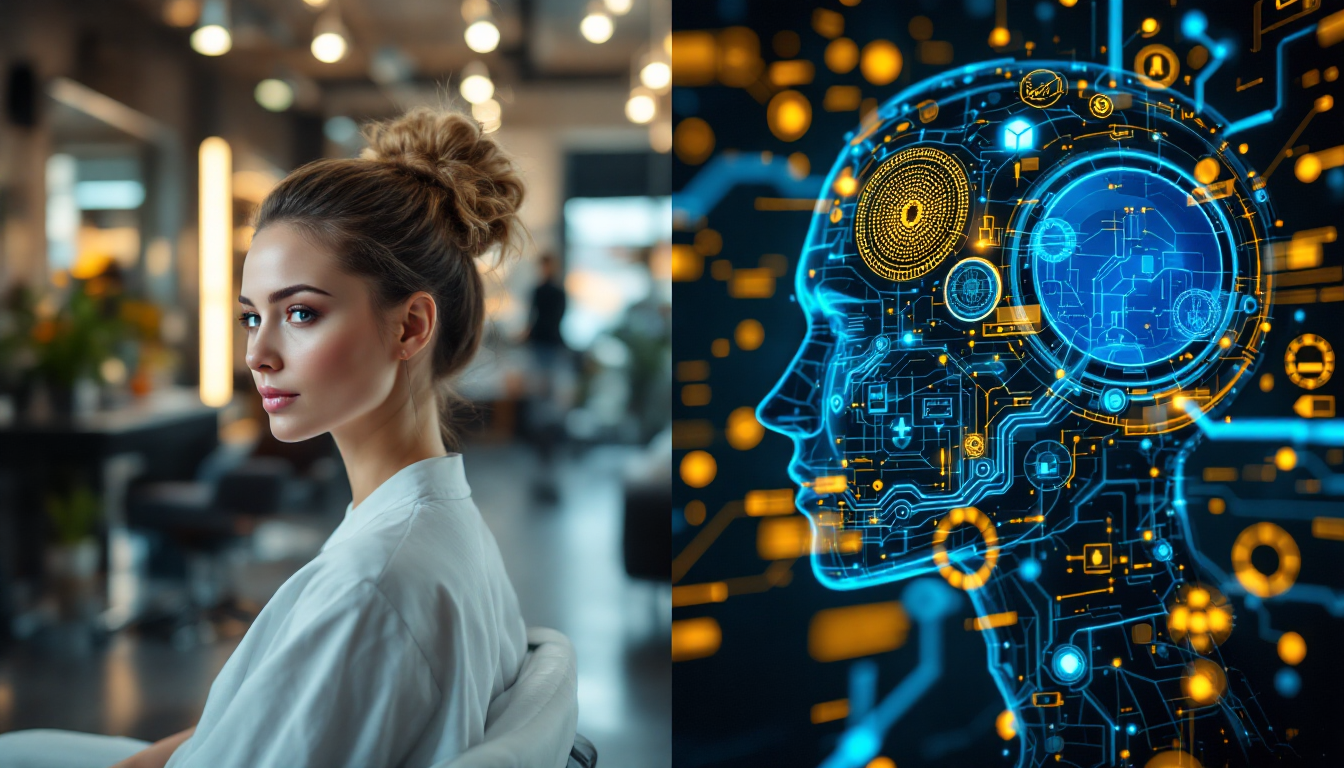
Enter artificial intelligence. By analyzing individual attributes—face shape, hair health, personal taste—and even psychological factors, AI transforms hairstyling from a guessing game into a precise, empathetic journey. Instead of flipping through generic lookbooks, clients can engage in a data-driven consultation that accounts for their lifestyle, mood, and long-term goals.
How AI Understands Personal Style Preferences
At the heart of AI personalization is data: the more the system knows about you, the better it tailors its recommendations. Surveys indicate 60–74% of consumers are willing to share personal data—such as hair density, curl pattern, or past styling experiences—in exchange for bespoke advice (zipdo.co). AI platforms ingest this information alongside broad style libraries to identify patterns: which cuts flatter your face shape, which colors complement your skin tone, which textures align with your maintenance tolerance.
Virtual try-on tools harness augmented reality to superimpose hairstyles in real time. Studies reveal AR hair-color try-ons can boost conversions by up to 2.5×, with users spending 300% more time on sites offering these visual tools (gitnux.org). Meanwhile, AI diagnostics analyze high-resolution images to assess hair porosity, damage, and scalp health with over 90% accuracy—surpassing manual inspections (gitnux.org).
By combining diagnostic insights with style preferences, AI platforms can recommend specific products and cuts. The result? Consumers are 60% more likely to purchase AI-recommended hair care products, and when their shopping experience is personalized, they spend nearly 48% more (zipdo.co; gitnux.org). Brands that deliver this level of understanding foster loyalty—74% of clients feel more committed to companies that “get” their unique hair needs (gitnux.org).
Mood Analysis: Choosing Hairstyles to Match Your Energy
Psychology teaches us that our mood profoundly influences style choices. On a high-energy day, you might crave bold layers or vibrant tones; when you’re feeling introspective, understated textures may feel more “you.” Advanced AI systems now integrate mood analysis by using facial-expression recognition or user-reported mood inputs. By cross-referencing your emotional state with thousands of hairstyle outcomes, these platforms suggest looks that amplify or balance your energy.
Opinion alignment further enhances trust in AI recommendations. A study of 1,000 participants interacting with AI assistants found that when the AI’s style suggestions matched users’ own opinions and emotional cues, the assistants were rated as more trustworthy, competent, and persuasive (arxiv.org). This means emotionally aware AI doesn’t just suggest a haircut—it co-creates a look that feels authentically aligned with who you are that day.
That said, designers must proceed responsibly. Research warns that overly critical or feedback-heavy beauty tools can trigger self-objectification and negative emotions—particularly among women—if not framed constructively (arxiv.org). The most effective mood-sensing AI encourages exploration and confidence, rather than fostering insecurity.
Lifestyle Considerations: Making Practical Style Choices
Your daily routine and environment are as vital to hairstyle success as your face shape. AI-driven platforms collect lifestyle data—such as work hours, exercise habits, time available for styling, and climate—to recommend looks that seamlessly integrate with your life. Busy professionals might receive suggestions for low-maintenance, wash-and-go cuts. Athletes might be guided toward protective styles that minimize damage during workouts.
In the salon, AI streamlines operations to create a frictionless customer experience. Smart scheduling and booking systems reduce no-show rates by up to 30% and cut product waste by 30% (zipdo.co). Smart mirrors deliver step-by-step tutorials and product demos, increasing retail sales by an average of 35% (gitnux.org). These efficiencies give stylists more time to focus on the creative, human side of hair design.
Case Studies: Successful AI-Personalized Hairstyles
GHD’s CurlFinder, launched in July 2025, exemplifies how AI can replicate a salon consultation digitally. By answering questions about curl pattern, texture, and styling goals, users receive tailored tool and product recommendations—whether the GHD Chronos Curve Wand for loose waves or a specialized hold spray for tight coils (voguebusiness.com). Post-launch metrics showed increased conversion and elevated user satisfaction.
Another leader, Get Hair Vision, allows clients to upload photos and virtually “try on” dozens of hairstyles with startling realism. Users report feeling more confident about booking a cut or color when they can see the outcome in advance. AI diagnostics embedded in the platform help recommend post-styling regimens, elevating client trust: 88% of salon clients surveyed express satisfaction with AI-assisted recommendations (gitnux.org). Across the board, virtual try-on solutions reduce product and style-return rates by roughly 64%—a win for both clients and businesses.
The Future of AI in Hair Personalization
The momentum behind AI in beauty and hairstyling is breathtaking. The global AI in beauty and cosmetics market is projected to soar to USD 13.34 billion by 2030, growing at a 20% CAGR over the next five years (gitnux.org; wifitalents.com). Brands that embrace AI personalization report up to 40% higher revenue, with some custom hair-care companies posting 300% year-over-year growth (gitnux.org). Subscription-based AI hair-care models alone have increased revenues by about 15%.
Looking ahead, we can expect further integration of brain-computer interfaces, real-time mood sensing via wearable devices, and fully immersive AR/VR salon experiences. Yet as AI becomes more intimate—offering ever-deeper insights into our psyches—it will be imperative to prioritize ethical design, data privacy, and positive emotional impact.
Conclusion: Embracing the AI-Driven Hair Revolution
AI is rewriting the rules of hairstyling by fusing data-driven diagnostics with the subtle nuances of personal style, mood, and lifestyle. From virtual try-ons that boost confidence to mood-adaptive suggestions that feel co-created, AI empowers both clients and stylists to collaborate on looks that are as individual as fingerprints. As the industry surges toward a projected USD 13.34 billion by 2030, the winners will be those who harness technology responsibly—elevating self-expression, building trust, and transforming every salon visit into a truly personalized journey. Whether you’re a consumer seeking your next signature style or a professional aiming to revolutionize your offerings, the AI-driven hair revolution is here—and it’s more personal than ever.