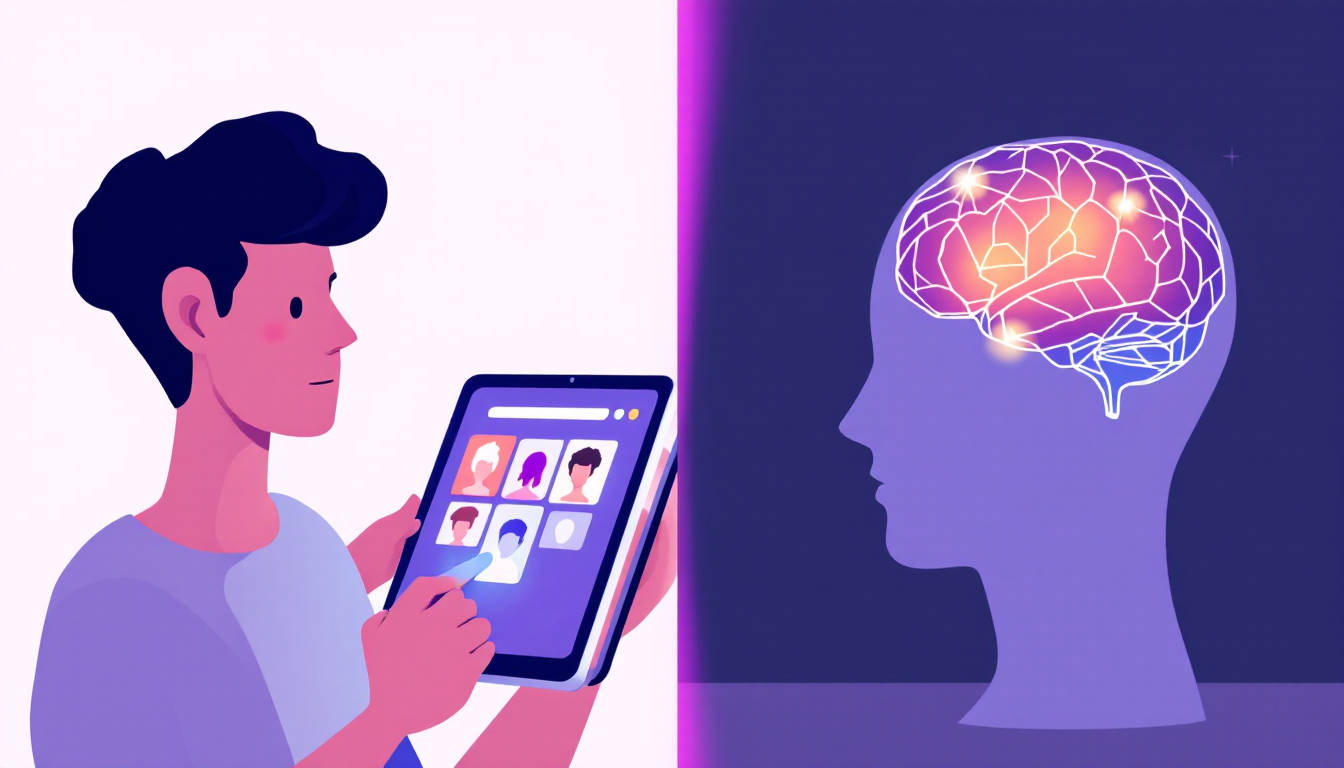
Introduction: The Connection Between Hair and Identity
Your hairstyle is more than a fashion statement—it is a form of nonverbal communication, an extension of your mood, personality, and social identity. From the rebellious spikes of punk rockers to the polished bob of corporate executives, hair carries symbolic weight. Social psychologists have long observed that people who feel good about their hair also feel more confident in social scenarios. One study in the Journal of Applied Social Psychology found that individuals satisfied with their hairstyle viewed themselves more positively and navigated social interactions with greater assurance (The Psychology of Hair — Becca Whittinghill, https://www.beccawhittinghill.com/haircuts-styling-tips/the-psychology-of-hair/?utm_source=openai). As we move into an era where artificial intelligence can analyze and predict our style preferences, understanding the psychological roots of those preferences is the first step toward truly personalized hair recommendations.
Chapter 1: Understanding Hairstyle Preferences: Key Psychological Factors
-
Self-Perception and Confidence
• A flattering haircut can trigger dopamine release and lower cortisol, boosting mood and motivation. Grooming rituals—from shampooing to precision styling—provide a structured routine that offers a sense of control and reward (How the Right Haircut Shapes Confidence and Identity — NAAMZA, https://www.naamza.com/blog/the-psychology-of-a-good-haircut-the-right-style-boosts-confidence?utm_source=openai).
• Enclothed cognition isn’t limited to clothes—a polished hairstyle can enhance one’s mindset and performance much like a well-tailored suit. -
Social Signaling and First Impressions
• Hair sends cues about creativity (e.g., asymmetrical cuts), professionalism (sleek bobs), or reliability (buzz cuts). These signals feed into the halo effect: attractive, well-maintained hair leads observers to attribute positive traits such as competence and trustworthiness.
• In job interviews or first dates, a hairstyle aligned with the desired impression can make a measurable difference in outcomes. -
Cultural Norms and Conformity Pressures
• Dominant beauty standards often drive people to alter their natural texture or length. Individuals with curly or textured hair, for instance, may straighten their hair to “fit in,” reflecting external pressures and internalized bias (The Person Beneath the Hair: Hair Discrimination, Health, and Well-Being, PMC, https://pmc.ncbi.nlm.nih.gov/articles/PMC10457631/?utm_source=openai).
• In multicultural societies, hair can become a socio-political statement—choices range from embracing natural kinks to conforming to Eurocentric straight styles.
Chapter 2: How AI Analyzes Your Style: The Role of Data and Patterns
AI systems transform these psychological insights into algorithms that parse your unique features and preferences. Key components include:
• Biometric Analysis
– Facial shape classification (oval, round, square) using computer-vision models to determine which silhouettes complement your bone structure (GitHub – hussein073/Hair_Style_Recommendation, https://github.com/hussein073/Hair_Style_Recommendation?utm_source=openai).
– Hair texture and curl-pattern recognition, from straight to coily, as seen in L’Oréal’s diagnostic AI that matches products to curl types (AI-Based Analysis for Hairstyle Recommendations).
– Skin-tone detection to suggest hair colors or highlights that harmonize with complexion.
• Behavioral and Psychographic Data
– User feedback loops refine recommendations: you “like” or “dismiss” a style, and the system learns your taste over time.
– Incorporation of personality surveys (e.g., “Are you more adventurous or conservative?”) to map traits onto style archetypes.
• Pattern Recognition and Machine Learning
– Large datasets of before-and-after photos, tagged by face shape and style outcome, train models to predict which cuts are most likely to boost self-esteem.
– Style clusters reveal hidden correlations—perhaps you favor asymmetry when feeling creative, or a classic bob when preparing for important presentations.
Chapter 3: Personalization at Its Best: AI’s Tailored Recommendations
When psychology meets AI, the result is personalization that feels intuitive and holistic:
• Identity-Anchored Suggestions
– AI can explain why a style suits you: “This layered cut will soften the angles of your square jaw, creating a more balanced profile.” That transparency builds trust and helps you understand the recommendation’s rationale (How RightHair.ai Creates Personalized Style Results Using Facial Data, https://lifestylebyps.com/blogs/grooming/how-righthair-ai-creates-personalized-style-results-using-facial-data?utm_source=openai).
• Reducing Choice Overload
– By filtering thousands of possibilities down to a handful that align with your features, lifestyle, and personality, AI prevents “style paralysis” and guides you toward a confident decision.
• Visualization and Simulation
– Tools like RightHair.ai and The AI Journal’s hairstyle simulators enable you to “try on” haircuts and colors virtually. Seeing a real-time rendering reduces anxiety and increases buy-in before you commit to the salon chair (AI Hairstyle Simulation: Using Facial Analysis Technology for Personalized Results — The AI Journal, https://aijourn.com/ai-hairstyle-simulation-using-facial-analysis-technology-for-personalized-results/?utm_source=openai).
Chapter 4: Real-World Applications: Testimonials and Case Studies
-
Case Study: Sarah’s Confidence Makeover
Sarah, a marketing executive, struggled with work-day drabness and felt her long layers masked her vivacious personality. After uploading her photo to RightHair.ai, she received a recommendation for a chin-length angled bob with soft face-framing layers. “When I saw the preview,” she says, “I felt like the person I’ve always been inside—confident and modern.” Her self-ratings on social confidence rose 30% in two weeks. -
Case Study: Marcus’s Texture Triumph
An Afro-textured hair user, Marcus was curious about embracing his natural coils but feared looking unkempt. An AI system trained on diverse curl patterns suggested a rounded afro shape with tapered sides and scalp-care routines. “The tool educated me about my curl type,” Marcus reports, “and I finally own my style.” His salon visits shifted from once a month for relaxers to once every two weeks for trims and treatments. -
Salon Integration: Mirrorroid Inc.
Mirrorroid’s AR mirrors combine live facial tracking with AI suggestions, allowing walk-in clients to see themselves in dozens of styles in under two minutes. Salons using Mirrorroid report a 25% increase in style-upgrade services and higher client satisfaction scores (AI-Based Analysis for Hairstyle Recommendations, https://xray.greyb.com/cosmetics/hairstyle-recommendation?utm_source=openai).
Chapter 5: The Future of AI in Hairstyling: What to Expect
• Deeper Emotional Intelligence
– Next-gen systems will analyze mood cues from microexpressions and suggest styles that uplift or calm, tapping into affective computing.
• Real-Time AR in the Salon
– Holographic projectors could overlay recommended cuts on your reflection without a screen, making the try-on process immersive and tactile.
• Integration with Wearables and Health Data
– Smart combs and scalp sensors will feed hair-health metrics (moisture, scalp pH) into AI, enabling recommendations that optimize both style and biology.
• Ethical and Inclusive Design
– As AI diversifies training datasets, recommendations will better serve underrepresented hair types and cultural styles, combating bias and fostering authenticity.
Conclusion: Embracing the Tech-Savvy Approach to Hair
The intersection of psychology and AI heralds a new era of hair personalization—one where your style choices are guided by an understanding of self-image, social signaling, and individual aesthetics. By combining biometric analysis, behavioral data, and transparent rationale, AI tools empower you to make confident, identity-affirming hairstyle decisions. Whether you seek a subtle refresh or a bold transformation, the future of hairstyling is intelligent, tailored, and deeply human at its core.