-
Introduction to Predictive Styling
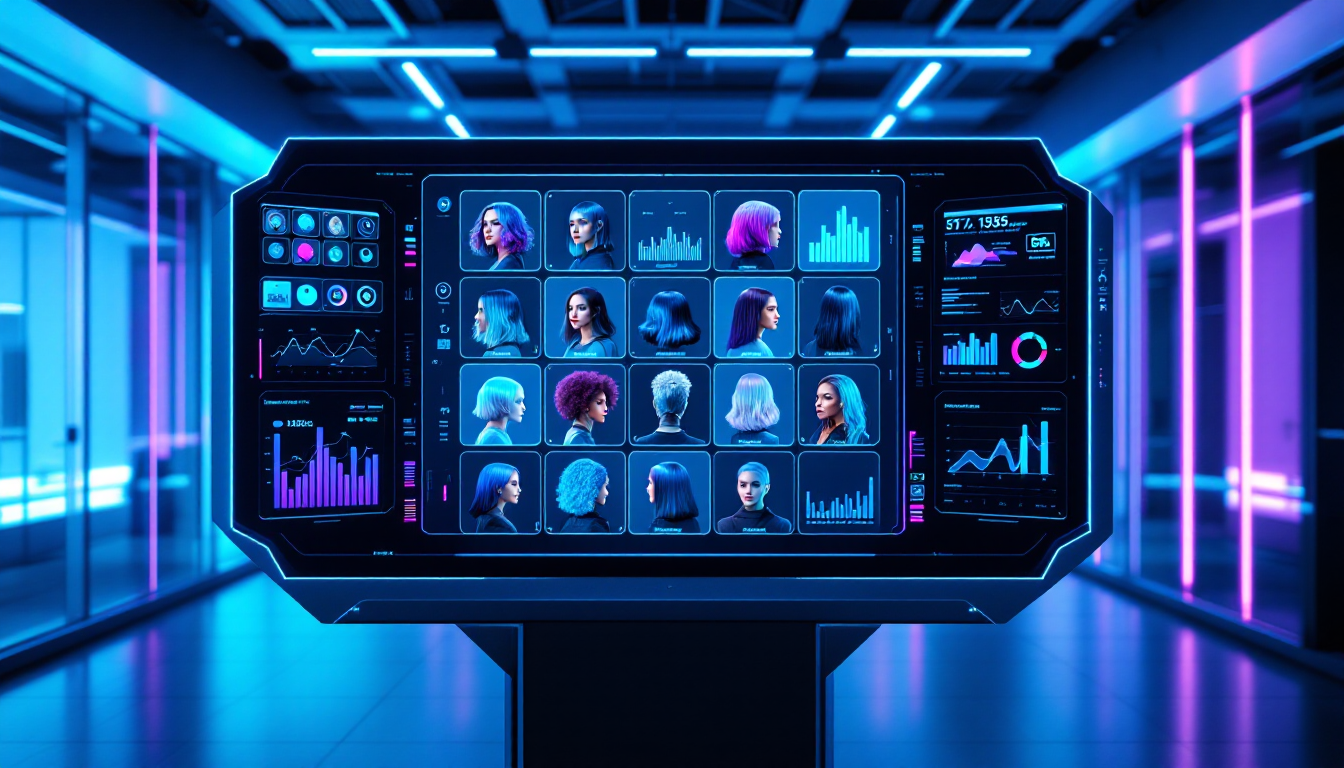
In recent years, artificial intelligence (AI) has transcended its early laboratory confines to become a strategic driver of creativity across industries. In fashion—long governed by the cyclical ebb and flow of trends—AI is now empowering designers, retailers, and salons to forecast what consumers will want before they even know it themselves. “Predictive styling” refers to the data-driven practice of analyzing large, disparate datasets (from runway imagery to social media posts and e-commerce patterns) in order to anticipate emerging aesthetic tendencies. When applied to hair, this approach goes beyond the barber’s intuition or the stylist’s gut feeling: it leverages machine learning models to detect nascent color palettes, cuts, and textures as they first appear around the globe. By marrying pattern-recognition algorithms with human creativity and cultural expertise, predictive styling promises to accelerate innovation, reduce waste, and deliver personalized experiences in salons and retail outlets alike. -
The Role of AI in Fashion Forecasting
AI’s entry into mainstream fashion forecasting has been swift. Platforms such as Paris-based Heuritech ingest millions of images—runway snaps, street-style photography, influencer posts—and classify them into thousands of visual attributes (for example, “pleated skirt,” “cargo pocket,” or “scarlet hue”). By tracking the frequency and geographic distribution of these attributes over time, Heuritech predicted that pinstripes would surge by 80 percent across European markets within a year [1].
Major brands have taken notice. H&M, Zara, Nike, Stitch Fix, and Alibaba now employ AI-driven trend insights to inform design lines, optimize inventory, and tailor marketing campaigns [2]. The stakes are high: industry estimates show that over 40 percent of fashion merchandise fails to sell at full price, and roughly 25 percent never sells at all. AI-powered demand alignment can dramatically reduce markdowns and landfill waste by anticipating which silhouettes, colors, and materials will resonate with consumers [1].
That said, AI models are not creative or cultural savants—they excel at detecting patterns in data, but they lack the intuitive grasp of societal undercurrents and subcultural nuance that human forecasters contribute. Successful forecasting depends on a hybrid approach: let the algorithms surface statistically significant signals, then apply human expertise to interpret those signals in light of broader social, economic, and cultural contexts [1].
- Understanding Global Data Analysis for Hair Trends
Hair-specific trend forecasting builds upon the same data-aggregation ethos but specializes on nuances of color, texture, and shape. Leading platforms ingest:
• Social-media imagery (Instagram, TikTok, Pinterest) to capture real-world styling experiments early
• Salon booking systems and virtual-try-on analytics to gauge consumer interest and intent
• Trend reports, blogs, and forum discussions to contextualize why certain shades gain traction [3]
Technically, convolutional neural networks (CNNs) scan and tag hair colors in millions of images, while recurrent neural networks (RNNs) or transformer architectures model how preferences evolve over time. Generative adversarial networks (GANs) and diffusion models produce photorealistic simulations of emerging color combinations—enabling virtual try-ons that let customers “test-drive” a pastel lavender balayage or a copper ombré weeks before the look goes mainstream [3].
Performance metrics underscore AI’s efficacy in this domain: general hair-fashion models boast roughly 80 percent accuracy in forecasting which colors will gain popularity over the next 6–12 months, while proprietary solutions—such as WGSN’s TrendCurve AI—claim over 90 percent accuracy up to two years in advance [3]. These systems operate in near real time: the moment a celebrity debuts a “mermaid blue” dye, AI can detect elevated mentions and image occurrences within days, signaling salons and brands to stock pigments or launch targeted campaigns [3].
- Case Studies: Successful AI Trend Predictions
• Mermaid Blue Mania. In mid-2023, a high-profile musician unveiled an electric blue hue on TikTok. AI platforms registered a 300 percent bump in user-generated content featuring similar shades within 72 hours—and within two weeks, consumer searches for “pastel blue hair” had climbed 250 percent. Savvy salons in London and Los Angeles ran limited-edition promotions, selling out custom dye kits in days [3].
• Pinstripe to Pastel—Translating Textiles to Tresses. Drawing on data originally used to forecast pinstripe jackets, one forecasting firm noticed the signature thin-line motif migrating from blazer lapels to hair art. By blending pattern-recognition of clothing with hair imagery, they predicted that “micro-striping” braids would surface as an Instagram trend, a forecast borne out at fashion week street-style shoots six months later [1].
• Retailer Inventory Overhaul. A global fast-fashion brand used AI insights to identify a rising preference for “warm caramel blonde” in Northern European markets. By adjusting their hair-accessory and dry-shampoo assortments accordingly, they reduced seasonal overstock by 30 percent and increased complementary-product attachments (brushes, serums) by 18 percent [2].
- The Impact of AI on Personal Style Choices
Perhaps the most profound effect of predictive styling is on the individual consumer. AI-enabled salon kiosks and mobile apps now:
• Analyze facial structure, skin undertones, and existing hair condition to determine flattering color palettes
• Recommend 3–5 personalized trend-based shades—for instance, a muted lavender or a rich copper—that suit both current style and projected seasonal trends
• Offer instant virtual try-ons, capturing user preferences for subsequent visits
• Pre-load salon software with custom dye formulas and application steps, accelerating appointment workflows and boosting upsell opportunities [3]
Clients benefit from greater confidence—they see how a trend will look on them before committing. Salons gain loyalty from tailored recommendations, and brands enjoy higher attachment rates for ancillary products (conditioners, touch-up sprays, styling tools). Over time, the feedback loop of user choices further refines the AI’s predictive accuracy, creating a virtuous cycle of personalization.
- Challenges and Limitations of AI in Predictive Styling
Despite its promise, predictive styling faces several hurdles:
• Creative and Cultural Blind Spots: AI models lack intrinsic understanding of cultural nuances—including regional symbolism of certain hair colors or textures—and may misinterpret fleeting fads as enduring trends. Human oversight remains vital to contextualize data-driven signals [1].
• Data Bias: If training datasets over-represent particular demographic groups or geographies, forecasts may skew toward those segments, overlooking emerging movements in under-monitored communities.
• Privacy Concerns: Harvesting publicly posted images raises consent and ethical-use questions. Responsible forecasting platforms must navigate evolving regulations (GDPR, CCPA) and implement robust anonymization.
• Technical Complexity: Integrating real-time social-media scraping, image-processing pipelines, and salon POS systems demands significant development resources—posing barriers for small salons or indie brands.
Academic research confirms these caveats. A 2020 model (KERN) enhanced deep-learning forecasts by embedding domain knowledge to capture fine-grained fashion patterns, underscoring that pure statistical learning can miss subtle but important signals [5]. And a 2025 Twitter sentiment-analysis study showed that social-media buzz correlates with—but does not independently cause—real-world style adoption, highlighting the need for multimodal data fusion (images, text, sales figures) for robust forecasting [4].
- Future Prospects of AI in Hairstyling
Looking ahead, AI’s integration into hairstyling will deepen:
• On-demand Dye Blending: Automated pigment dispensers could mix bespoke color formulas in-salon, reducing waste and ensuring consistency.
• Environmentally Aware Forecasting: Models may factor in sustainability metrics—carbon footprint of dyes, water usage—to recommend eco-friendly formulations aligned with both trend data and environmental impact scores.
• Hyper-Personalized AR Mirrors: Augmented-reality systems may project evolving trend forecasts onto a client’s reflection, letting them preview next season’s hottest cut or shade in real time.
• Supply-Chain Optimization: From pigment procurement to packaging, AI could synchronize demand signals from salons and retailers, minimizing overstock, reducing shipping emissions, and improving margins.
As AI continues to evolve—incorporating richer contextual data, unsupervised learning techniques, and ever-more realistic generative models—predictive styling is poised to transform the hair industry’s creative process, operational efficiency, and customer experience.
- Conclusion
Predictive styling illustrates the power of data to illuminate tomorrow’s hair trends today. By harnessing global visual datasets, advanced machine-learning architectures, and real-time analytics, AI is enabling brands, salons, and individual consumers to anticipate and adopt new looks with unprecedented speed and precision. Yet the true art lies in balancing algorithmic insight with human creativity and cultural sensibility. As the technology matures—integrating sustainability considerations, on-demand customization, and richer personalization—AI-driven predictive styling promises to redefine how we conceive, craft, and wear our hair in the years to come.
References
[1] ‘You’ve got to be data-driven’: the fashion forecasters using AI to predict the next trend | The Guardian, Oct. 2023. https://www.theguardian.com/technology/2023/oct/01/ai-artificial-intelligence-fashion-trend-forecasting-style?utm_source=openai
[2] How AI Fashion Trend Forecasting is Reshaping Retail | Zealousys. https://www.zealousys.com/blog/ai-fashion-trends-forecasting-for-retail/?utm_source=openai
[3] Beyond Haircuts: Exploring AI's Role in Predicting Hair Color Trends | GetHairVision. https://www.gethairvision.com/en/blog/ai-predicting-hair-color-trends?utm_source=openai
[4] Emotional Analysis of Fashion Trends Using Social Media and AI: Sentiment Analysis on Twitter for Fashion Trend Forecasting, arXiv:2505.00050, 2025. https://arxiv.org/abs/2505.00050?utm_source=openai
[5] Knowledge Enhanced Neural Fashion Trend Forecasting, arXiv:2005.03297, 2020. https://arxiv.org/abs/2005.03297?utm_source=openai