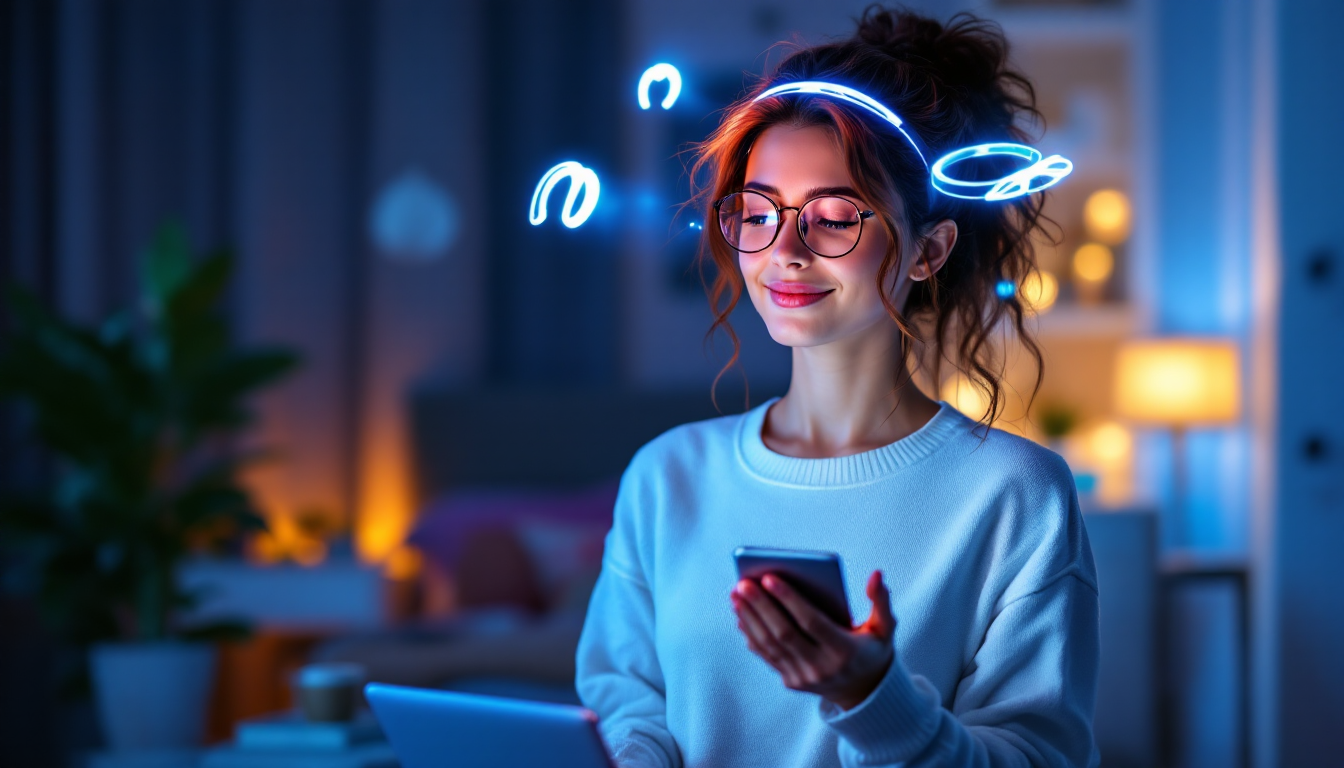
Introduction to AI in Hairstyling
Artificial intelligence has transformed countless industries, and hairstyling is no exception. Once limited to static magazine spreads or trial-and-error in the salon chair, today’s consumers expect immersive, interactive ways to experiment with new looks. Virtual try-on technologies—which overlay hairstyles, colors and accessories onto live or uploaded images—are the driving force behind this shift. In 2023 the virtual try-on market reached roughly $3.2 billion, and it’s forecast to climb to $5.5–6.0 billion by 2025 and $12.5 billion by 2028 (Virtual Try-On Statistics, InstaBanana). Retailers using these tools report conversion increases up to 64%, return reductions of 30%, and revenue lifts of 25–30% (Virtual Try-On Statistics, InstaBanana). As consumer demand for hyper-personalization grows—76% of shoppers say they expect virtual try-on features by 2025—AI-driven hairstyling solutions are poised to become standard across salons, e-commerce sites and mobile apps.
How AI Can Simulate Hairstyles with Accessories
To convincingly preview a headband, clip or hat, AI systems must accurately detect face shape, hairline, texture, volume and lighting conditions. Key technical steps include:
• Face and hair segmentation: Neural networks isolate the face and hair region from the background. Models such as Perfect Corp’s detection engine achieve over 90% accuracy in texture recognition, ensuring accessories align with curls, waves and straight hair (gitnux.org).
• 3D mapping and overlay: Depth estimation algorithms build a rough 3D model of the head, allowing accessories to be placed at the correct angle and scale.
• Physically-based rendering: Advanced research like ControlHair uses video diffusion guided by physical parameters (stiffness, wind movement) to animate how hair interacts with a hat’s brim or how a headband moves as the user turns their head (arxiv.org).
• Real-time feedback: Optimized inference engines deliver near-instant previews, often in 30–60 milliseconds, enabling smooth 360° rotations and color adjustments without lag.
Top AI Tools for Visualizing Hair Accessories
-
HeyBeauty’s Hairstyle Virtual Try-On
• Real-time 360° previews accounting for face shape, volume and texture.
• Custom color adjustments and virtual headband/clips overlays.
Link: https://heybeauty.ai/hairstyle-virtual-try-on?utm_source=openai -
HairstyleAI by AIBucket
• Library of haircut lengths, textures and accessory options.
• Face-shape adaptation and high-resolution snapshots to share with stylists.
Link: https://www.aibucket.io/tools/hairstyleai?utm_source=openai -
hippist AI Headwear Photography
• Photorealistic AI-generated models showcasing hats, turbans and headbands.
• Enables brands to swap styles in campaigns without physical photoshoots.
Link: https://www.hippist.com/ai-headwear-photography/?utm_source=openai -
GlamAI Mixed-Reality Styling
• AR-enabled environments for immersive “try-before-you-buy” experiences.
• Supports combined hairstyle and accessory layering.
Link: https://en.wikipedia.org/wiki/GlamAI?utm_source=openai -
Artisse AI Consumer App
• Over 1 million personalized hairstyle+accessory images generated since 2023.
• Secured $6.7 million in seed funding to expand accessory options.
Link: https://en.wikipedia.org/wiki/Artisse_AI?utm_source=openai
Benefits of Using AI for Style Transformations
• Increased Sales and Reduced Returns: Virtual hair color try-on can boost conversions by up to 2.5× and cut return rates by 20% for extensions and wigs (AI in the Hair Industry Statistics, Gitnux).
• Deeper Engagement: Sites with virtual try-on keep users engaged 360% longer; Aveda, for instance, saw a 112% on-site engagement spike after launching its tool (AI in the Hair Industry Statistics, Gitnux).
• Higher Consumer Confidence: 81% of shoppers say virtual try-on helps them make better decisions, and 73% feel more confident about their purchase (Virtual Try-On Statistics, InstaBanana).
• Personalization Meets Expectations: With 76% of consumers craving customized experiences but only 23% of brands delivering them, AI tools fill a glaring gap in beauty-tech offerings (Demand for customisation boosts Hourglass and Tatcha, Vogue Business).
Real-Life Applications and User Experiences
– E-Commerce Retailers: Beauty brands integrate AI try-on modules directly into product pages. Customers experimenting with hats, headbands or scarves can instantly compare multiple styles, reducing hesitation and abandoned carts.
– Salons and Stylists: Clients use AR previews during consultations to finalize accessory choices before a single pin is placed. This eliminates miscommunication and fosters trust. According to Gitnux, 44% of salon-goers want AR previews before styling begins.
– Marketing Campaigns: Hippist AI’s photorealistic renderings allow fashion houses to prototype headwear collections digitally, slashing campaign production costs and turnaround times.
– Everyday Consumers: Gen Z drives adoption—32% have already used virtual makeovers. Social-media integrations enable users to share “try-on selfies,” indirectly amplifying brand reach and building peer-based credibility.
Challenges and Limitations
• Rendering Accuracy: Fine details like lace headbands or metallic hair pins strain segmentation models, sometimes producing jagged or misaligned overlays.
• Lighting and Environment Variance: Poor lighting or complex backgrounds can confuse AI, leading to unrealistic shadows or color shifts.
• Data Privacy Concerns: Uploading facial images raises user data and consent issues; robust encryption and transparent policies are essential.
• Hardware and Bandwidth Requirements: Real-time 3D mapping and rendering demand significant processing power, potentially excluding users on older devices or low-bandwidth connections.
• Size and Fit Estimation: Unlike clothing, headwear sizing is less standardized, so AI may struggle to accurately convey tightness or adjustability of certain accessories.
The Future of AI in Fashion and Hair Accessories
Emerging trends point to ever deeper integration of AI, AR and VR in hairstyling:
• Predictive Styling Recommendations: By analyzing past preferences and social-media trends, AI advisors will suggest accessory-hairstyle combos likely to suit individual tastes.
• Fully Immersive VR Salons: Users will enter virtual spaces, interact with stylists’ avatars and customize looks in real time before booking actual appointments.
• Smart Mirrors and IoT Devices: Connected mirrors could run hair health diagnostics, recommend accessories that protect or enhance specific textures, and seamlessly order products.
• Advanced Material Simulation: Next-generation diffusion models like ControlHair will simulate how wind, movement and environmental factors affect both hair and accessories, elevating realism to cinema-quality.
• End-to-End E-Commerce Integration: From AI-powered style try-on to one-click purchase and at-home tutorial videos, brands will create frictionless, personalized journeys that blend digital experimentation and physical products.
AI-driven hair accessory visualization is no longer a futuristic novelty—it’s fast becoming an indispensable tool for consumers, stylists and brands alike. By harnessing accurate face and hair modeling, photorealistic rendering and real-time interactivity, these platforms empower users to explore complete looks with confidence. As technology advances and demand for personalization soars, the next frontier of hairstyling will be defined by immersive, AI-augmented experiences that blur the line between virtual and reality.