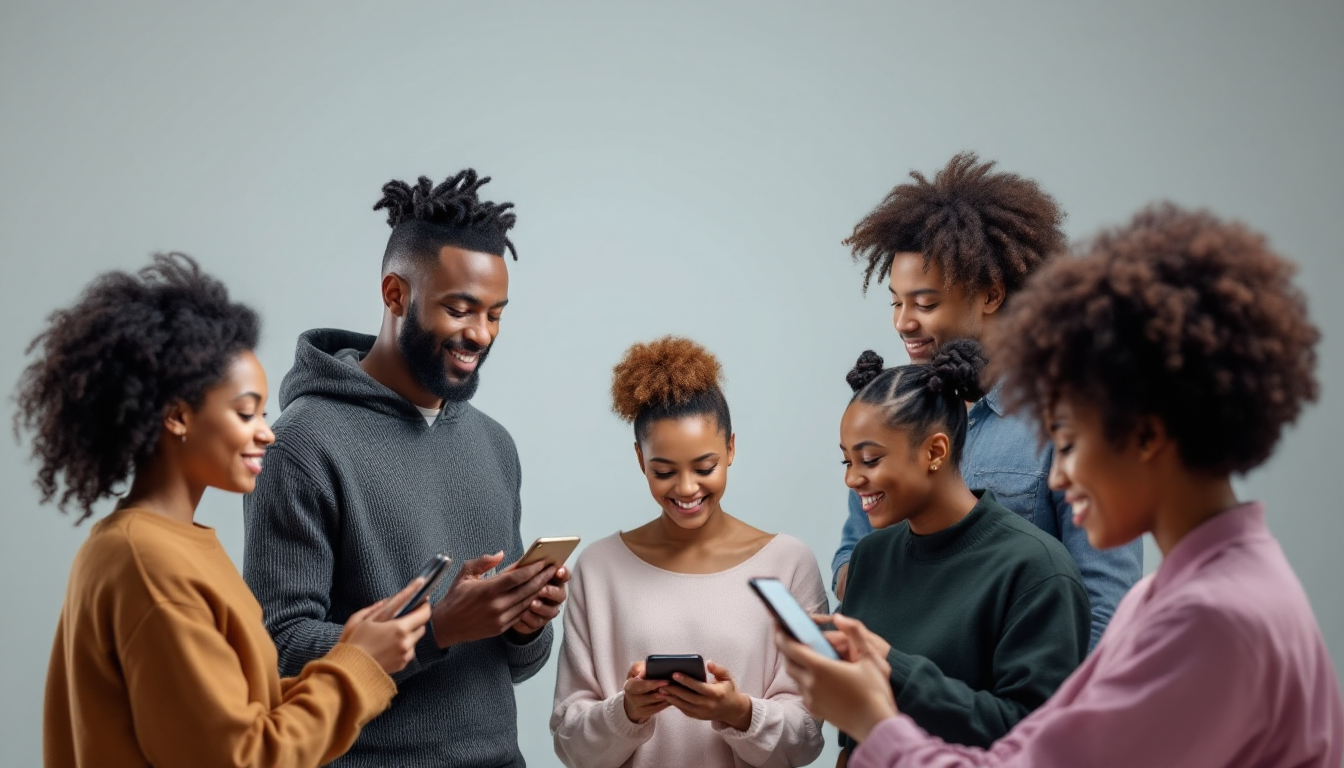
Inclusive Styling: How AI Makes Hairstyles Accessible for Everyone
Introduction to AI in Hairstyling
Artificial intelligence is transforming nearly every aspect of our lives—including how we care for and style our hair. What began as recommendation engines and virtual try-ons has quickly evolved into a suite of AI-powered solutions that address physical, sensory, and dexterity barriers. From robot-assisted styling to voice-guided tutorials and smart grooming hardware, AI is making hairstyling not only more personalized, but genuinely accessible to people of all abilities. In this post, we’ll explore the imperative of accessibility in fashion and beauty, examine how AI tailors hairstyle suggestions and assistive tools, review real-world success stories, address current limitations, and look ahead to a future where every individual can style and care for their hair with autonomy and confidence.
Chapter 1: The Importance of Accessibility in Fashion
• Defining Accessibility in Beauty
Accessibility means removing barriers—physical, sensory, cognitive—that prevent people with disabilities from fully participating in everyday activities. In hairstyling, those barriers can include:
– Mobility challenges that make reaching the sink, handling tools, or turning one’s head difficult.
– Limited fine motor control, which complicates the use of a round brush, hairdryer, or straightener.
– Visual impairments that make it hard to follow styling steps or check for even sections.
– Digital obstacles—unreadable salon-booking sites or inaccessible virtual try-ons—that exclude people with screen-reader or keyboard-only needs.
• The Stakes
According to the World Health Organization, over 1 billion people—about 15% of the global population—live with some form of disability. Yet mainstream beauty and fashion industries have historically treated disability as an afterthought. This exclusion not only undermines individuals’ autonomy and self-expression but also leaves brands vulnerable to legal risks: as of April 24, 2026, all public-facing digital assets in the U.S. must meet WCAG 2.1 AA standards under ADA Title II (CompliScan.ai).
• Guiding Principles for Inclusive AI
The American Foundation for the Blind emphasizes that truly inclusive AI requires:
- Representative data that includes people with disabilities.
- Ongoing auditing to prevent discriminatory outcomes.
- Interfaces designed for multiple modalities—voice, haptics, captions (afb.org).
Similarly, the Center for Democracy & Technology and the American Association of People with Disabilities urge a “Design for All” approach, embedding accessibility into every stage of product development (aapd.com; en.wikipedia.org).
Chapter 2: How AI Is Tailoring Hairstyle Suggestions
• Computer Vision–Driven Analysis
Modern apps leverage AI to analyze photos or live video of a user’s face shape, hair density, curl pattern, and coloration. Based on that analysis, they generate a short- and long-list of styles optimized for:
– Manageability (e.g., recommending wash-and-go cuts for limited dexterity).
– Growth goals (e.g., trimming schedules for healthy ends).
– Styling time (e.g., simple braids vs. elaborate updos).
• Voice- and Audio-Guided Tutorials
Inspired by Estée Lauder’s voice-enabled makeup assistant for the visually impaired, developers are creating step-by-step audio guides to walk users through sectioning hair, applying product, and using tools—no mirror needed (happi.com).
• Smart Styling Tools with Auto-Adjustment
AI-powered devices like the Aire IQ Intelligent Hair Dryer automatically detect hair type, thickness, and moisture, then modulate temperature and airflow to optimize drying time and minimize heat damage. The dryer even recognizes which attachment is in use—ideal for users who struggle with manual attachment swaps—ensuring that every styling step delivers consistent results (happi.com).
Chapter 3: Case Studies—Success Stories in Inclusive Styling
-
FLŌRA Barrier-Free Hair Washing Machine
• Winner of the 2025 James Dyson Award, FLŌRA enables users with mobility impairments to wash and dry their own hair autonomously. Its features include:
– Precise water-temperature control.
– Programmable foam sprayer and scalp massage.
– Gentle, even drying and optional light therapy for scalp health.
By combining ergonomic design with intelligent controls, FLŌRA exemplifies how hardware and AI can restore independence in a fundamental self-care task (jamesdysonaward.org). -
DYMO-Hair Robot Stylist
• Researchers at the cutting edge of robotics have developed DYMO-Hair, an AI model that simulates hair volumetrics and dynamics to perform styling actions—brush strokes, curling, even updos—on real wigs with zero prior training. Compared to earlier methods, DYMO-Hair achieves:
– 22% lower geometric error in hair shape.
– 42% higher success rates on novel hair types.
This proof of concept paves the way for robot-assisted styling stations in salons or homes, enabling users with severe dexterity or mobility limitations to receive precision styling without human assistance (arxiv.org). -
Voice App for Visually Impaired Users
• As part of Pantene’s Adaptive Beauty initiative, a mobile app uses real-time image recognition and voice feedback to guide apply-and-rinse sequences for both hair and makeup. Users receive audible cues on section placement, product quantities, and rinse timing—transforming intimate styling routines into accessible experiences (beautystreams.com). -
ADA-Compliant Salon Booking and Virtual Try-Ons
• CompliScan AI’s free salon-and-spa website scanner highlights common WCAG 2.1 AA violations—missing alt text, unlabeled grids, broken keyboard paths—and provides automated remediation suggestions. Accessible booking portals and virtual style previews ensure that from first click to final curl, every interaction welcomes users with screen readers or mobility aids (compliscan.ai).
Chapter 4: Challenges and Limitations of AI in Accessibility
• Data Diversity and Bias
AI models trained predominantly on able-bodied users risk misclassifying or under-serving people with atypical head postures, hair textures, or assistive device use. Without representative datasets, styling recommendations can miss critical nuances—underscoring the need for inclusive data-collection practices and regular bias audits (afb.org).
• Technical and Cost Barriers
Advanced robotics like DYMO-Hair and hardware such as FLŌRA carry high research, development, and manufacturing costs, which may limit early adoption. Lower-income households and small salons might struggle to integrate these innovations without subsidies or scalable pricing models.
• User Trust and Training
Introducing new AI tools requires user education—especially for those unaccustomed to voice interfaces or automated hardware. Without intuitive design and robust onboarding, assistive devices risk abandonment.
• Regulatory and Privacy Concerns
Vision-based styling assistants collect sensitive biometric data. Ensuring compliance with data-protection regulations (GDPR, CCPA) and safeguarding personal images demands rigorous security protocols and transparent user consent flows.
Chapter 5: Future Prospects of AI in Styling Inclusivity
• Multimodal AI: Combining voice, vision, and haptics to deliver seamless, context-aware styling guidance for users with multiple or complex disabilities.
• Augmented Reality Mirrors: Real-time, overlaid styling instructions that adapt to a user’s movements, reducing reliance on fine motor skills.
• Remote Robot-Stylist Networks: Users could connect virtually to remote robotic stylists housed in specialized salons, receiving bespoke cuts and updos shipped as ready-to-wear wigs or extensions.
• Expansion of Assistive Hardware: Building on FLŌRA’s success, we can expect barrier-free solutions for blow-drying, straightening, and curling—each with AI-driven safety interlocks and adaptive ergonomics.
• Policy and Standards Evolution: As AI-powered beauty tech becomes mainstream, we anticipate stronger regulatory frameworks and industry standards mandating disability inclusion across both physical products and digital services (e.g., upcoming WCAG 3.0 guidelines).
Conclusion: Embracing Diversity with Technology
AI’s rapid strides in hairstyling and beauty tech present a unique opportunity: to redefine personal care as a universally accessible experience. By adhering to “Design for All” principles, prioritizing representative data, and fostering cross-sector collaboration between engineers, salon professionals, disability advocates, and policymakers, we can ensure that every individual—regardless of ability—reclaims autonomy over their styling choices. As these innovations scale, inclusive styling will move from a niche aspiration to an industry standard, allowing all of us to express our identity through hair with confidence, dignity, and ease.