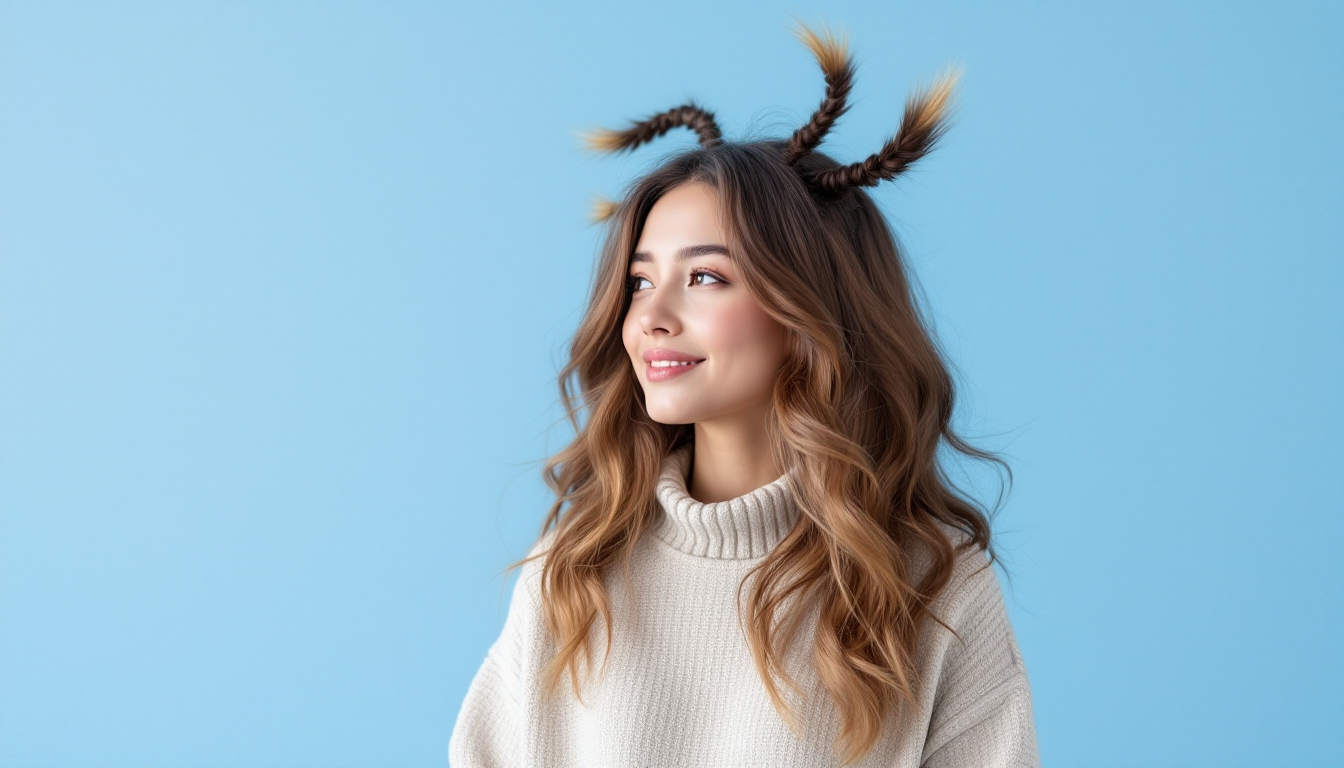
Introduction to AI in Hairstyling
In recent years, artificial intelligence (AI) has transformed many creative industries—including fashion, beauty, and personal care. Hairstyling, once limited to a stylist’s intuition and experience, now benefits from AI-driven insights that blend data science, computer vision, and user preferences. Modern AI-powered apps analyze facial features, hair type, and even scalp health to recommend cuts, colors, and care routines. But one of the most intriguing frontiers is weather-aware hairstyling: tailoring your look not only to your style goals but also to the day’s temperature, humidity, wind, and precipitation. In this post, we’ll explore how AI understands weather conditions and suggests hairstyles that stay on point—rain or shine.
The Importance of Weather-Compatible Hairstyles
Weather affects hair in predictable ways:
• High humidity raises the hair’s moisture content, causing frizz and loss of curl definition.
• Arid heat saps moisture, leading to brittle strands and static.
• Wind tangles loose styles and flattens volume.
• Cold and snow often dry hair out, making it break more easily.
Choosing a hairstyle that anticipates these conditions can mean the difference between an all-day flawless look and a mid-afternoon frizz disaster. For example, a sleek low bun resists wind tugs and holds up in drizzle, while protective braids lock in moisture when humidity spikes. AI can rapidly match these weather-style relationships to your unique hair profile and recommend the optimum style each morning.
How AI Analyzes Weather Data
At the core of weather-adaptive hairstyling is real-time weather analysis. AI platforms integrate multiple data streams:
- Meteorological APIs: Sources like OpenWeatherMap supply granular metrics—temperature, relative humidity, dew point, wind speed, UV index, and rainfall probability.
- Historical Patterns: Systems such as TravelAI’s climate model combine current readings with past seasonal data to predict how the day will evolve (travelai.com).
- User Feedback Loops: Apps like My Hair Weather ask users to rate their hair condition after following advice, refining forecasts for frizz, flatness, and dryness (myhairweather.com).
- Physics-Based Simulation: Cutting-edge research such as ControlHair employs hybrid video diffusion with physics parameters—hair stiffness, air resistance—to simulate how strands move in wind (ControlHair, 2025). This allows AI to visualize whether a loose style will flutter too much on a breezy afternoon.
By fusing these inputs, AI builds a profile of “hair-weather interactions” unique to each user. The result is hyper-personalized style advice that factors in both your hair’s intrinsic properties and the day’s environmental stresses.
Top Hairstyle Suggestions for Various Climates
Below are AI-driven hairstyle strategies for common weather scenarios:
Tropical Humidity (Above 70% Humidity, 75–95°F)
• Protective Box Braids or Twists: Sealed ends lock in moisture, prevent frizz.
• High Ponytail or Top Knot: Keeps hair off the neck and tamed, reducing sweat-induced frizz.
• Recommendation Source: Jimei Weather suggests humidity-proof updos when rainfall probability exceeds 50% (spark.mwm.ai).
Desert Heat and Low Humidity (≤20% Humidity, 90–110°F)
• Moisture-Rich Deep Braid with Leave-In Conditioner: Protects strands from brittleness.
• Silk Scarf Wrap: Minimizes UV damage, preserves hairstyles overnight.
• AI Tip: My Hair Weather warns of static and breakage risk when dew point falls below 30°F-equivalent humidity levels.
Windy Conditions (Wind Speed Over 15 mph)
• Sleek Low Bun or French Braid: Reduces loose ends that catch in gusts.
• Headband or Hair Clip Securing Flyaways: Keeps style intact during outdoor activities.
• Simulation Insight: ControlHair modeling shows that buns retain 85% of their shape versus only 30% for loose curls under high wind loads.
Cold, Dry Winter (30–40°F, Low Humidity)
• Protective Twists or Braided Crown: Shield ends from dry air and friction.
• Oil-Rich Scalp Massages with Nourishing Serums: Pre-styling step to lock in hydration.
• AI Suggestion: TravelAI’s hybrid model flags days with UV index above 3 as ideal for deep-conditioning treatments before styling.
Rainy or Drizzly Days
• Waterproof Styling Products + Slicked-Back Pony: Minimizes water absorption in strands.
• Micro Braids Under a Cap or Hood: Keeps style while protecting from precipitation.
• Outfit Pairing: Platforms like Glance recommend breathable, water-resistant layers paired with rain-friendly hairstyles (glance.com)—an approach easily adapted to hair care.
User Experiences: Testimonials
Real-world feedback underscores AI’s impact on daily styling:
“Ever since I started using My Hair Weather, my frizz days have dropped from four times a week to one. The app’s ‘humidity alert’ tells me exactly when to skip the curling iron and braid instead.” — Sara M., Miami, FL
“I travel between London and Dubai. TravelAI’s climate predictions help me pack the right hair care tools—no more panicking at the hotel because my weights and curly cream didn’t make the cut.” — Ahmed R., Frequent Business Traveler
“A friend demoed a ChatGPT-based weather-styling shortcut this morning. It tapped my location, checked the forecast, and suggested a scattered braid for my humid Portland day. Lifesaver!” — Priya K., Portland, OR (reddit source).
The Future of AI in Climate-Based Hairstyling
The intersection of AI, hair science, and meteorology is poised for rapid growth. Emerging possibilities include:
• Augmented Reality (AR) Try-Ons: Imagine virtually testing a wind-resistant updo against live camera footage of a breezy street, powered by ControlHair-like rendering engines.
• Predictive Maintenance Alerts: AI could notify you days in advance to start hydration routines when an upcoming cold snap is forecast.
• Personality-Driven Style Evolution: By combining HairCLIPv2’s fine-grained editing (arxiv.org) with weather data, systems could propose entirely new cuts that maximize manageability in your local climate.
• Seamless Integration with Smart Home Devices: Your bathroom mirror might display instant hairstyle suggestions synced to an in-home weather station.
As DIY developers continue experimenting with open APIs—just as hobbyists have built weather-aware outfit suggesters on Reddit—the barrier to entry for weather-adaptive hairstyling tools will only lower, letting more innovators tailor the technology to diverse hair types and cultural aesthetics.
Conclusion: Embracing AI for All-Weather Style
AI-driven, weather-aware hairstyling is no longer a futuristic concept—it’s here. By leveraging real-time meteorological data, historical trends, and advanced simulation models, today’s apps and platforms offer smart hairstyle recommendations that keep you looking your best under any sky. Whether you face humidity, biting wind, or relentless sun, AI can guide you toward styles and treatments that preempt environmental challenges. As these systems become increasingly sophisticated—integrating AR, predictive scheduling, and user-generated feedback loops—they’ll empower everyone to embrace all-weather style with confidence and creativity.