-
Introduction to AI and Hairstyling
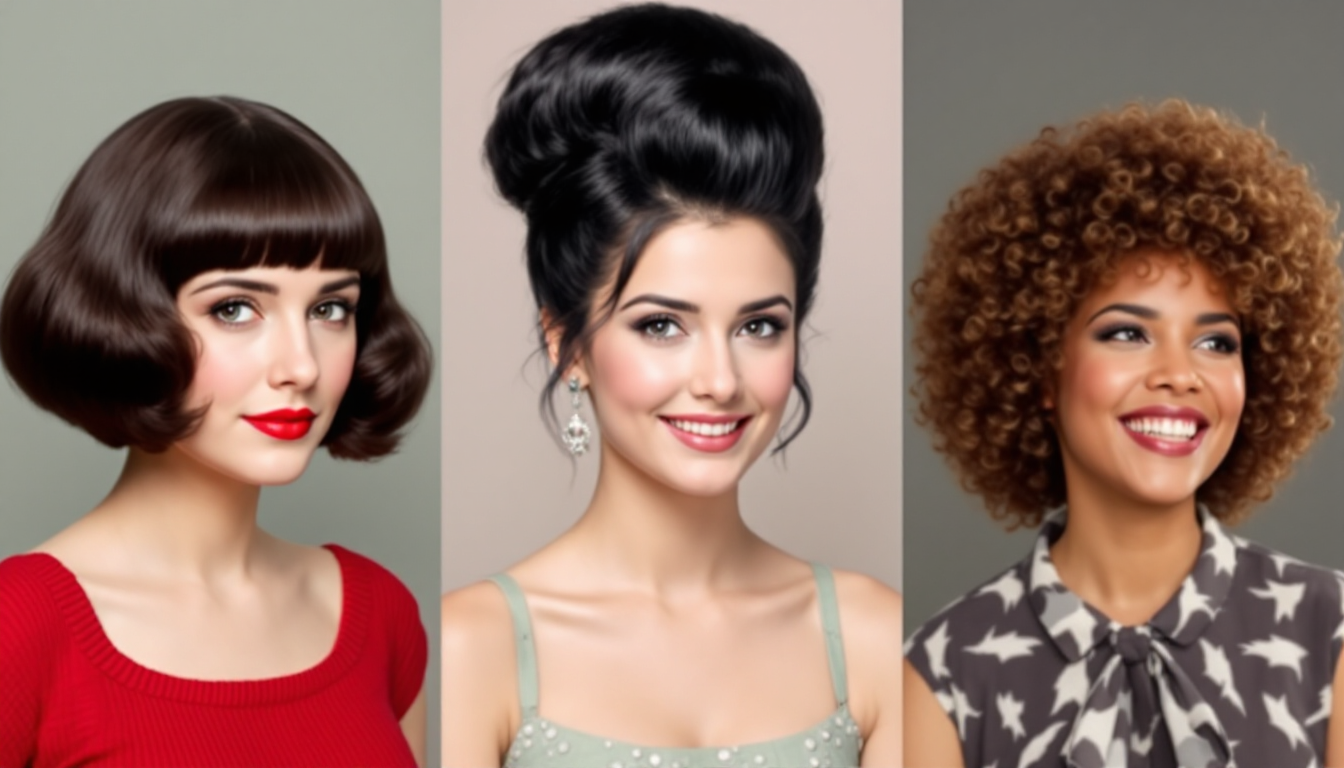
In recent years, artificial intelligence has leapt beyond language and vision into the realm of personal care — notably, hairstyling. What was once confined to salon consultations and trial-and-error dye tests can now be explored virtually in seconds. AI-driven hairstyle simulators use computer vision, generative adversarial networks (GANs), and physics-based rendering to map your facial features, assess lighting and hair texture, and overlay any style or color you desire. From quick “what-if” snapshots to full 3D avatar reconstructions, these tools transform how we discover and decide on looks, bridging the gap between imagination and reality. -
Historical Hairstyles: A Brief Overview
Hairstyles have long served as markers of culture, class, gender and even rebellion. A whirlwind tour:
• Ancient Egypt (c. 4000–300 BC): Both men and women sported long, straight hair, elaborate braids or ornate wigs topped with gold and beads (All Things Hair).
• Ancient Greece (c. 1500–150 BC): Women favored intricate updos—chignons woven with leaves, flowers or jeweled pins (All Things Hair).
• Ancient Rome (500 BC–500 AD): Blonde hair powders, barrel curls set with early tongs and elaborate headpieces marked status and fashion (All Things Hair).
• Renaissance–Baroque (1500s–1700s): Voluminous, towering updos encrusted with ribbons, pearls and stones signaled aristocratic opulence (All Things Hair).
• Victorian Era (1837–1901): Defined by soft curls around the face, intricate braids and ornamental combs; wigs remained in vogue for formal occasions (All Things Hair).
The 20th century accelerated change:
• 1920s: The “flapper” bob, popularized by Irene Castle, sliced off long locks in a symbol of women’s liberation (Timetoast).
• 1930s: Hollywood’s Marcel wave, an S-shaped curl achieved with heated irons and pomade, graced screens on Jean Harlow (Brillare Beauty Institute).
• 1950s: Glamorous mid-length curls brought icons like Marilyn Monroe to life (Brillare Beauty Institute).
• 1960s–1980s: From beehive bouffants to teased perms, volume and texture reigned (see Bouffant).
• 1990s–2000s: Braids (Janet Jackson), the “Rachel” cut (Jennifer Aniston) and early ombré signaled the power of media on style (Brillare Beauty Institute).
• 2010s–2020s: Social media drove micro-trends—pixies, shags, balayage and low-maintenance looks skyrocketed, especially during COVID-19 lockdowns (Brillare Beauty Institute).
- How AI Simulates Classic Looks
Modern simulators combine several AI techniques:
• Face & hair segmentation: Computer vision algorithms isolate your hair from background and facial features.
• GAN-based style transfer: Models like Stable-Hair (July 2024) use diffusion frameworks to remove existing hair and realistically apply target styles while preserving identity consistency (Stable-Hair).
• 3D strand rendering: HAAR (Dec 2023) generates full 3D strand-based assets from text prompts, enabling physics-aware movement and realistic lighting (HAAR).
• Dynamic video diffusion: State-of-the-art models like ControlHair (Sep 2025) integrate wind and motion physics for animated simulations in video format (ControlHair).
Accessible consumer tools harness these breakthroughs under the hood:
• Perfect Corp’s virtual hairstyle try-on uses GANs to project bobs, pixies and buzz cuts with custom colors directly onto live video feeds (Perfect Corp).
• YouCam Makeup, with over 1 billion downloads by 2025, offers real-time AR hairstyle simulations and color transformations in its beauty suite (YouCam Makeup).
- Benefits of Using AI for Hairstyling
• Risk-Free Experimentation: Test extreme colors, daring cuts or elaborate historical updos—like an 18th-century bouffant or Japanese nihongami—without a single haircut or dye job (Nihongami; Bouffant).
• Time & Cost Savings: Skip multiple salon appointments; preview looks in minutes on your smartphone.
• Personalized Recommendations: AI analyzes your face shape, skin tone and hair texture to suggest eras and styles that complement you best.
• Cultural Storytelling: Virtually don a Cossack-inspired mohawk or Victorian ringlets and learn the social significance behind each look (Mohawk).
• Boosted Confidence: Seeing yourself in a prospective style builds conviction before committing to a cut or color.
With the global hair-care market projected to reach USD 105 billion by 2025—and hairstyling and coloring driving much of that growth—AI represents both an innovation and revenue catalyst (Vocal.media).
-
User Experiences and Testimonials
• “I used YouCam to try a 1920s finger wave before my Gatsby-themed wedding. The AI preview convinced me to go bolder—and it turned out better than I imagined!” – Sarah J., New York
• “I’ve always been curious about a punk-rock mohawk but was too scared to get it. The virtual try-on made me confident to shave half my head—and I love it.” – Marcus L., London
• “Perfect Corp’s simulator helped me decide between a classic Victorian updo and a modern up-swept nihongami for a cosplay event. The 3D preview was shockingly lifelike!” – Yuki T., Tokyo -
Future of AI in Hairstyling
Emerging research and startups hint at what’s next:
• Multi-Image Fusion: ReelMind.ai’s approach stitches together varied poses and lighting to create consistent historical reconstructions—imagine filming a Victorian hair-art tutorial on your own head (ReelMind.ai).
• On-Demand Haircut Algorithms: AutoHair predicts your full hairstyle from a single snapshot—ideal for virtual avatars or instant salon recommendations (Patternity).
• VR & Metaverse Integration: Picture attending a 16th-century masquerade ball in VR, complete with AI-rendered nihongami or Baroque curls that sway realistically in virtual wind.
• Personalized Time Capsules: In the near future, AI could catalog your facial changes over decades and simulate how you might have looked in any era—from Egyptian braided crowns to 1980s perms—based on your unique features. -
Conclusion: Embrace Your Time-Traveling Hair Journey
From Cleopatra’s braids to punk rock mohawks, hairstyles offer a portal into history. AI-powered simulators now let you step through that portal at will—try on century-old updos, experiment with legendary film-star waves, or craft a hybrid style that’s wholly your own. As technology evolves, the line between digital preview and real-world result blurs, empowering you to explore your identity across time without a single haircut misstep. Whether you’re chasing vintage elegance or avant-garde rebellion, the future of hairstyling makes every era—and every you—possible.