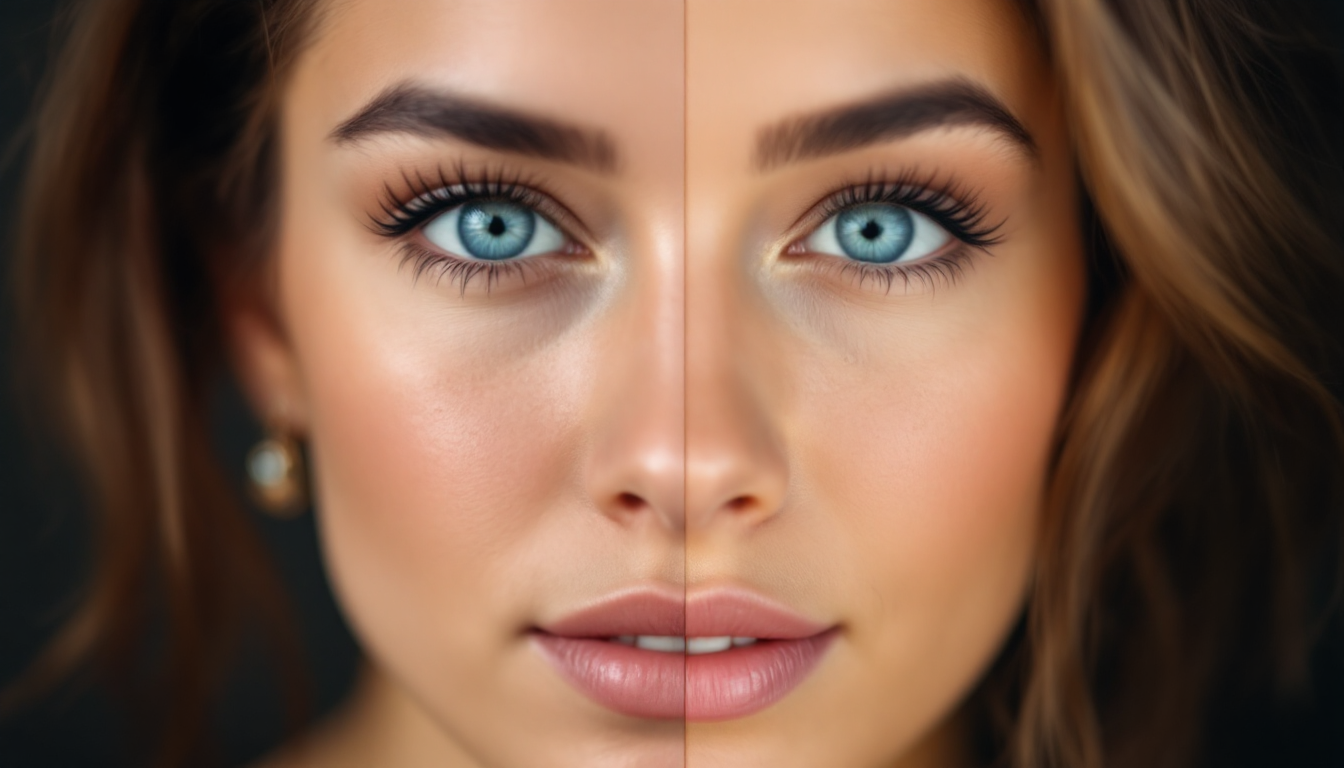
- Introduction to Common Hairstyle Failures
Every year millions of salon appointments end in disappointment: the cut is too severe, the color clashes with skin tone, or the style demands more upkeep than anticipated. Common hairstyle failures include
• Face-shape mismatches: A blunt bob on a round face can exaggerate fullness, while overly layered cuts on fine hair may sap volume.
• Texture misreads: Impractical styles for curl patterns—think sleek, poker-straight looks imposed on tightly coiled hair—lead to excessive heat styling and damage.
• Color catastrophes: Underrated factors such as hair porosity and existing pigments can turn “honey blonde” into brassy orange overnight.
• Lifestyle clashes: Busy professionals who can’t devote daily time to styling tools end up with a look they rarely wear.
These mishaps undermine confidence. According to a 2025 survey by ReelMind.ai, 78 percent of users who tried AI hairstyle simulations felt more confident in salon decisions, while a 2024 Salon Today poll found 68 percent of clients reporting higher styling assurance after visualizing looks with AI tools (reelmind.ai, reelmind.ai). By identifying these pitfalls up front, AI-driven solutions are reshaping how we choose, preview and ultimately love our hair.
- How AI Predicts Successful Hairstyles
Modern AI systems leverage generative adversarial networks (GANs), diffusion models and large-scale data to forecast which hairstyles will suit you. Key approaches include:
• Virtual try-ons with StyleGAN2: Ulta Beauty’s GLAMlab uses NVIDIA’s StyleGAN2 to render new cuts and colors over a user selfie in roughly five seconds for the first look and one second thereafter. Early adopters see higher product conversions after previewing styles (NVIDIA Blog).
• Stable diffusion for texture realism: Perfect Corp’s YouCam Makeup app deploys diffusion-based generative AI to simulate hair textures, shine and color transitions at near photo-real fidelity (Business Wire). Their salon-grade solution can reconstruct ears, neck and hairline for unparalleled realism (Business Wire).
• Recommendation engines: GHD’s CurlFinder quiz combines AI and expert input across 40 hair and skin-tone profiles to suggest the ideal wands or sprays for your curl type (Vogue Business). Myavana analyzes textured-hair photos against a database of two billion strands and 972 profiles to craft personalized product regimens (Allure).
By simulating outcomes and recommending tools, AI drastically reduces guesswork, ensuring you—and your stylist—make data-driven choices.
- Understanding Your Features: The AI Advantage
Traditional consultations rely heavily on verbal descriptions and 2D magazine clippings. AI supplements this by:
• Face-shape analysis: Advanced computer vision algorithms categorize jawlines, forehead-to-chin ratios and cheekbone structure to propose flattering silhouettes.
• Skin-tone harmonization: Tools use colorimetry to match hair dyes that complement undertones, avoiding clashes that can leave you looking washed out or overly ruddy.
• Texture profiling: AI identifies curl tightness, strand thickness and porosity to recommend cuts and treatments that work with—not against—your natural pattern.
• 3D modeling & multi-image fusion: Platforms like ReelMind.ai stitch together multiple angles of your head to generate a dynamic, 3D preview with accurate shadows, highlights and even simulated wind effects (ReelMind.ai).
By harnessing millions of data points—from celebrity looks to salon outcomes—AI creates bespoke style suggestions. You no longer settle for “good enough”; you get “perfect for you.”
- Lifestyle Considerations in AI Hair Predictions
Your job, daily routine and styling preferences matter as much as your facial features. AI-driven platforms account for:
• Maintenance level: An algorithm may flag a layered mid-length cut as too high-maintenance for someone reporting only five minutes of morning prep time.
• Activity profile: Athletes who need to wear protective styles under helmets receive different recommendations than office workers seeking sleek blowouts.
• Climate factors: Humidity-averse styles (e.g., anti-frizz treatments) can be suggested if you live in a tropical region.
• Budget constraints: Some tools provide a spectrum of options from at-home styling kits to salon-only services, ensuring recommendations align with your wallet.
For example, GHD CurlFinder’s virtual salon consultation tailors tool recommendations around user lifestyle inputs, while Myavana’s premium tier even ships physical hair samples along with expert feedback, closing the loop between digital insight and real-world execution.
- Real-Life Examples of AI’s Impact on Hairstyling
• Ulta Beauty GLAMlab: After integrating NVIDIA’s StyleGAN2, Ulta reported a marked lift in related product sales—proof that customers buy with confidence when they see realistic previews first (NVIDIA Blog).
• Perfect Corp: In 2024 the company grew revenue by 12.5 percent year-over-year to $60.2 million, attributing gains to expanded AI try-on APIs across beauty retailers (Wikipedia).
• Salon surveys: Stylists using AI visualization tools note fewer “redo” appointments and higher client satisfaction. In one study, 68 percent of clients felt more certain about their hairstyle choices after AI previews (ReelMind.ai).
• GetHairVision case study: Users uploading their photos to GetHairVision’s platform saw a 40 percent drop in post-cut buyer’s remorse, thanks to pre-style visualization and side-by-side comparisons.
These examples underscore AI’s capacity to transform hairstyling from guesswork into guided artistry.
- Choosing the Right AI Tool for You
With myriad AI hairstyling solutions on the market, consider:
• Rendering speed and realism: Does the first hairstyle preview load in seconds? Are textures—curls, waves, straight locks—convincingly rendered?
• Feature depth: Beyond basic try-ons, does the platform analyze face shape, skin tone, texture and lifestyle?
• Product integration: Can you click through to purchase recommended tools and dyes directly?
• Platform accessibility: Is there a mobile app, web interface or salon-installed kiosk?
• Cost and support: Are free trials or freemium tiers available? Is expert consultation bundled or sold separately?
Leading contenders include Ulta Beauty’s GLAMlab (quick StyleGAN2 previews), Perfect Corp’s YouCam Makeup (diffusion-powered realism), GHD CurlFinder (tool recommendations), Myavana (textured-hair expertise), ReelMind.ai (3D modeling and physics), and GetHairVision (user-friendly photo uploads). Demo multiple tools to find the interface and features that resonate with your needs.
- Conclusion: The Future of AI in Hairstyling
AI’s role in hairstyling is only accelerating. Cutting-edge research such as HairFastGAN’s real-time transfers under one second on high-end GPUs (arxiv.org), Stable-Hair’s two-stage diffusion for ultra-faithful style application (arxiv.org), and ControlHair’s physics-informed video diffusion for dynamic previews (arxiv.org) point toward a future where you’ll see your dream haircut—or motion-sensitive style—in augmented reality before stepping into the salon. As these technologies mature, expect ever more personalized, predictive and immersive hairstyling experiences that eliminate risk, boost confidence and unlock your best look every day.