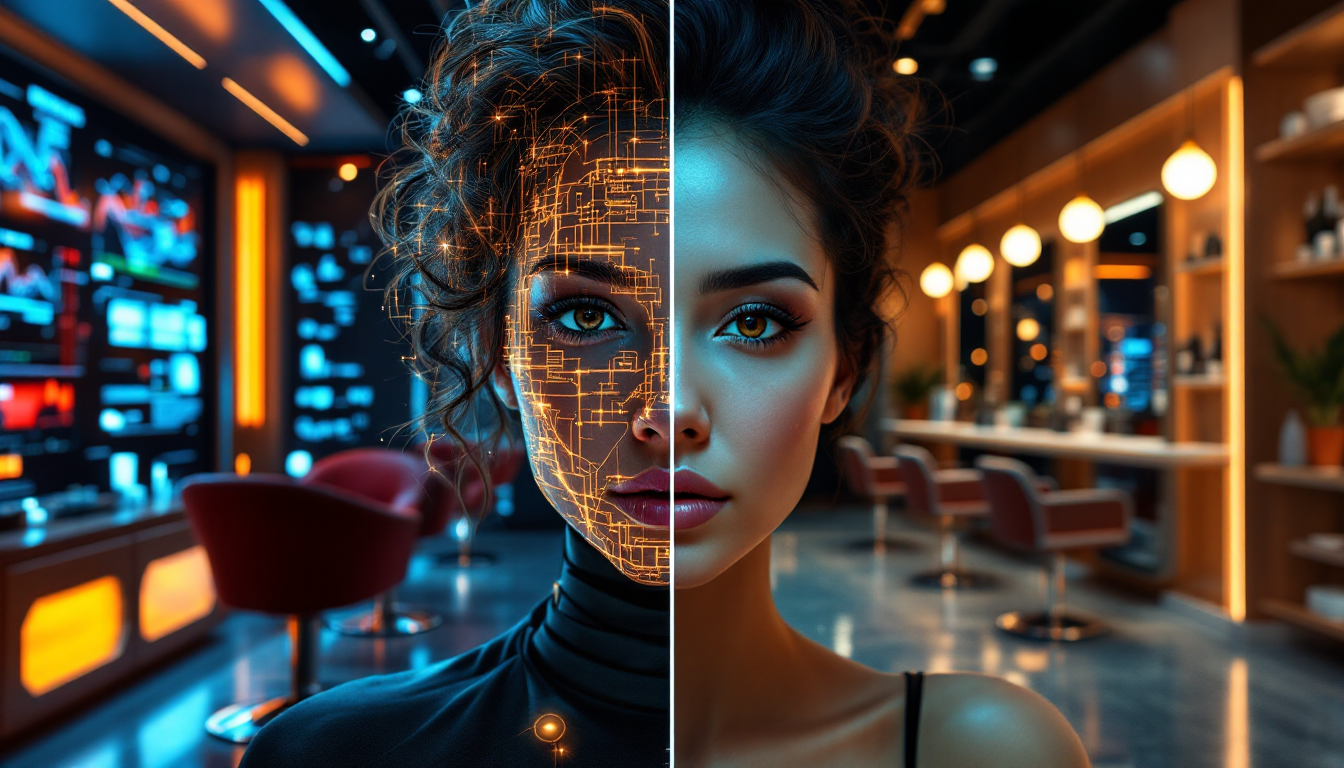
The Evolution of Hairstyle Trends: AI vs. Traditional Methods
Chapter 1: Introduction to Hairstyle Trend Prediction
Hairstyle trends have always been a powerful barometer of cultural shifts, individual identity and creative expression. From the polished up-dos of the 1950s to the edgy cuts of punk in the 1970s, each era’s signature look has been anticipated and celebrated by salons, manufacturers and media alike. Predicting which styles will capture the public’s imagination is critical not only for hairstylists but also for hair-care brands, wig and extension makers, and fashion houses that seek to align their product development and marketing with evolving consumer tastes. Traditionally, forecasters have relied on runway observations, street-style scouting, and expert intuition—a process that can be slow, costly and prone to bias. Today, artificial intelligence (AI) is radically transforming this landscape by mining vast visual and textual datasets to forecast emerging hair trends with unprecedented speed, scale and granularity. In this post, we’ll explore how AI is reshaping hairstyle trend prediction, compare it with time-honored human-driven methods, and consider how both approaches can co-exist to spark the next big look.
Chapter 2: The Role of AI in Modern Hairstyling
-
Data-Driven Speed and Scale
• AI platforms ingest millions of images from social media, celebrity appearances, runway shows and e-commerce sites, then use computer-vision algorithms to detect hairstyle attributes—length, color palette, texture and even accessories—at lightning speed. According to ReelMind, its AI models scan celebrity hair looks to uncover micro- and macro-trends long before they reach mainstream salons (reelmind.ai/blog/women-s-celebrity-hairstyles-ai-trend-forecasting).
• In fashion forecasting more broadly, McKinsey reports that AI integration can boost demand-prediction accuracy by up to 50%, enabling brands to optimize inventory and reduce markdowns (wornfashionjournal.com/fashion-forecasting-how-ai-is-changing-the-game). For hairstyling, this means salons and product manufacturers can plan stock levels of hair color, treatments and styling tools with far greater confidence. -
Hyper-Personalization and Virtual Try-On
• AI-powered virtual-try-on tools map up to 68 facial feature points, detect skin undertones and assess hair texture to recommend the most flattering styles and colors for each client. These systems learn continuously from thousands of successful makeovers, refining suggestions over time (smallbusinessweb.co/beauty-salons-offering-ai-hair-style-recommendations).
• Such personalization fosters a deeper salon–client relationship, reduces returns on color products and inspires clients with realistic previews of potential cuts or dyes. -
Sustainability and Waste Reduction
• More precise trend forecasting helps brands and salons avoid overproduction of hair-care products and styling tools. H&M, for example, is exploring AI’s potential to align product launches with actual consumer demand, a practice that can curb excess inventory and minimize environmental impact (theguardian.com/technology/2023/oct/01/ai-artificial-intelligence-fashion-trend-forecasting-style). -
Accelerating Design Cycles
• Companies like fashionINSTA have collapsed the traditional sketch-to-pattern timeline from months to minutes, allowing style teams to iterate rapidly and respond to nascent signals. Though focused on apparel, this methodology is directly transferable to hair accessory and wig design, accelerating the time from concept to salon floor (fashioninsta.ai/blog/ai-fashion-trend-forecasting-guide).
Chapter 3: Traditional Methods: Surveys and Stylist Expertise
-
Qualitative Observation and Expert Intuition
• Historically, trend forecasters have scoured runway shows, flipped through fashion magazines and patrolled city streets to spot emerging hairstyles. Expert stylists and trend analysts apply their cultural knowledge and years of experience to gauge which looks will resonate. This “eye test” approach captures nuances that data alone may overlook—such as a haircut’s cultural symbolism or a color’s seasonal mood (theguardian.com/technology/2023/oct/01/ai-artificial-intelligence-fashion-trend-forecasting-style).
• Brands have also relied on consumer surveys, focus groups and stylist panels to assess preferences. These methods bring direct feedback from end users but are time-intensive and limited in scope. -
Limitations of Human-Driven Forecasting
• Subjectivity: Different experts may interpret the same runway look in divergent ways, leading to conflicting predictions.
• Latency: By the time qualitative insights are consolidated, a trend may already be peaking or fading, risking missed opportunities or product-market mismatch (theguardian.com/technology/2023/oct/01/ai-artificial-intelligence-fashion-trend-forecasting-style).
• Scalability: Surveys and panels rarely capture the full breadth of global consumer behavior, especially among younger, digitally native demographics. -
Enduring Strengths
• Creative Insight: Stylists imbue trend forecasts with artistic vision and cultural context—from avant-garde editorial looks to regional hairstyle traditions.
• Deep Expertise: Long-tenured professionals can anticipate long-range trends (12–18 months out) based on shifts in pop culture, film and music that data signals alone may not surface.
Chapter 4: Comparative Analysis: AI vs. Traditional Methods
Advantages of AI
• Real-Time Analysis: AI digests new images and posts continuously, detecting trend upticks in hours rather than months (theguardian.com/technology/2023/oct/01/ai-artificial-intelligence-fashion-trend-forecasting-style).
• Unmatched Scale: Machine learning models process millions of data points—runway stills, street snapshots, search queries—far beyond human capacity (wornfashionjournal.com/fashion-forecasting-how-ai-is-changing-the-game).
• Enhanced Accuracy: McKinsey’s 50% improvement in forecast precision translates to better inventory management and product-launch timing.
• Personalization: AI tailors recommendations to individual clients, boosting satisfaction and reducing return rates (smallbusinessweb.co/beauty-salons-offering-ai-hair-style-recommendations).
Limitations of AI
• Long-Range Forecasting: AI models struggle to predict trends 18+ months ahead; they excel at accelerating shorter design cycles rather than distant trend projection (fashioninsta.ai/blog/ai-fashion-trend-forecasting-guide).
• Creative Nuance: Data-driven algorithms may overlook the cultural or emotional subtext that human stylists read intuitively.
Strengths of Traditional Methods
• Cultural Context: Stylists and forecasters interpret the “why” behind trends—social movements, film influences, music subgenres—ensuring products resonate on an emotional level.
• Creative Direction: Expert insight sparks groundbreaking looks, rather than merely amplifying patterns already in motion.
Complementarity: AI and Experts in Tandem
• A 2025 study from Pusan National University introduced “Top-Down Prompting” with ChatGPT to forecast sub-category trends—silhouettes, materials, colors. While the model accurately matched only 9 of 39 official forecasts, it uniquely flagged emerging ideas like gender fluidity and statement coats, demonstrating AI’s ability to surface nascent themes for human refinement (prnewswire.com/news-releases/pusan-national-university-researchers-show-how-ai-can-help-in-fashion-trend-prediction-302594606.html).
• The ideal workflow marries AI’s data-mining strengths—spotting micro-signals across vast pools—with expert stylists’ creative judgment, ensuring both speed and depth.
Chapter 5: The Impact of AI on Trend Prediction Accuracy
-
Statistic Gains
• Demand-forecast accuracy jumps by up to 50% with AI integration (wornfashionjournal.com/fashion-forecasting-how-ai-is-changing-the-game).
• Retailer Stitch Fix employs natural-language processing and trend simulation to predict demand 12 months out and pinpoint spikes—300% growth in “Barbiecore” and a 1,000% surge in “quiet luxury”—before mainstream adoption (vogue.com/article/how-stitch-fix-is-using-ai-to-predict-trends). -
Business Outcomes
• Reduced Waste: Leaner production runs for hair-care lines and styling tools.
• Inventory Optimization: Fewer stockouts and markdowns.
• Client Satisfaction: More on-trend cuts and colors, matched to individual features, drive repeat bookings and product loyalty. -
Innovation in Beauty and Hairstyling
• AI-powered color-palette detection and texture analysis from social and runway imagery let brands develop products aligned with true consumer preferences, not just seasonal color wheels (reelmind.ai/blog/art-hairstyles-ai-driven-trends-in-beauty-and-fashion).
Chapter 6: Future Outlook: The Integration of AI in the Hairstyling Industry
-
Democratization of Trend Access
• Small salons and independent stylists can leverage affordable AI tools—like GetHairVision—to access the same forecasting insights once available only to large brands, leveling the competitive playing field.
• Students and emerging designers gain real-time trend data, accelerating their learning curves. -
Hybrid Forecasting Models
• Brands will adopt tiered forecasting: AI for near-term signals and personalization; expert panels for long-range vision and creative themes.
• Collaboration platforms may evolve that allow stylists to annotate AI-generated trend boards with cultural insights and on-the-ground intelligence. -
Advances in Long-Horizon Prediction
• Ongoing research into transformer-based models and multimodal data fusion (combining social sentiment, video, text and image) promises to extend AI’s forecasting horizon beyond current limits. -
Ethical and Sustainability Considerations
• Responsible AI development will prioritize bias mitigation—ensuring models represent diverse hair textures and styles.
• Sustainable forecasting practices powered by AI can drive circular beauty initiatives, reducing overproduction and encouraging refillable or upcyclable packaging.
Chapter 7: Conclusion: Balancing Innovation with Tradition
AI has ushered in a new era of hairstyle trend forecasting—one defined by real-time analysis, unparalleled scale and hyper-personalization. It empowers brands, salons and stylists to respond swiftly to emerging micro-trends, optimize inventory and deliver bespoke client experiences. Yet, human expertise remains invaluable for its creative flair, cultural sensitivity and ability to craft long-range visions. The future of hairstyle prediction lies in hybrid models that unite AI’s data-driven strengths with stylists’ intuitive artistry. By embracing both innovation and tradition, the beauty industry can stay agile, sustainable and ever-inspired by the next frontier of hair expression.