Introduction to AI in Haircare
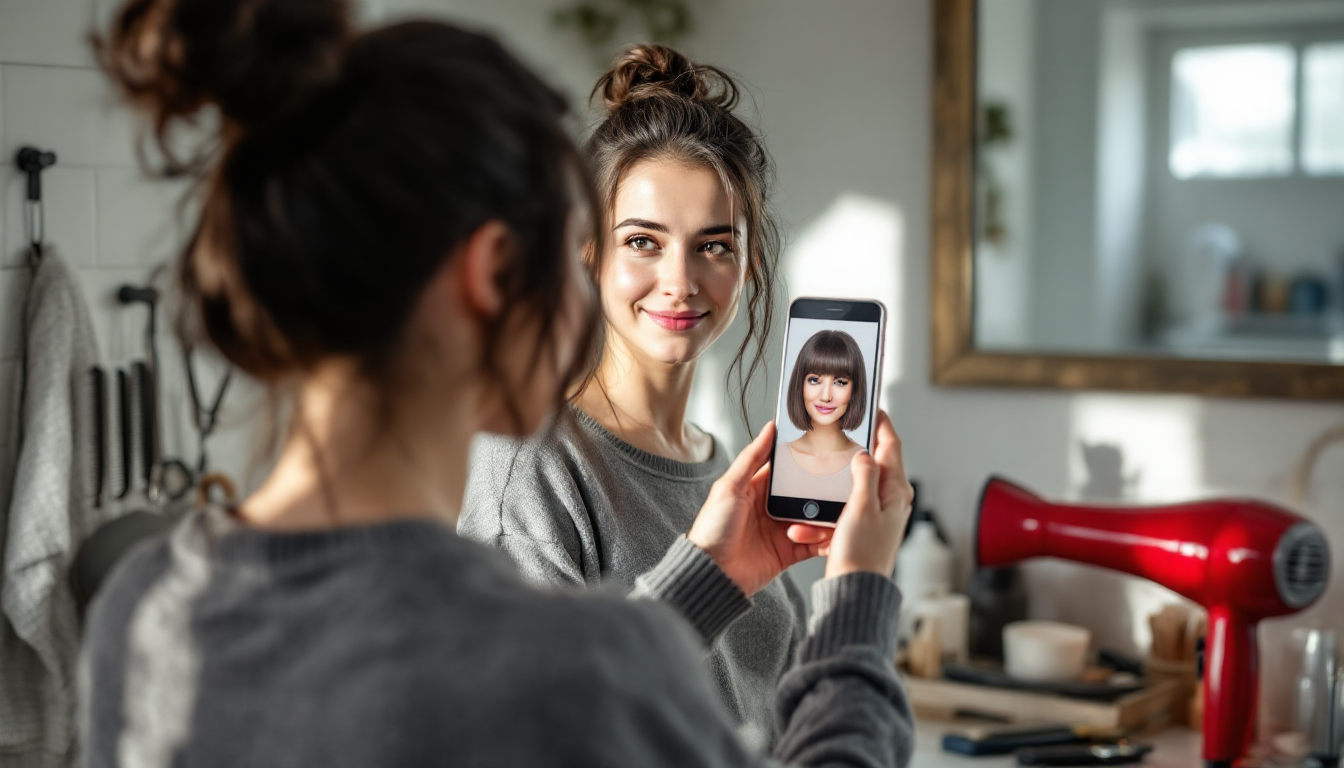
Artificial intelligence has moved beyond self-driving cars and voice assistants to reshape how we think about beauty and grooming. In haircare, AI tools are transforming both professional salons and our homes into virtual styling studios. Virtual try-ons, powered by AI and augmented reality (AR), now let you experiment with dozens of cuts, colors and textures in under a minute—eliminating the guesswork and anxiety of a dramatic haircut. In 2024 the global virtual try-on market for hair, makeup and eyewear was valued at $12.5 billion and is projected to skyrocket to $48.8 billion by 2030 (CAGR 25.5%) GetHairVision. Meanwhile, nearly 60 percent of professional salons have adopted remote consultations or VR demos to engage clients digitally. Whether you’re a busy parent, a design-minded millennial or simply seeking to avoid dry-shampoo disasters, AI in haircare is lowering barriers to personalization and giving everyone access to salon-grade expertise from their own bathroom mirror.
Benefits of AI Tools for At-Home Styling
- Hyper-personalization: AI platforms like HairMetrix (GetHairMD) and Lushair use image-based analysis to assess scalp health, follicle density and damage markers. They deliver data-backed recommendations for treatment, products and even lifestyle adjustments (HairMetrix, Lushair).
- Confidence & Risk Reduction: Virtual try-ons allow you to preview cuts—bixies, curtain bangs, perms and more—on your own face shape and hair texture before committing. GetHairVision reports over 10,000 users have found “their perfect haircut with just one photo” (GetHairVision).
- Time & Cost Savings: Skipping the salon means no travel time, appointment fees or impulse product purchases. Instead, you invest in one-off AI services or apps that pay dividends every time you tweak your look.
- Accessibility & Convenience: 72 percent of clients now prefer a virtual consultation before booking in-salon, and 64 percent say they’d pay a premium for that service (GetHairVision). Whether you live in a rural area or just hate the salon chair, AI brings professional guidance to you.
- Ongoing Monitoring & Progress Tracking: Apps like AI Hair Scanner & Health Check (iOS) track your hair density, shine, and health scores over time, helping you see the impact of new products, treatments or routines (App Store).
Popular AI Hairstyling Tools and Apps
GetHairVision – Virtual Hairstyle Studio
• Upload a selfie, choose from dozens of realistic styles (bob, pixie, perms, curtain bangs) and see yourself transformed in under a minute. 10,000+ users have discovered their ideal look with one photo. (gethairvision.com)
HairMetrix (GetHairMD)
• Physician-directed diagnostic tool using a handheld VEOS camera and AI to quantify follicle density, growth phases and scalp metrics—no lab work required. Delivers personalized treatment plans. (gethairmd.com)
Lushair
• High-resolution scalp and hair health tracker capturing 200+ images to analyze 16 “vital signs” (oil/redness state, damage, follicle health). Offers custom care protocols and product suggestions. (lushair.ai)
MYAVANA HairScope™
• Portable microscope-style device examines individual strands for dryness, split ends and breakage, then compiles data into a digital hair health profile. (myavana.com)
AI Hair Scanner & Health Check (iOS)
• Photo-based app analyzes scalp condition, density, shine and overall health score. Includes AI hairstyle/color recommendations and progress tracking. (apps.apple.com)
HairCounting.com
• AI hair density and follicle-counting tool used by dermatologists and trichologists with 99.9 percent accuracy in real-time density mapping. (haircounting.com)
GHD CurlFinder
• AI recommendation engine launched mid-2025 that mimics an in-salon consultation by analyzing hair type and styling goals to suggest the perfect heat tool. (vogue.com)
Revieve’s AI Hair Care Advisor & Color Artist
• SaaS beauty-tech suite offering personalized hair care routines and virtual color try-ons, integrated by retailers and salons worldwide. (wikipedia.org)
Perfect Corp’s AR Hair Tech
• APIs and consumer apps enabling virtual wigs, hairstyle simulations, frizz analysis and image enhancements to power retail and at-home experiences. (wikipedia.org)
Step-by-Step Guide to Creating a DIY Salon Experience
- Prepare Your Space
• Lighting: Position yourself facing natural or soft white light. Avoid backlighting that casts shadows.
• Background: Choose a clean, uncluttered wall. A plain background helps AI isolate your hair silhouette. - Capture Your Baseline
• High-resolution Photo: Use the highest camera resolution available. Pull hair back gently to frame your face fully.
• Angle Variety: Take front, left profile, right profile and top-down shots for scalp-health apps. - Scan and Analyze
• Scalp & Health Assessment: Launch an AI health tool (HairMetrix, Lushair or AI Hair Scanner). Follow prompts to capture multiple images. Review diagnostics on density, damage and oil/redness metrics. - Virtual Try-On
• Choose an App: Open GetHairVision or Perfect Corp’s hairstyle simulator. Upload your best front-facing shot.
• Explore Styles: Filter by length, texture and face-shape recommendations. Bookmark favorites.
• Color Experiments: Use Revieve’s Color Artist or hair-color try-on features to preview highlights or bold hues. - Review & Decide
• Side-by-Side Comparisons: Export or screenshot your top 3 virtual looks. Compare in a single document or gallery view.
• Consult a Pro (Optional): Share your digital try-on with a stylist via remote consultation. Many salons now accept digital images and VR previews. - Execute at Home
• Tutorials: Reference in-app tutorials or YouTube guides to cut, style or color. Invest in a quality set of shears, sectioning clips and heat tools recommended by AI (e.g., GHD CurlFinder suggestions).
• Maintenance Plan: Use AI-driven product suggestions from your scalp-analysis report. Track progress weekly or monthly.
Success Stories: Real Users Share Their Experience
• “I went platinum pink without regret.” – Jenna, 28. After using Revieve’s Color Artist, she tested three pastel shades virtually. The final look matched her virtual preview within 95 percent accuracy, according to her stylist.
• “Myashia found her confidence.” – Myashia, 34, struggled with post-covid hair thinning. Using HairMetrix, she tracked follicle density improvements month-to-month. Paired with a trichologist’s treatment plan, she saw a 12 percent density increase in three months.
• “One photo, one perfect pixie.” – Carlos, 42, dreaded salon visits. GetHairVision’s bixie cut preview convinced him to chop off 8 inches. He says, “I wouldn’t have dared go that short without seeing it on my own face first.” (gethairvision.com)
Potential Challenges and How to Overcome Them
• Lighting & Photo Quality: Poor lighting can confuse AI. Always use soft, uniform light and high-resolution cameras.
• AI Accuracy Limits: No tool is 100 percent. Cross-reference diagnostics with a professional if you have scalp or medical concerns.
• Privacy & Data Security: Review app privacy policies. Opt out of data sharing if possible. Delete images when done.
• Technical Barriers: Older smartphones may struggle with high-resolution captures. Consider a budget tablet or digital camera.
• Overwhelm from Options: Bookmark a shortlist of styles and colors. Limit yourself to 3–5 top choices before deciding.
Conclusion: The Future of At-Home Haircare
AI-driven haircare is no longer futuristic—it’s mainstream. With the global virtual try-on market poised to quadruple by 2030, and salons increasingly integrating VR/AI for remote consultations, home styling is evolving into a seamless hybrid of tech and tradition. As devices like VEOS cameras and AR headsets become more affordable, expect ever more sophisticated scalp diagnostics, real-time styling feedback and integrative wellness insights. Whether you’re a seasoned pro or a curious novice, AI tools are your ticket to consistent, confident salon-quality results from the comfort of home. Embrace the change: your next great hair day may be just an app download away.