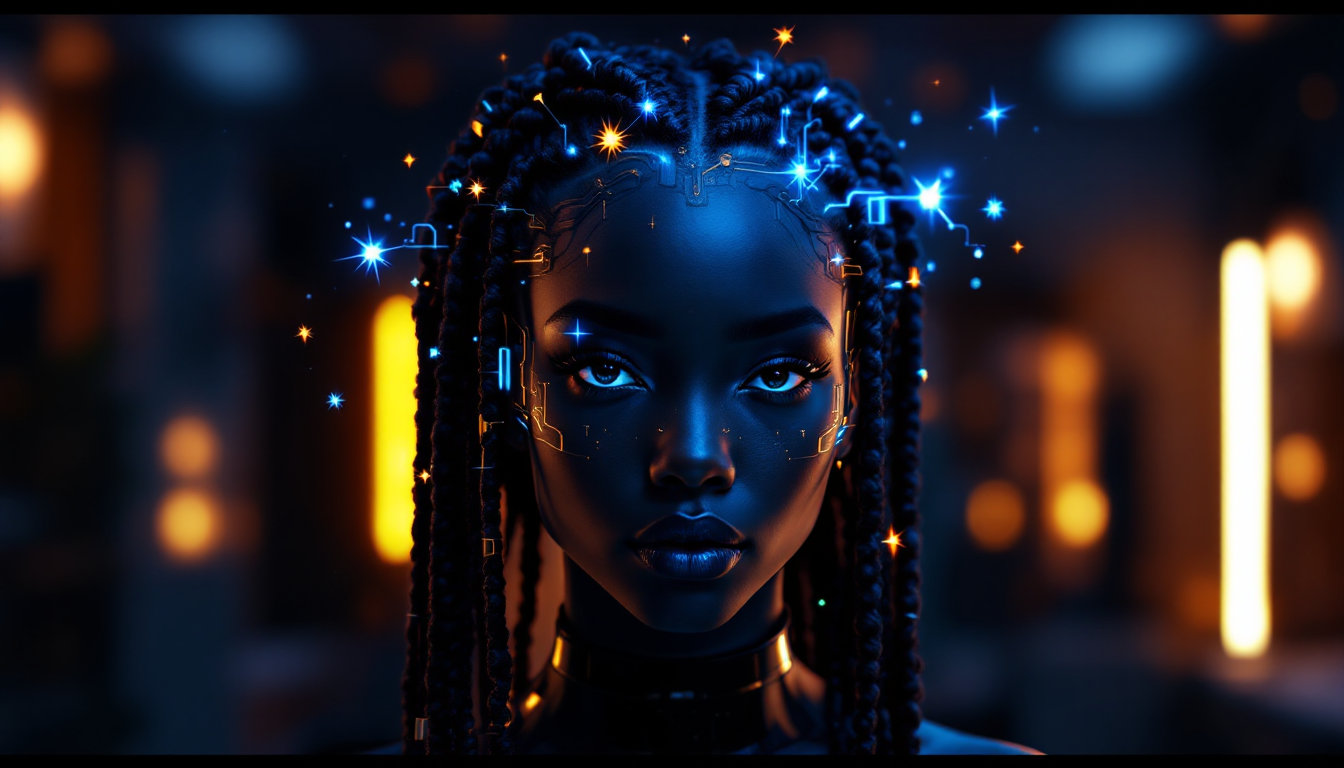
Introduction to AI in Hairstyling
As artificial intelligence expands its reach into creative industries, hairstyling has emerged as one of the most dynamic frontiers. Once the domain of scissors, combs, and human intuition, hair design now leverages machine learning, computer vision, and generative modeling to offer tools that reimagine, personalize, and historicize coiffure in real time. From AI-driven virtual try-on apps to text-conditioned 3D hair generators, today’s technologies empower both professionals and enthusiasts to experiment with looks that range from futuristic cuts to meticulously recreated cultural styles. Beyond convenience and novelty, AI in hairstyling holds promise for cultural preservation—digitally archiving centuries-old traditions—and for social empowerment, by expanding access to expert-level design advice regardless of geography or background. In this post, we trace how AI is reinventing classic cultural hairstyles, blending time-honored aesthetics with cutting-edge innovation, and we examine the ethical and technical challenges that arise when modern algorithms engage with rich, living traditions.
Classic Cultural Hairstyles: A Brief Overview
Before delving into AI, it’s important to appreciate the depth of meaning and craftsmanship behind classic cultural hairstyles:
• Nihongami (Japan)
Dating back to the Edo period, nihongami encompasses refined updos characterized by wax-sculpted “wings,” topknots, and decorative kanzashi combs. Styles such as suberakashi signified social status and occasion, from geisha ceremonies to samurai weddings (source: en.wikipedia.org/wiki/Nihongami).
• African Hair Threading
Originating at least as early as the 15th century, hair threading uses wool, cotton, or nylon to wrap individual strands into precise, protective patterns. Beyond beauty, threading carries symbolic meanings—denoting tribe, marital status, and rites of passage (source: en.wikipedia.org/wiki/African_hair_threading).
• Fulani Braids (West Africa)
Distinguished by cornrow braids radiating from the scalp and often interwoven with beads or gold cuffs, Fulani styles represent both functional grooming and cultural identity, passed down through generations.
• Indian Bridal Hairstyles
Lavishly adorned with flowers (gajra), jewels, and jewels-encrusted pins, bridal hairstyles such as the South Indian chignon reflect regional customs, religious symbolism, and familial heritage.
• Korean Binyeo Buns
Worn by women during ceremonies, the binyeo hairpin secures high buns and denotes social rank and marital status in traditional hanbok attire.
These diverse practices embody centuries of innovation, yet many risk fading as younger generations adopt globalized, fast-fashion trends. AI offers a bridge—digitally preserving each nuance while allowing contemporary reinterpretations.
The Role of AI in Modern Design
Today’s AI platforms bring cultural hairstyles into the digital design toolkit, enabling users to visualize, customize, and remix heritage styles with unprecedented ease:
• a1.art Traditional Hairstyle Templates
Through prompt-driven image and video templates, designers can generate faithful recreations of Indian bridal updos, Japanese nihongami, or Korean ceremonial buns. Users supply a text prompt or reference image, then tweak color, ornamentation, or volume in a few clicks (source: a1.art).
• AI Hairstyle Try-On APIs (Ai Photocraft, AIhairstyles.com)
By analyzing facial geometry, lighting, and hair texture, these APIs superimpose a library of dreadlocks, braids, curls, and cultural variants onto user selfies. The result is a realistic, interactive virtual makeover that respects individual features (source: aiphotocraft.com).
• Style Guru: Culturally Informed Advice
Built on conversational AI (ChatGPT-4o), Style Guru specializes in regionally specific recommendations: for instance, suggesting a Korean binyeo bun for a wedding or a West African threading pattern for a festival. It contextualizes style choices within cultural narratives and event protocols (source: yeschat.ai).
These platforms democratize access to expert-level styling, allowing both professionals and novices to experiment with looks that once required years of apprenticeship. At the same time, they surface critical questions about authorship, cultural ownership, and the risks of algorithmic bias.
Case Studies: Tradition Meets Technology
-
Fulani Futures by Fatoumata Diakité
Artist and designer Fatoumata Diakité’s “Fulani Futures” project confronts AI’s tendency to oversimplify cultural hairstyles. By refining her MidJourney prompts—from generic “braids” to “geometric tension-based scalp weaving referencing museum archives”—Diakité achieved richly detailed, culturally authentic visuals. Her approach, documented in Alibaba’s insights on combating auto-censorship, has become a blueprint for creators across West Africa and the diaspora, demonstrating how prompt engineering can reclaim heritage imagery (source: alibaba.com). -
DiffLocks: 3D Hair Generation
The DiffLocks framework employs diffusion models trained on a synthetic dataset of 40,000 hairstyles to reconstruct lifelike 3D hair geometry from a single photograph. Crucially, it captures the tight coils and texture of Afro-centric styles, providing a path toward digital avatars and virtual fashion that respect structural nuances (source: arxiv.org/abs/2505.06166). -
HAAR: Text-to-3D Strand Generation
HAAR advances beyond surface meshes, generating full strand-based 3D hair according to text prompts. This allows precise control over volume, curl tightness, and layering—features vital for authentically rendering styles like African threading or Japanese shimada buns in VR or AR environments (source: arxiv.org/abs/2312.11666). -
HSC-Net: Mask R-CNN + GAN Conversion
By segmenting hair and face regions with Mask R-CNN and overlaying new styles via GANs, HSC-Net enhances virtual try-on realism. Although not yet culture-focused, this architecture signals future applications where users could seamlessly switch among traditional coiffures in video or livestream contexts (source: mdpi.com/2079-9292/11/12/1887).
The Impact on Fashion and Cultural Preservation
AI’s deep integration into hairstyling has reverberations beyond aesthetics. On one hand, digital archives and generative tools preserve endangered traditions, giving historians and communities new ways to document and share their heritage. Virtual try-ons can educate younger generations about the cultural significance behind each twist and ornament. Fashion designers increasingly incorporate AI-inspired cultural motifs into runway shows, collaborating with technologists to create hybrid collections that honor origin stories while pushing stylistic boundaries.
Yet these advances also raise ethical questions. When algorithms trained on biased, Western-centric data predominate, they risk misrepresenting or erasing subtle cultural markers. As Diakité’s work shows, intentional prompt design and community-driven datasets are essential to guard against cultural appropriation. Moreover, intellectual property issues emerge when generative models sample from museum photographs or traditional art without clear attribution.
Responsible AI hairstyling thus requires:
• Inclusive datasets that represent diverse hair textures and styles.
• Collaboration with culture bearers to validate designs and metadata.
• Transparent attribution of source materials and design influences.
• Ethical guidelines for commercial use, ensuring community benefits.
Future Trends in AI Hairstyling
Looking ahead, several converging trends promise to further transform how we experience cultural hairstyles:
• Augmented Reality Mirrors and Glasses
Real-time AR headsets will let users “wear” virtual braids or nihongami updos in everyday settings, guided by AI assistants that adapt style to lighting, movement, and personal preferences.
• Immersive VR Salons
Virtual salons in the metaverse will offer co-creative sessions with AI stylists and global artisans, enabling clients to customize and purchase 3D-printed hair ornaments or even digitally store ceremonial looks for posterity.
• Generative Style Marketplaces
Platforms may emerge where AI-generated cultural hairstyle assets (3D meshes, ornament designs, instructional animations) are bought, sold, and licensed—empowering creators and heritage communities to monetize and protect their traditions.
• On-Device AI and Edge Computing
As models shrink, smartphone apps will enable fully offline, privacy-preserving virtual try-ons and text-to-3D hair generation, democratizing access while safeguarding user data.
• Ethical Certification and Metadata Standards
We can expect the rise of “cultural authenticity” badges—verifying that AI hairstyles adhere to community-endorsed standards—and embedded metadata tracing each design’s provenance.
Conclusion: Embracing Progress with Respect to the Past
AI’s entry into the world of hairstyling offers a powerful lens through which to view the intersection of technology, culture, and creativity. By digitally preserving traditional practices—whether the sculpted elegance of nihongami, the precision of African threading, or the intricate geometry of Fulani braids—algorithms can help keep these art forms alive. At the same time, robust ethical frameworks and community partnerships are crucial to ensure AI amplifies, rather than appropriates, cultural heritage. As we move forward, the goal is not to replace human artisans, but to equip them—and enthusiasts everywhere—with tools that honor the past even as they innovate for the future. In marrying tradition with technology, we open new chapters in the story of human expression, reminding us that every braid, bun, and weave carries both history and hope.