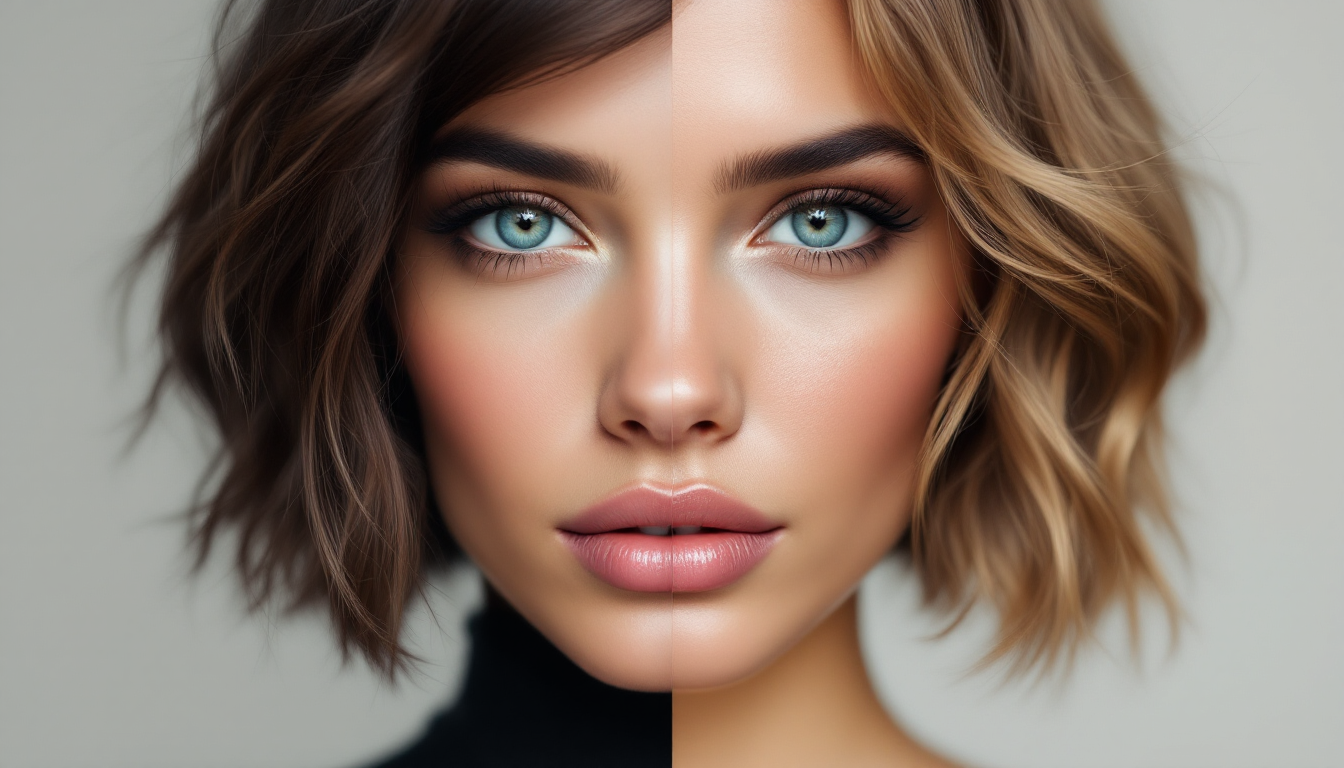
Introduction to AI in Hairstyling
As personal style evolves into a data-driven art form, AI has emerged as the next frontier in hairstyling. “Face framing”—the practice of sculpting cuts and colors around your facial contours to accentuate eyes, cheekbones, jawline and more—has long been the domain of expert stylists. Today, AI-powered tools bring that same precision to everyone with just a selfie. By mapping facial landmarks and simulating hundreds of looks in seconds, apps like FaceHair (https://www.lionaibox.com/ai/facehair?utm_source=openai) and Airbrush AI Hairstyle (https://www.aitoolsspace.com/en/tools/hairstyle-ai?utm_source=openai) empower you to explore the ideal cut, length and hue tailored uniquely to your features. In this post, we’ll explore how AI analyzes your face shape, recommends personalized styles and even predicts colors that make your best features pop—transforming hairstyle discovery into an exact science.
- Understanding Face Shapes and Features
Every face falls broadly into categories—oval, round, square, heart, diamond and oblong—each with its own ideal framing strategies:
• Oval: Balanced proportions; suits most styles. Framing focuses on soft layers at brow and chin level.
• Round: Wider cheeks and minimal angles. Long layers and side partings create vertical lines to slim the face.
• Square: Strong jawline and forehead width. Wispy bangs or soft waves soften angles.
• Heart: Wider forehead tapering to a narrow chin. Chin-length bobs or side fringes balance proportions.
• Diamond: High cheekbones with narrow forehead and chin. Volume at forehead and chin areas evens out.
• Oblong/Rectangular: Longer face shape. Full bangs and mid-length cuts reduce apparent length.
Identifying your shape is the foundation of effective face framing. AI tools automate this classification, guiding you toward cuts and hues that harmonize with your natural architecture.
- How AI Analyzes Facial Features
Modern AI hairstyle platforms perform a multi-step facial analysis:
a. Landmark Detection
• Algorithms detect key points—hairline, brow arch, cheekbones, jawline (FaceHair).
• Depth-sensing and contour mapping capture subtle curves.
b. Shape Classification
• Systems like Hairstyle AI’s Face Shape Detector classify your face in under two seconds (hair-style.ai).
• Over 200 predefined templates drive personalized recommendations.
c. Feature Prioritization
• Eyes, lips, forehead height and chin length feed into style-matching engines—ensuring that fringe density, parting angle and layer placement accentuate rather than obscure.
d. Real-Time Overlay
• Instantaneous rendering of virtual hairstyles enables you to compare looks side by side with high photorealism (Airbrush AI).
- Choosing the Perfect Haircut with AI
With your face shape mapped, AI leverages vast style libraries to suggest cuts that highlight your best angles:
• Library Scale: FaceHair offers hundreds of trend-driven and classic cuts, from textured lobs to curtain bangs, each algorithmically matched to your contours.
• Precision Preview: A/B style comparisons let you see, for example, how light face-framing layers soften a square jaw versus blunt ends that emphasize structure.
• Confidence Boost: Users of virtual try-on tools report a 40% increase in trust that “before” and “after” will match real life (Wifitalents).
By testing lengths, angles and layers in silico, you arrive at a salon appointment with a crystal-clear vision—and your stylist with exact references.
- AI-Driven Color Selection to Enhance Features
Beyond cut, AI’s mastery of color science elevates face framing:
• Skin-Tone Analysis: Algorithms evaluate your undertones and melanin distribution to recommend complementary shades—warm or cool, muted pastels or vivid primaries.
• Contrast Optimization: Users with fair skin and light eyes might be guided toward soft balayage highlights that draw attention upward, while deeper complexions pair beautifully with rich mahogany or caramel lowlights.
• Accuracy Gains: AI in cosmetology has improved hair color matching accuracy by 30% and boosted user confidence in predicted results by 40% (Wifitalents).
• Conversion & Engagement: Virtual hair color try-ons can increase purchase conversion rates by up to 2.5× and keep consumers on site 360% longer (Gitnux).
With color simulations layered over your facial map, AI pinpoints the exact tones that illuminate your complexion and harmonize with your personal palette.
- Real-Life Examples and Success Stories
The rise of AI in hairstyling is already reshaping both consumer and professional experiences:
• YouCam Makeup (Perfect Corp)
– Over 1 billion downloads by October 2025.
– Combines makeup and hairstyle simulations, letting users “try on” entire beauty looks before buying (Eweteh).
• Style My Hair by L’Oréal
– AI-powered salon tool recommending cuts and colors based on face shape, skin tone and current trends.
– Helps stylists up-level consultations and ensures clients leave satisfied (Eweteh).
• Artisse AI
– 5 million+ images generated by early 2024; $6.7 million in funding.
– Enables users to visualize complex scenarios—hairstyles in motion, under different lighting—fostering confidence and creativity (Wikipedia).
Consumers report higher satisfaction, greater willingness to experiment and fewer costly color corrections when they leverage AI-driven previews.
- Future Innovations in AI Hairstyling
The next wave of AI hairstyling promises even deeper personalization:
• 3D Scanning & Holographic Try-Ons: Realistic volumetric models rendered in AR glasses or VR headsets.
• Predictive Trend Forecasting: AI trained on social media, runway shows and celebrity stylists to recommend tomorrow’s hottest cuts today.
• Integrations with Wearables: Smart mirrors that track hair health metrics—damage, porosity—and suggest maintenance cuts or color refreshes.
• Collaborative AI-Stylist Platforms: Hybrid human-AI consultations where stylists adjust AI proposals in real time, blending data precision with artistic intuition.
As computing power and computer-vision algorithms advance, AI hairstyling will become as fluid and dynamic as your own personal style journey.
Conclusion: Embrace AI for Personalized Beauty
Face framing is no longer guesswork—it’s a marriage of art and data science that honors your unique facial geometry. By adopting AI-driven tools, you gain
• Clarity: Immediate, photo-realistic previews of cuts and colors.
• Confidence: Data-backed recommendations that truly suit your features.
• Creativity: The freedom to experiment without commitment.
Whether you’re a style newcomer or a salon pro, AI hairstyle platforms like FaceHair, Airbrush AI and Style My Hair are revolutionizing how we discover and perfect our best looks. Embrace the art of AI face framing, and unlock a new era of personalized beauty—one pixel at a time.