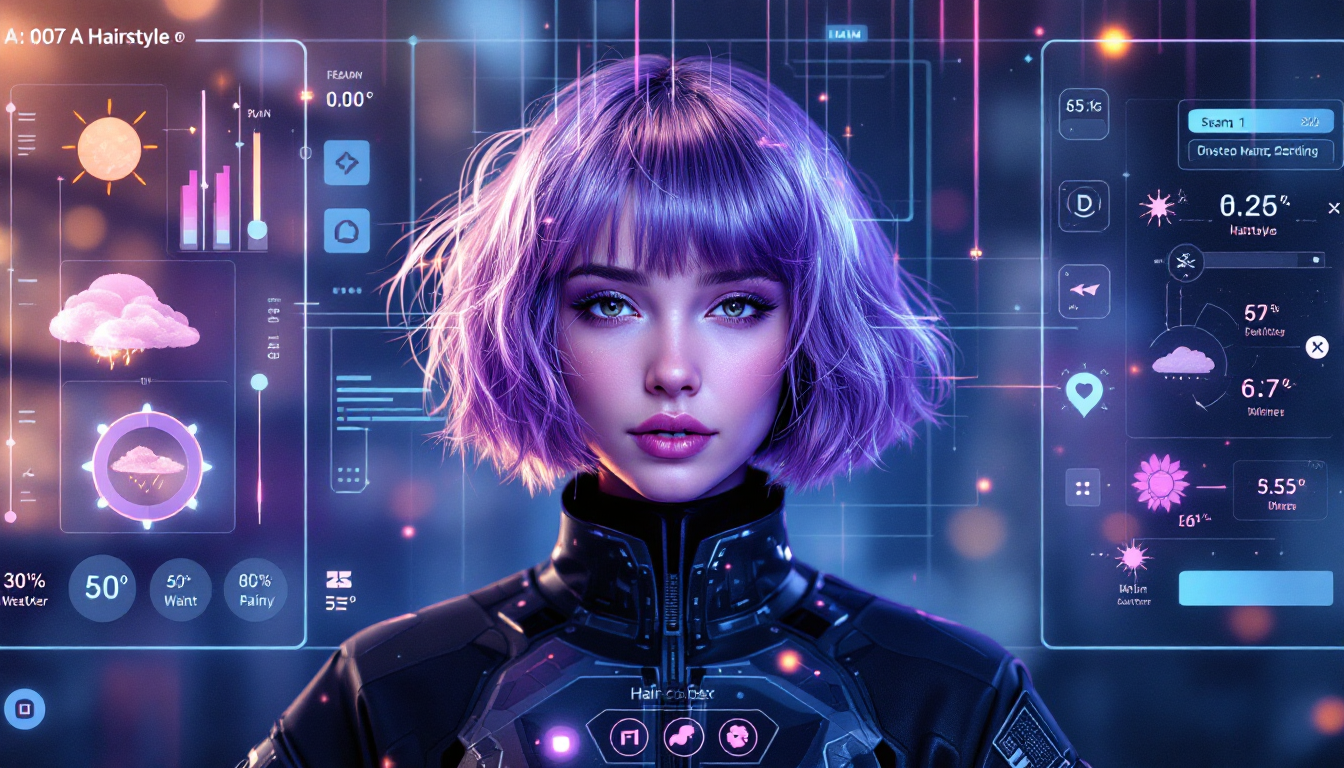
Introduction to AI in Hairstyling
The art of hairstyling has always balanced creativity, personal expression and practical considerations—from hair health to climate-related maintenance. Today, artificial intelligence (AI) is revolutionizing every step of this process. By harnessing computer vision, machine learning and neural simulation models, AI systems can analyze facial features, predict style–weather interactions, forecast seasonal color palettes and generate photorealistic previews in real time. Early adopters in the beauty tech space include:
• VisualGPT’s “AI Hairstyle Changer,” which adapts texture, lighting and proportions to a user’s face, letting you test spring layers, summer highlights, autumn coppers or sleek winter cuts in seconds (https://breakingac.com/news/2025/nov/21/seasonal-hair-transformations-made-simple-with-visualgpt-ai-hairstyle-changer/?utm_source=openai).
• TryHair.ai’s Face Shape Detector, launched for Spring 2026, that analyzes head geometry and hair texture to recommend flattering cuts—think airy butterfly layers for long faces or modern mullets for round profiles (https://tryhair.ai/spring_equinox?utm_source=openai).
• ReelMind.ai’s NLP-driven trend forecasting, which scans social media images, hashtags and location metadata to predict must-have seasonal colors like dusty rose and warm chestnut for fall (https://reelmind.ai/blog/fall-short-hair-colors-ai-driven-seasonal-style-guides?utm_source=openai).
Under the hood, advanced neural architectures such as “Quaffure” (arXiv:2412.10061) and “HairFormer” (arXiv:2507.12600) simulate realistic hair deformations in real time, paving the way for dynamic, moving previews that closely mimic how styles behave under wind, humidity or motion. Together, these breakthroughs are making hairstyling more personalized, data-driven and risk-free—no more “hair regret” after a drastic chop.
Understanding Seasonal Hair Trends
Every season brings unique demands on hair, from spring’s gentle breezes to summer’s humidity, autumn’s crisp air and winter’s drying cold. Stylists and trend forecasters have traditionally guided clients toward:
• Spring: Lightweight layers, pastel highlights and face-framing fringe to celebrate renewal.
• Summer: UV-protected color boosts, humidity-resistant textures (beach waves, braids) and cooling up-dos.
• Autumn: Rich, earthy tones—deep caramel, warm chestnut, muted plum—and versatile mid-length cuts for layering.
• Winter: Sleek, polished styles with strong shine; protective treatments to counteract static and dryness.
AI is transforming how these trends are identified and translated into actionable style guides. For example, ReelMind.ai’s analysis of millions of user-generated images and geotagged posts has surfaced 2025 fall color favorites: deep caramel, dusty rose, ash blonde with warm undertones and muted plum (https://reelmind.ai/blog/fall-short-hair-colors-ai-driven-seasonal-style-guides?utm_source=openai). Meanwhile, photorealistic “mood reels” generated with Flux Pro and PixVerse V4.5 models allow creatives to visualize how an “Iced Rose Gold” highlight shifts under overcast skies versus golden autumn sunsets (https://reelmind.ai/blog/highlight-color-trends-predicting-next-season-s-hair-fashion-with-ai?utm_source=openai).
By combining these insights with individual face shape and hair texture data, AI ensures that seasonal trends are not just broadly appealing, but tailored to each user’s unique canvas.
The Role of AI in Predicting Weather-Suited Styles
Beyond aesthetics, effective hairstyling must account for local climate variables—temperature, humidity, wind, UV index and precipitation. Fashion-tech pioneer Glance AI has demonstrated how merging live weather APIs, geolocation, historical user behavior and style context can produce real-time outfit recommendations (https://glance.com/us/blogs/glanceai/ai-shopping/ai-weather-fashion-shopping?utm_source=openai). A similar methodology applied to hair could:
• Recommend humidity-resistant textures—beach waves with anti-frizz serums or micro-braids—for tropical summers.
• Suggest protective up-dos and hydrating masks when humidity is low and cold air threatens hair brittleness.
• Propose UV-filtering gloss treatments and sun-kissed highlights on sunny vacation days.
• Flag windy or rainy forecasts and offer secure styles—slicked-back buns, topknots or headbands—to maintain polish.
Imagine an app that, each morning, cross-references your GPS location with local weather data and your hair profile, then pushes a customized tutorial: “74°F, 80% humidity—try these humidity-blocking spray techniques and a waterproof scrunchie-friendly braid tutorial.” This level of predictive intelligence helps users stay stylish and protected, all year round.
Practical Benefits of AI in Daily Hairstyling
Integrating AI into your daily styling routine delivers tangible advantages:
- Confidence and Experimentation: Virtual previews from VisualGPT or TryHair.ai let you trial cuts and colors risk-free, building confidence before stepping into the salon.
- Time and Cost Savings: AI-driven recommendations minimize trial-and-error visits. Knowing exactly which style suits your face and climate reduces costly corrective treatments.
- Hair Health Optimization: Weather-aware suggestions guard against dryness, breakage and color fading by recommending appropriate products and techniques for current conditions.
- Personalized Trend Adoption: Rather than one-size-fits-all trend reports, AI matches the latest seasonal palettes—be it dusty rose fall tones or platinum winter highlights—to your unique hair type and preferences.
Underpinning these benefits are advanced neural simulation engines like “Quaffure” and “HairFormer,” which render dynamic, photorealistic movement so accurately that you can see how a proposed hairstyle will react to wind or head turns before committing to it.
User Stories: Success with AI-Powered Trends
Case Study 1: Summer-Ready Braids
A Chicago commuter used an AI hair-weather app powered by a Glance-style API. Facing sultry 85°F, 70% humidity days, she received a suggestion for micro-braids with a built-in anti-frizz serum. Her morning routine halved in time, and she arrived polished despite the muggy climate.
Case Study 2: Fall Color Confidence
Inspired by ReelMind.ai’s seasonal color forecast, a New York stylist recommended “warm chestnut balayage” to a client who virtually tested the shade under autumn light via VisualGPT. The client loved the on-brand look so much she pre-booked her next color session two months early.
Case Study 3: Winter Dryness Prevention
A Seattle resident relying on AI-driven haircare alerts learned to swap her everyday shampoo for a sulfate-free, moisturizing formula when predicted overnight lows dipped below freezing. The change eliminated winter frizz and breakage, restoring shine by January.
These real-world successes underscore how AI tools are not just futuristic novelties but practical style partners.
Future Developments in AI and Hairstyling
The horizon for AI in hairstyling is bright:
• Real-Time AR Mirrors: Next-gen salons will feature augmented-reality mirrors powered by HairFormer-style engines, letting clients see and adjust cuts and colors as the stylist works.
• Multimodal Personal Stylists: AI agents that combine your wardrobe data, upcoming events calendar and local climate forecasts to devise head-to-toe seasonal looks, hair included.
• Sustainable Salon Practices: AI-optimized product usage and shade mixing could cut waste, reducing the carbon footprint of hair color and styling services.
• Emotion-Aware Styling: Future models may incorporate sentiment analysis—adjusting styles to match not just seasons but moods, events or social trends in real time.
As neural techniques like Quaffure continue to improve simulation fidelity and speed, the line between virtual trial and real-world result will vanish, democratizing professional-grade styling for everyone.
Conclusion: Embracing Technology for Style
Seasonal hair trends have evolved from salon-only forecasts to dynamic, data-driven, hyper-personalized experiences. Today’s AI tools—VisualGPT’s seasonal previews, TryHair.ai’s face-shape matches, Glance-inspired weather-aware stylists and ReelMind.ai’s trend-forecasting engines—empower users to look and feel their best in every climate. By embracing these innovations and the sophisticated neural engines behind them, you can:
• Experiment with confidence, risk-free.
• Optimize hair health against seasonal challenges.
• Stay ahead of trends while honoring your unique features.
• Reduce waste, time and cost in your beauty routine.
The future of hairstyling is intelligent, adaptive and deeply personal. As AI continues to refine how we predict, visualize and execute seasonal looks, your next great hairstyle is only a tap—and a forecast—away.