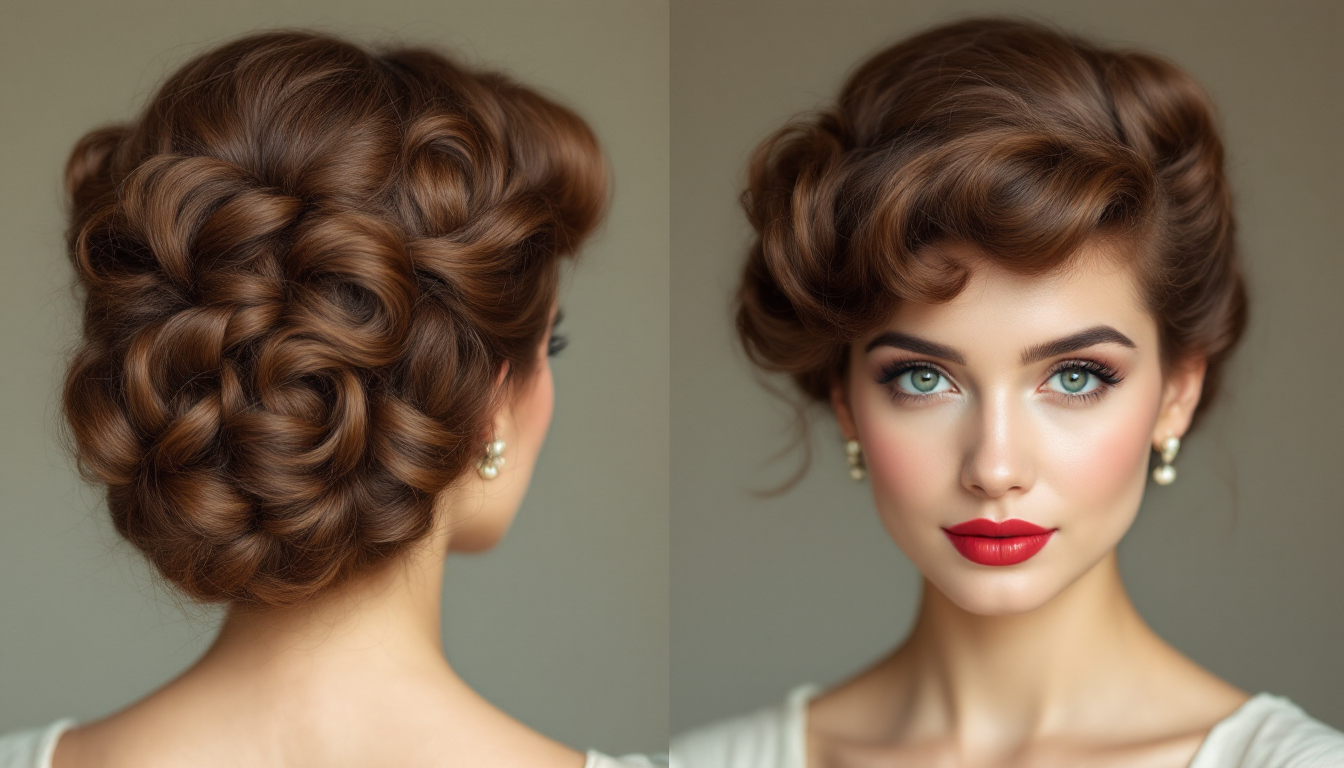
Introduction to AI in Hairstyling
Artificial intelligence has rapidly permeated creative industries, and hairstyling is no exception. From virtual try-on apps to deep-learning frameworks that reconstruct intricate 3D hair geometry, AI tools are revolutionizing how we conceive, design and experience hair. No longer confined to salon chairs or Photoshop brushes, digital hairstyling platforms now enable professionals and enthusiasts alike to explore vintage looks—finger waves from the Roaring Twenties, the bouffant of the Sixties or the voluminous curls of the Eighties—at unprecedented speed and fidelity. Behind the scenes, image-conditioned diffusion models, text-to-3D generators and pose-invariant transfer techniques learn from tens of thousands of hairstyle examples to deliver hyper-realistic results. As a result, AI is not only automating labor-intensive retouching tasks but also unlocking entirely new creative possibilities, blending nostalgia with cutting-edge technology.
The Charm of Vintage Hairstyles
Vintage hairstyling carries the emotional weight of bygone eras:
• 1920s finger waves evoke the glamour of art-deco jazz clubs.
• 1950s victory rolls and pin curls recall silver-screen starlets.
• 1960s beehives and flip hairstyles channel mod culture and bold femininity.
• 1980s big hair, crimped textures and side ponytails celebrate daring self-expression.
These styles endure because they tell stories—of social change, cultural icons and personal identity. Today’s fashion aficionados seek authenticity, yet they crave the convenience and experimentation that modern technology affords. AI bridges that gap, letting users explore and personalize classic silhouettes in a matter of clicks.
How AI is Bringing Back Classic Styles
Several AI-powered platforms simplify vintage hairstyle recreation:
• PixelDojo offers pre-trained filters for 1920s finger waves, Eton crops and Marcel waves. Users upload a portrait and instantly apply studio-quality retro styling (Create Stunning 1920s Hairstyles with AI).
• Pippit’s “Retro Hairstyle AI” and “80s AI Filter Hair” templates let creators overlay authentic 1950s curls or bold 1980s volume onto images and videos, with adjustable intensity and color (Pippit).
• MakeImg.AI, Retro Style AI, Postcrest and PhotoGPT AI extend these capabilities by adding film grain, sepia toning and subtle color shifts—completing the vintage illusion across the entire portrait (AI Vintage Style Transfer).
Beyond surface filters, advanced deep-learning frameworks push the envelope:
• DiffLocks (2025) reconstructs precise 3D hair geometry from a single photo using diffusion-transformer models trained on 40,000 synthetic hairstyles (DiffLocks).
• HAAR (2023) generates strand-based 3D hair directly from text prompts—ideal for production-level visual media (HAAR).
• HairFIT achieves pose-invariant hairstyle transfer, seamlessly mapping a vintage style onto subjects photographed from different angles (HairFIT).
Together, these tools automate what once required hours of manual retouching or sculpting in 3D software.
Technology Meets Nostalgia: Digital Enhancements
AI doesn’t merely slap on a filter; it can infuse images with period-accurate textures and lighting. Vintage-style tools incorporate:
• Film grain algorithms that mimic analog footage.
• Aged color shifts—warm sepia or faded pastel palettes.
• Subtle vignette or light-leak effects around the frame.
On the user side, apps such as Hairstyles AI Makeover (updated December 2025) let anyone preview a multitude of retro styles—marcel waves, 1950s bouffants or 1980s side ponytails—on their own selfies with realistic hair physics and lighting (Hairstyles AI Makeover). TryHairstyle, another 2025 release, transforms a single portrait into dozens of stylized vintage looks for side-by-side comparison before a real-world salon visit (TryHairstyle). These virtual makeovers enhance confidence, reduce decision fatigue and encourage playful experimentation.
Case Studies: Successful Vintage Revivals
- PixelDojo’s Jazz-Age Campaign
A heritage fashion label launched an online “Roaring Twenties” lookbook by partnering with PixelDojo. In two days, user-generated content featuring finger waves and cloche hats increased engagement by 250% (Create Stunning 1920s Hairstyles with AI). - Pippit for Social Media Marketing
Beauty influencers used Pippit’s 80s filter on TikTok, generating a viral hashtag that garnered over 5 million views in a week, driving brand awareness for a retro denim line (80s AI Filter Hair). - Editorial Revival via DiffLocks
A digital magazine employed DiffLocks to reconstruct a 1950s updo in 3D for an interactive web feature. Readers could rotate the hairstyle, view internal wave patterns and understand the engineering behind victory rolls—blurring lines between history and technology (DiffLocks).
Advantages of Using AI for Hairstyling
• Speed & Scalability: Instant retro transformations versus hours of salon styling or manual retouching.
• Affordability: Low-cost or free tools democratize access—no professional hairstylist required.
• Personalization: Fine-tune curl tightness, volume and color to match skin tone and face shape.
• Creativity: Mix and match eras—1920s waves with 1980s color pops—without risk or commitment.
• Sustainability: Virtual try-ons reduce waste from trial-and-error hair products and accessories.
Future Trends in AI and Vintage Hairstyles
• Real-Time AR Mirrors: In-store smart mirrors powered by generative AI will overlay vintage styles live, adjusting to head movements and lighting.
• Mixed-Reality Styling: VR platforms where users “sculpt” retro updos in fully immersive 3D.
• Voice-Driven Design: Tell your device “Give me a 1960s beehive with soft highlights,” and watch it render in seconds using models like HAAR.
• AI-Optimized Products: Shampoos and setting sprays formulated by analyzing digital styling algorithms to enhance real-world hold and texture.
• Ethical Frameworks: As AI-generated content grows, industry guidelines will emerge to ensure authenticity, respect for cultural heritage and transparency in digital representations (see user debates on authenticity in vintage fashion (AI use rant)).
Conclusion: Embracing the Past with Modern Technology
The fusion of AI and vintage hairstyling offers more than nostalgic flair: it empowers creatives, brands and everyday users to explore historical aesthetics in a sustainable, accessible way. From one-click filters to advanced 3D reconstruction, these technologies revive classic looks with unprecedented realism and convenience. As we refine ethical standards and integrate AI more deeply into beauty and fashion, the past and future of hairstyling will continue to converge—inviting us all to rediscover iconic styles and write the next chapter of hair history.