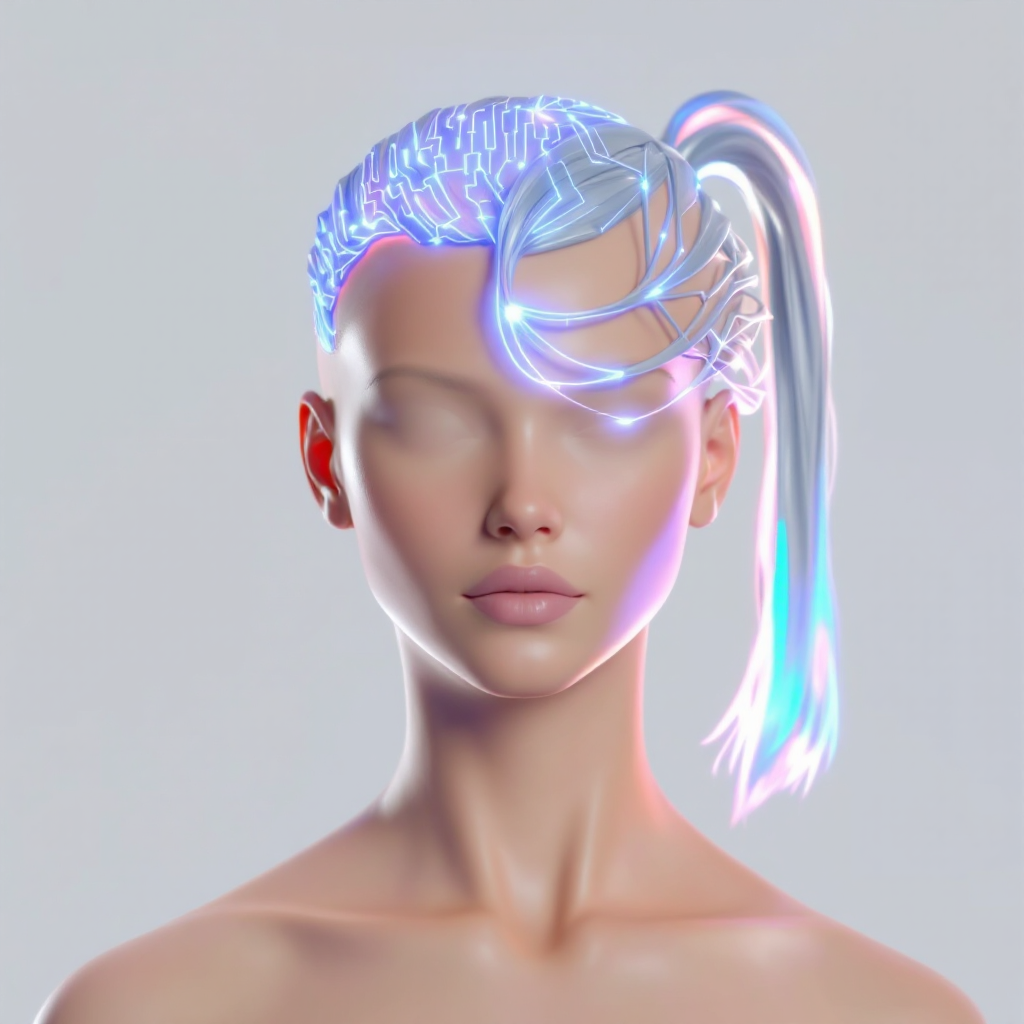
Introduction to AI Hairstyle Predictions
Artificial intelligence has transformed countless industries, and personal grooming is no exception. Today’s AI hairstyle prediction tools analyze your unique facial structure, hair properties, and even environmental factors to recommend cuts and colors tailored just for you. No longer must you rely solely on magazine clippings or guesswork at the salon—AI-powered apps let you preview dozens of hairstyles in seconds. Behind the scenes, these systems leverage computer vision, deep learning, and generative modeling to create photorealistic simulations, helping users make confident style choices before picking up scissors.
How AI Analyzes Facial Features and Hair Texture
-
Face and Landmark Detection
• Tools like MediaPipe and dlib locate key facial landmarks—eyes, nose, mouth, chin—to establish a precise geometric map of your face.
• This map enables the system to align hairstyles naturally with your features (forehead height, jaw angle, cheekbones). -
Hair Region Segmentation
• Deep learning architectures (U-Net, transformer-based models) segment the hair region from the rest of the image, distinguishing fine strands, curls, and edges.
• Academic research such as HairNet reconstructs full 3D hair geometry from a single photo, generating up to 30,000 strands in real time (HairNet: Single-View Hair ReconstructionUsing CNNs). -
Generative Synthesis and Compositing
• After segmentation, generative adversarial networks (GANs) or StyleGAN-based pipelines synthesize new hairstyles. One approach inverts the user image into a latent space (W), predicts an offset (ΔW) for the desired style, and re-renders the image with the updated latent vector (W′) (My Journey to Automating HairstyleRecommendations with AI).
• The final step composites the new hair onto your photo, preserving lighting, skin tone, and facial identity. -
Feedback and Refinement
• Some systems incorporate attractiveness evaluators and identity-preservation checks to ensure the AI’s suggestion feels both flattering and true to you.
Overall, this multi-stage pipeline—from detection to refinement—enables highly personalized hairstyle predictions (AI Hairstyle Generator 2025 Guide).
The Role of Lighting and Style Compatibility in AI Analysis
• Simulating Real-World Lighting
Virtual try-on tools must recreate how light interacts with hair under varied conditions—bright salon lighting, outdoor sunlight, and indoor ambient light. GAN-based AR solutions from Perfect Corp. generate hyper-realistic previews that account for shadows, highlights, and even occluded facial regions when you switch to very short cuts (Perfect Corp. Virtual Try-On Solution).
• Assessing Style Compatibility
AI models analyze your face shape—oval, round, square, heart—and cross-reference it with hairstyle databases to recommend cuts that balance proportions. Advanced systems may even rate each option’s compatibility score, guiding you toward styles that highlight your best features.
Case Study: AIHairstyleGenerator
AIHairstyleGenerator combines the full technical pipeline with a user-friendly interface:
• Upload and Analysis
- Users upload a clear, front-facing photo. The system maps facial landmarks and segments hair in under a second.
• Style Library - Offers 100+ hairstyles, from classic bobs to trend-setting pixie cuts. Each style is calibrated to your face shape and hair density profile.
• Customization Controls - Sliders let you adjust length, volume, and parting. Real-time previews respond instantly as you tweak settings.
• Feedback Loop - After selecting a style, the app asks for quick ratings (thumbs up/down). This data fine-tunes the AI’s internal scoring for future recommendations.
According to internal tests, AIHairstyleGenerator achieves about 75% realism—on par with industry averages—but emphasizes transparency about potential discrepancies between virtual and real outcomes.
User Benefits: Experimenting with Colors and Styles
-
Infinite Virtual Try-Ons
• Swap between natural shades (blonde, brunette, red) and bold pastels or ombrés in seconds.
• A small, optimized neural network can recolor hair in real time on mobile GPUs at 30–100+ FPS (Real-time Hair Segmentation and Recoloring on Mobile GPUs). -
Confidence Before Commitment
• 82% of salon clients bring digital references, but only 47% leave fully satisfied—AI previews help close that satisfaction gap by aligning expectations (Virtual Try-On vs. Reality). -
Creative Exploration
• Platforms like Hairpaca boast over 3,000 styles, influencer-curated trend boards, and social sharing—encouraging self-expression and reducing decision fatigue (AI Hair Styling: Your Personal Digital Stylist).
Building Trust through Technical Transparency
Trust is crucial when beauty decisions are powered by AI. Here’s how leading tools foster confidence:
• Clear Accuracy Metrics
- Display realism scores (e.g., “This preview is 70–80% photorealistic” based on industry benchmarks) (Virtual Hairstyle Try-On 2025 Guide).
• Educational Walkthroughs - Simple explanations of face detection, segmentation, and synthesis steps demystify the technology.
• Data Privacy Assurances - Users see how and where their images are stored, processed, or deleted.
• Salon Integration - By partnering with salons and providing stylists with annotated reference images, AI tools help translate virtual previews into real-world cuts—minimizing post-styling regret (AI Hair Style Recommendations: Transforming Beauty Salons).
Future Trends in AI Hairstyling
- Pose-Invariant Style Transfer
• HairFIT uses flow-based alignment and semantic inpainting to transfer hairstyles seamlessly across different head poses (HairFIT: Pose-Invariant Hairstyle Transfer). - Detailed 3D Hair Geometry
• GroomGen introduces hierarchical latent spaces encoding individual strands up to full styles, enabling interactive editing and interpolation (GroomGen: A High-Quality Generative Hair Model). - Mixed Reality in the Salon
• AR glasses could project real-time “what-if” hairstyles onto your reflection, facilitating instant stylist feedback. - Personalized Hair Health Insights
• Future AI may integrate hair porosity, elasticity, and scalp health data—recommending styles that minimize damage and optimize growth. - E-Commerce and Metaverse Integration
• Virtual wigs, digital avatars, and non-fungible hairstyle collectibles could redefine how we experiment with hair in online worlds.
Conclusion: The Impact of AI on Personal Style
AI hairstyle prediction tools are more than novelty apps—they represent a paradigm shift in how we explore personal style. By combining facial analysis, advanced generative models, and real-time AR, these systems empower users to make informed decisions, unleash creativity, and bridge the gap between digital previews and real-world outcomes. As research continues to push boundaries—from 3D strand modeling to pose-invariant transfers—AI hairstyling will become ever more realistic, personalized, and seamlessly integrated into both our digital and salon experiences. The future of hair is not just in the hands of stylists, but in the code and data that help each of us discover our best look.