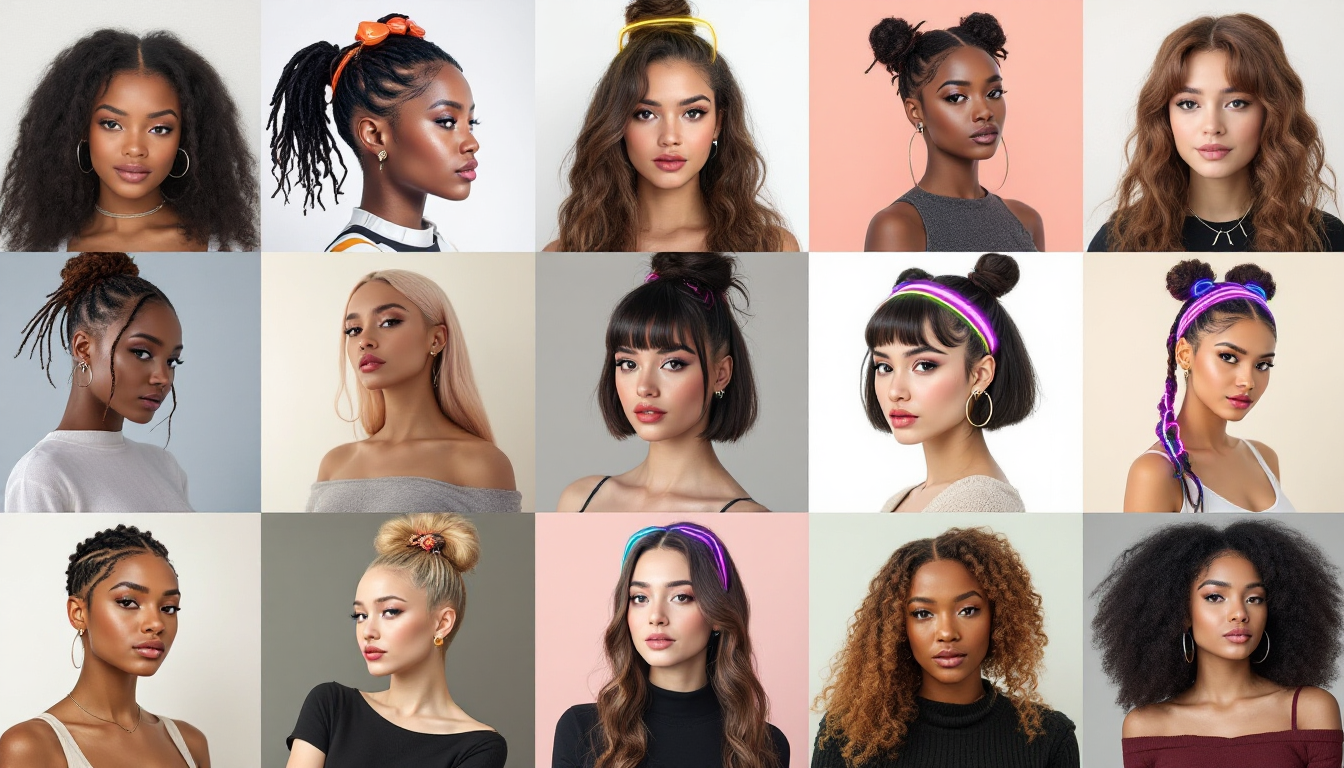
AI Meets Hair Accessories: Visualizing the Perfect Complements to Your Style
Explore how AI can suggest and visualize hair accessories, enhancing your styling experience with a perfect match for your look.
Introduction to AI in Fashion
Artificial intelligence is transforming every corner of the fashion industry—from design and production to marketing and personalized styling. What began as simple recommendation engines has evolved into sophisticated computer-vision systems, virtual-try-on platforms and large-scale visual search tools. According to recent research, AI-powered visual search engines can analyze images and automatically generate descriptive keywords—“color,” “fit,” “aesthetic,” “vibes”—so users can discover complementary items even when they don’t know what words to use (source: https://www.theverge.com/news/661157/pinterest-ai-visual-search-fashion-vibe?utm_source=openai). This leap forward is especially exciting for hair accessories, a niche where shape, color, texture and personal style converge in countless creative combinations. By applying AI to hair styling, brands and consumers alike unlock endless possibilities: from virtual trials of embellished hairpins and silk scarves to real-time advice on matching metal tones or accentuating face shapes. In this post, we’ll explore how AI suggests the perfect hair adornments, how it visualizes them on you, why your own preferences matter, real-world success stories and a glimpse at what’s next for AI-driven fashion integration.
How AI Suggests Hair Accessories
Modern AI tools use advanced computer vision and machine learning to recommend hair accessories that complement your unique features and outfit choices. Two standout approaches:
· Pinterest Visual Language Model (VLM): Initially launched for women’s fashion in the US, Canada and the UK, Pinterest’s VLM analyzes user-uploaded images to extract descriptors—color palettes, pattern intensity, “vibe” categories—and then finds matching accessories users might not even think to search for. Users type “80s retro hair” or simply drop in a photo; VLM returns curated pins with coordinating clips, scrunchies and headbands (source: https://www.theverge.com/news/661157/pinterest-ai-visual-search-fashion-vibe?utm_source=openai).
· FrescAI Accessory Matcher: You upload a selfie and within milliseconds the tool uses facial-feature detection—face shape, forehead height, hairline, skin tone—to generate a shortlist of hair accessories tailored to your attributes. Their API integration has made it possible for brands and apps to offer instant, personalized suggestions on everything from tiaras to barrettes (source: https://frescai.com/accessory-matcher?utm_source=openai).
These AI engines combine your photo data and outfit metadata (season, occasion, style keywords) to propose pieces that enhance your overall look—whether that’s a minimalist metal bobby pin cluster for a sleek up-do or a jewel-tone velvet bow for an evening gala.
Visualizing Your Look with AI
Beyond suggesting accessories, AI platforms let you “try on” styles virtually, in both static images and dynamic videos:
· Modelia Smart Styler: E-commerce teams can drop digital assets of hats, headbands, glasses and hair clips onto live or studio images of models. A major fashion retailer reported a 20% lift in accessory sales after integrating this click-to-style tool into their online catalog (source: https://modelia.ai/smart-styler?utm_source=openai).
· Huhu.ai Virtual Try-On: Brands generate both studio and lifestyle mockups—complete with realistic light, shadow and drape—to showcase how a pearl-encrusted hair comb glints in bright sunlight or a fleece headband warms in low light. They track KPIs like conversion rate uplift and user engagement to optimize each visual campaign (source: https://huhu.ai/article/virtual-try-on-accessories/?utm_source=openai).
· GlamAI Mixed-Reality Experiences: By blending AR filters on mobile apps or in-store mirrors, GlamAI lets shoppers virtually toy with oversized bows, metallic scrunchies and silk turbans. Users see true-to-brand textures and proportion in real time, bridging the gap between digital exploration and physical purchase (source: https://en.wikipedia.org/wiki/GlamAI?utm_source=openai).
The Role of Personal Preferences in AI Suggestions
AI styling isn’t one-size-fits-all. Intelligent systems factor in your personal tastes, past behavior and desired occasions to refine their recommendations:
· OutfitScore Style Coherence: Upload photos of your current outfit and accessories, and OutfitScore analyzes color harmony, metal tones, proportion and occasion suitability to assign you a 0–100 “coherence score.” The tool then advises whether to add statement hair claws or subtle barrettes to optimize your ensemble (source: https://outfitscore.com/accessories-analysis?utm_source=openai).
· User Profiles & Feedback Loops: Many platforms build a style profile from saved favorites, purchase history and explicit preference settings (boho, minimalist, glam). Every time you “heart” or dismiss a suggestion, the AI adapts, learning which shapes, materials and price ranges resonate most.
· Inclusive and Diverse Modeling: Tools like Huhu.ai emphasize model diversity—various hair textures, lengths and skin tones—ensuring that accessory previews feel authentic to each user’s identity, not just a narrow beauty standard.
Case Studies: AI Success Stories in Hair Styling
-
High-Street Retailer + Modelia Smart Styler
Challenge: Low accessory attach rate during outfit browsing.
Solution: Integrated Modelia’s click-to-style tool.
Result: 20% increase in hair accessory sales within three months (source: https://modelia.ai/smart-styler?utm_source=openai). -
Online Marketplace + FrescAI Accessory Matcher
Challenge: Shoppers overwhelmed by inventory.
Solution: Photo-based AI suggestions based on facial analysis.
Result: 35% reduction in bounce rate and a 15% lift in add-to-cart conversion (source: https://frescai.com/accessory-matcher?utm_source=openai). -
Beauty Brand + Revieve AI Haircare Advisor
Challenge: Integrating hair color, care and styling guidance in one platform.
Solution: Revieve’s award-winning AI Hair Color Artist and holistic beauty advisor.
Result: Recognized as Beauty Innovation of the Year 2024, with a 25% boost in user engagement across haircare and styling modules (source: https://en.wikipedia.org/wiki/Revieve_%28company%29?utm_source=openai).
Future Trends: AI and Fashion Integration
• Large-Scale Look Matching: LookSync processes over 350,000 AI-generated “looks” daily and aligns them with 12 million indexed products, promising hyper-relevant accessory matches at scale (source: https://arxiv.org/abs/2511.00072?utm_source=openai).
• AI-Generated Accessory Designs: Platforms like a1.art let users create custom hair accessory visuals—ranging from avant-garde headpieces to embellished tiaras—via text prompts or sample images. Designers can use these AI-generated templates as springboards for physical prototypes (source: https://a1.art/template/hair-accessories?utm_source=openai).
• Unified AR/AI In-Store Experiences: Expect seamless blending of virtual try-ons with AI recommendations in retail environments—mirrors that advise on matching metal tones, kiosks that suggest contrasting hair clips, and mobile apps that let you reserve pieces to try on in person.
• Sustainability and Circular Fashion: AI will soon help users match second-hand or rental hair accessories to new outfits, reducing waste and extending product lifecycles.
Conclusion: Embracing AI for a Personalized Style
AI is no longer a futuristic novelty—it’s an everyday styling companion that elevates how we discover, visualize and select hair accessories. From instant visual search and personalized face-based suggestions to immersive virtual try-ons and AI-driven accessory design, technology empowers self-expression in ways we’ve never seen before. Whether you’re a fashion retailer looking to boost accessory sales or a style enthusiast eager to experiment with bold new looks, AI delivers bespoke recommendations, realistic visualizations and data-driven insights—all tailored to your individual preferences and features. As these tools continue to advance, the only limit will be your imagination and the next statement piece you choose to wear.