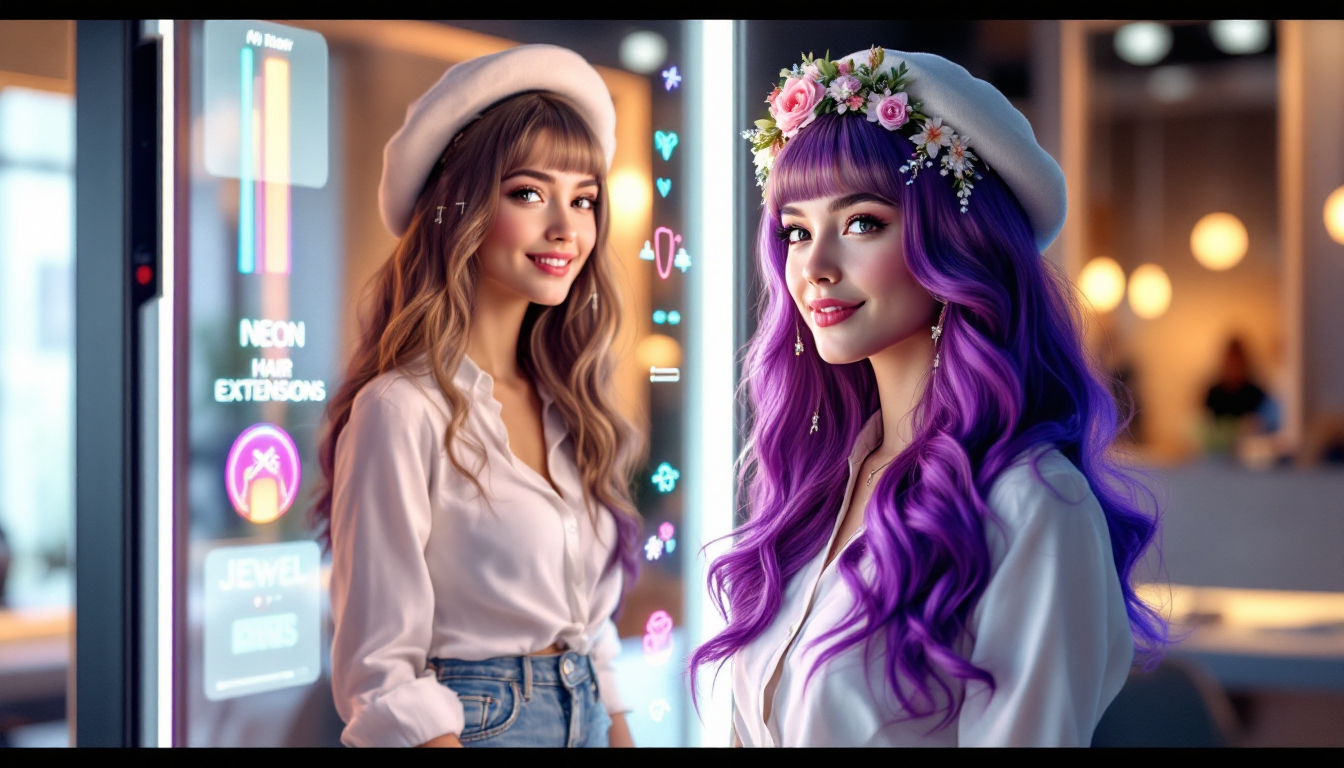
Introduction to AI in Hairstyling
In recent years, artificial intelligence (AI) and augmented reality (AR) have moved beyond novelty filters to become indispensable tools in beauty and fashion. Once limited to virtual makeup try-ons, AI-powered applications now enable users to experiment seamlessly with hairstyles, hair colors, and—crucially—hair accessories such as headbands, clips, and hats. According to Grand View Research, the global virtual try-on market was valued at US$12.5 billion in 2024 and is projected to reach US$48.8 billion by 2030, growing at a CAGR of 25.5% (grandviewresearch.com). This explosive expansion reflects rising consumer comfort with digital “try-before-you-buy” experiences and a growing desire for personalized styling tools that reduce uncertainty and promote self-expression.
The Importance of Accessories in Personal Styling
Accessories are more than decorative add-ons; they complete and define a look. A well-chosen headband can soften facial features, a statement clip can draw attention to a sleek updo, and the right hat can transform a casual outfit into a chic ensemble. Key reasons accessories matter:
• Personalization: They enable wearers to express their unique tastes and complement their facial structure, hair texture, or outfit.
• Versatility: A single piece—like a silk scarf or embellished band—can work across seasons and occasions.
• Confidence: Trialing new accessories virtually removes fear of mismatches, encouraging users to explore bold styles.
• Commercial impact: Brands leveraging accessory visuals see higher engagement—AR-driven experiences can increase time spent by up to 200% and double purchase likelihood (freeyourself.com).
How AI Tools Are Used to Visualize Accessories
A robust ecosystem of AI-powered platforms now supports hyper-realistic accessory try-ons. Leading solutions include:
• Image Loop: Offers an AI-driven app for virtual hats, glasses, and beard styles with natural blending, plus save/share functionality (imageloop.io).
• Perfect Corp’s AR 3D Headwear Try-On: Utilizes precise real-time face tracking for headbands and hats across mobile, web, e-commerce, and in-store mirrors (perfectcorp.com).
• Style3D’s AI Hat Application: Converts any 2D hat image into multi-angle, realistic 3D try-ons covering eight hat styles—cutting content-production costs by up to 95% versus traditional shoots (style3d.ai).
• Bandy AI: Transforms flat accessory images into lifelike visuals on AI-generated models, preserving color, texture, and detail for e-commerce catalogs (bandy.ai).
• HuHu AI: Lets brands auto-place or manually adjust jewelry, hats, bags, and more on digital models, boosting buyer confidence and reducing returns (huhu.ai).
• Hippist AI: Converts selfies or mannequin photos into styled headwear visuals—hats, headbands, wigs, turbans—with diverse AI-generated models and backgrounds without photoshoots (hippist.com).
For hairstyle changes, tools like BasedLabs.ai’s Virtual Hair Style Try-On leverage Gemini 2.5 Flash AI to let users experiment with cuts and colors before committing (basedlabs.ai).
Benefits of Virtual Accessory Try-Ons
Consumers and brands alike reap significant advantages from AI-driven accessory visualization:
For Consumers
• Confidence & convenience: Instantly preview dozens of accessories—no salon appointment needed.
• Risk-free experimentation: Try bold colors, new shapes, or oversized pieces without buyer’s remorse.
• Social sharing: Save and share virtual looks to gather feedback from friends or stylists.
For Brands & Retailers
• Higher conversions: Virtual try-ons can yield up to 2.4× lift in purchase likelihood and 90% higher conversion rates (freeyourself.com).
• Lower returns: AR-enabled shopping experiences can reduce return rates by up to 64%.
• Cost savings: Style3D’s AI hat solution cuts model-shoot costs by roughly $150 per style.
• Scalable content: Generate product visuals on AI models instantly, eliminating expensive and time-consuming photoshoots.
Real-World Applications: Success Stories
• Global Beauty Brands: L’Oréal and Shiseido deploy Perfect Corp’s headwear AR in mobile apps and in-store mirrors, driving double-digit increases in accessory sales.
• Direct-to-Consumer Hat Labels: One boutique milliner saw a 35% uplift in web conversion after integrating Style3D’s multi-angle try-on widget.
• E-commerce Marketplaces: Merchants using Bandy AI report a 25% reduction in product returns and a 20% increase in add-to-cart actions for headbands and jewelry.
• Influencer Campaigns: Hippist AI powered a social-media campaign where micro-influencers virtually styled six seasonal headbands each, generating 1.2 million impressions and 15 000 clicks in two weeks.
• Salon Chains: BasedLabs.ai’s hairstyle and accessory combo tool has been piloted in 50+ US salons, reducing styling consultation time by 40% and boosting add-on accessory sales by 18%.
Future Trends in AI-Driven Hairstyling
The next frontier of AI-powered styling combines deep personalization, real-time recommendation engines, and immersive 3D environments:
• Intelligent Styling Assistants: AI agents that suggest accessories based on face shape, hair density, and outfit color palette.
• Metaverse Integration: Digital twins outfitted with virtual hats, headbands, and hair colors for fashion shows, gaming avatars, and social VR.
• Full-Body AR Fitting Rooms: Seamless access to hair, makeup, apparel, and accessories in one virtual mirror—on mobile, in store, or via smart glasses.
• Sustainable Digital Sampling: Brands will rely increasingly on virtual samples to reduce overproduction and waste, replacing physical prototyping with AI-generated visuals.
With the virtual try-on market forecast to top US$48.8 billion by 2030, innovation will only accelerate, blurring the lines between digital and physical styling experiences.
Conclusion: Embracing AI for a Complete Look
AI-powered visualization tools have transformed hairstyling and accessory selection from guesswork into a confident, data-driven process. By virtually layering headbands, clips, hats, and hairstyles, consumers can explore their personal style without risk, and brands can scale immersive shopping experiences that drive engagement, conversions, and sustainability. Whether you’re a trend-seeker or a fashion retailer, the time to embrace AI for a complete look is now.