Introduction to AI in Beauty Tech
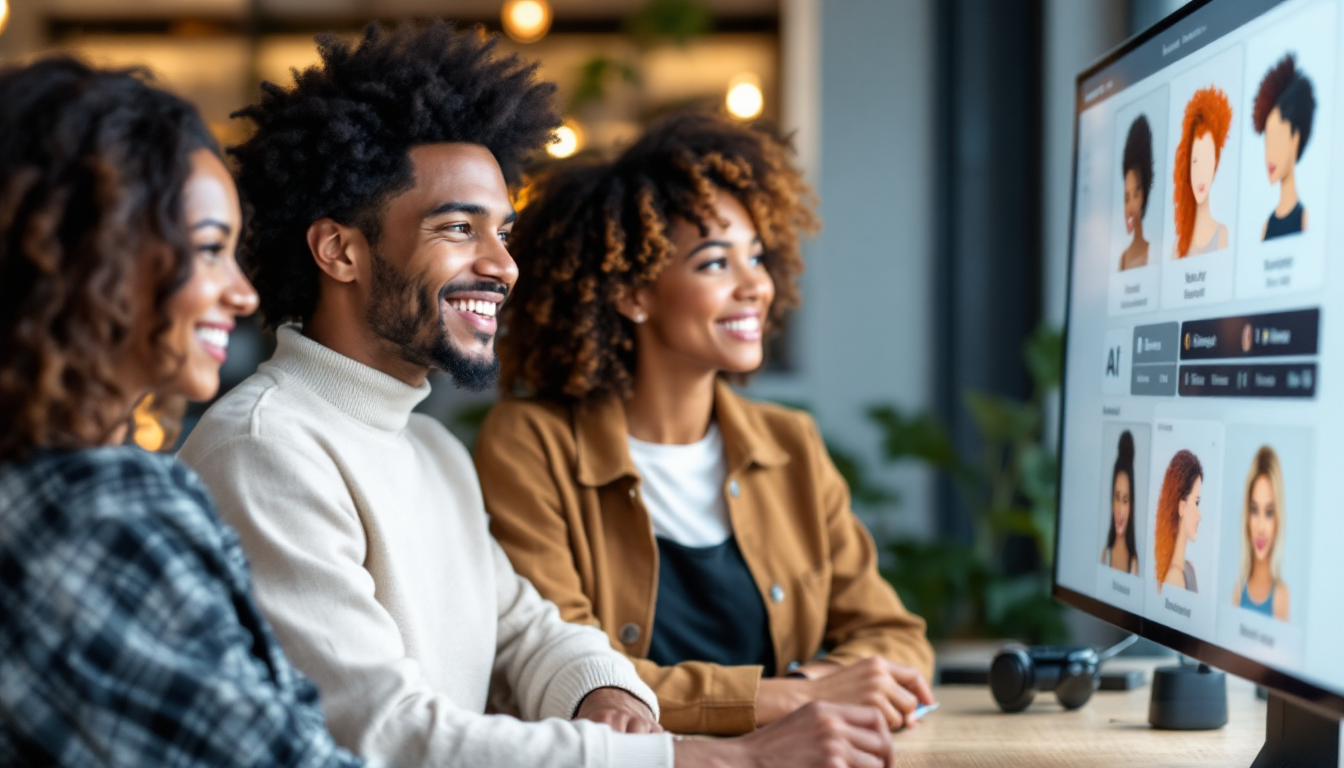
Artificial intelligence (AI) has swiftly moved from niche research labs into everyday life, reshaping industries from finance to healthcare—and beauty is no exception. In the past decade, beauty tech startups and established brands alike have harnessed machine learning, computer vision, and generative algorithms to reinvent how consumers discover, evaluate, and experiment with products. AI-powered skincare apps analyze blemishes and recommend personalized routines, virtual-try-on tools let users “try” lipstick shades or nail polishes in real time, and chatbots field questions about ingredient safety. Now, AI is turning its attention to one of the most visible forms of personal expression—hairstyling. By modeling, diagnosing, and simulating an ever-wider range of hair textures, densities, and cultural styles, AI promises to make hairstyling more inclusive, data-driven, and creative than ever before.
The Importance of Diversity in Hairstyling
Hair is deeply intertwined with identity, culture, and self-confidence. Yet for decades, mainstream beauty imagery and product development have skewed heavily toward straight, fine, European-textured hair. A 2023 audit of AI beauty filters found that over 75% of training images featured light-to-medium skin tones (Fitzpatrick I–III), while fewer than 8% included curly, coily, or kinky hair textures (3c–4c). The result? Filters that “smooth away” frizz, algorithms that misinterpret tight coils as noise, and virtual-try-on tools that simply fail on underrepresented hair types (Alibaba).
Exclusion in hairstyling tech has real-world consequences:
• Cultural erasure: When Afros, Bantu knots, or Fulani braids are mislabeled “unsafe” or “inappropriate,” entire traditions vanish from digital platforms (Alibaba).
• Professional bias: Biased AI assessments have classified natural Black hairstyles as “unprofessional,” negatively impacting hiring and performance evaluations (Pulse24.ai).
• Emotional impact: Beauty is a key facet of self-esteem. When technology consistently misrepresents or omits textured hair, it communicates a damaging message: some hair types don’t matter.
Recognizing these gaps, beauty-tech innovators are pushing for data-driven inclusivity, building comprehensive hair databases, and collaborating with communities to ensure AI sees—and celebrates—the full spectrum of hair diversity.
How AI Recognizes and Adapts to Different Hair Types
Modern AI systems rely on large, well-annotated datasets and advanced modeling techniques to parse hair’s complexity:
• Massive textured-hair repositories
– Myavana has analyzed over two billion individual hair strands, identifying 972 distinct hair profiles. This database underpins personalized product recommendations for textured hair, enabling truly bespoke routines (Allure).
– Smart vending machines, deployed through a partnership between Myavana and The Beauty Genie in Atlanta, offer on-the-spot diagnostics across 900+ texture, density, and porosity combinations, democratizing access to expert guidance (PersonalCareInsights).
• 3D hair-strand modeling
– TANGLED (2025) introduces a 457-hairstyle dataset and diffusion-based generative models that reconstruct coherent 3D hair strands from single images, enabling culturally diverse avatars and digital styling simulations (arXiv).
– GaussianHair (2024) employs light-aware Gaussian primitives for strand-level geometry, supporting realistic editing, relighting, and dynamic rendering—critical for virtual try-ons that accurately reflect curls, coils, and kinks (arXiv).
• Computer-vision diagnostics
– Revieve’s AI Haircare Advisor and AI Hair Color Artist analyze user-uploaded photos to identify hair type, damage, and coloration needs, then recommend tailored routines and visualize new dye jobs (Wikipedia – Revieve).
– Perfect Corp.’s Frizzy Hair Analyzer quantifies frizz levels, suggests corrective products, and powers virtual wig-try-ons that accommodate everything from straight bobs to 4C coils (Wikipedia – Perfect Corp).
Inclusive Solutions for Underrepresented Hair Types
Leading brands and researchers are developing solutions specifically aimed at hair types long neglected by mainstream beauty tech:
• Community-driven data validation
– “In the Context of Curls,” a Spelman College study, invites Black women to evaluate AI-generated images of braids, twist-outs, and pineapples. Their feedback directly informs model retraining, boosting cultural accuracy (CBS News).
– Stylus’s “Texture Gap” report highlights the under-representation of 4C hair in product development. With social media discussions on Type 4 hair up 62% year-over-year, Stylus calls on brands to integrate consumer insights into R&D and marketing (Stylus).
• Ethical AI design principles
– Companies like Revieve emphasize transparency in algorithmic design, ensuring datasets include proportional representation of all hair types and skin tones.
– Perfect Corp. runs bias audits on its virtual-try-on tools, iteratively correcting misclassifications and expanding hairstyle libraries to include Afrocentric cuts, protective styles, and braids.
• Retail innovation
– AI-powered smart vending machines in underserved communities eliminate barriers to expert recommendations, stocking products formulated for tightly coiled and highly porous hair.
– Virtual consultations powered by AI advisors provide 24/7 access to customized regimens, reducing dependency on in-salon appointments that may not cater to textured hair.
The Future of AI in Promoting Hairstyling Diversity
As research and industry efforts converge, five key trends will shape the next wave of inclusive beauty tech:
- Multimodal AI platforms
Integrating visual analysis with user-provided text feedback, allowing AI to understand not just what hair looks like, but how it feels, behaves over time, and responds to care routines. - Real-time 3D and AR experiences
Advanced 3D strand modeling (TANGLED, GaussianHair) combined with augmented reality will let users virtually style, braid, or coil from any angle, under any lighting condition. - Democratic data collection
Decentralized apps encouraging users to contribute hair profiles, texture measurements, and styling outcomes, building vast, community-sourced datasets that reflect global diversity. - Bias detection and correction
Automated audits to flag misclassifications, ceasing the inadvertent policing of cultural hairstyles, and ensuring AI models treat every hair type with equal fidelity. - Cross-industry collaboration
Beauty brands, academic researchers, and advocacy groups will co-author ethical guidelines, share open-source datasets, and champion AI regulatory frameworks that protect cultural expression.
Testimonials and Real-Life Success Stories
• “For the first time, my daughter sees herself in virtual-try-on,” says Arianna, a mother from Atlanta who used Myavana’s vending machine diagnostic. “The AI knew exactly what her curls needed—no more one-size-fits-all product failures.”
• Tracee Ellis Ross, co-founder of Pattern Beauty, credits Stylus’s Texture Gap report and community forums for inspiring her brand’s data-driven approach to Type 4 hair: “When you give people the data they deserve, innovation follows.”
• Spelman researcher Blanca Burch recalls early model errors that turned cornrows into “hazy noise.” “After participants flagged those mistakes,” she notes, “our retrained algorithms now nail the intricate partings and patterns of each style.”
• A Brazilian 4C-haired user of Perfect Corp.’s Frizzy Hair Analyzer shared before-and-after visuals on Instagram, documenting a 73% reduction in frizz after following AI-recommended treatments.
Conclusion: Embracing a New Era in Inclusivity
AI’s potential to revolutionize hairstyling lies not in replacing human stylists, but in augmenting expertise with data, scale, and personalized insights. By acknowledging past exclusions—light-tone and straight-hair biases—and committing to community-driven solutions, the beauty-tech industry can craft tools that honor every curl, coil, and braid. As 3D modeling advances, datasets diversify, and ethical frameworks solidify, we stand on the cusp of a truly inclusive hair-tech renaissance—one where beauty technology finally reflects the myriad ways we wear our hair, and the cultures behind them.