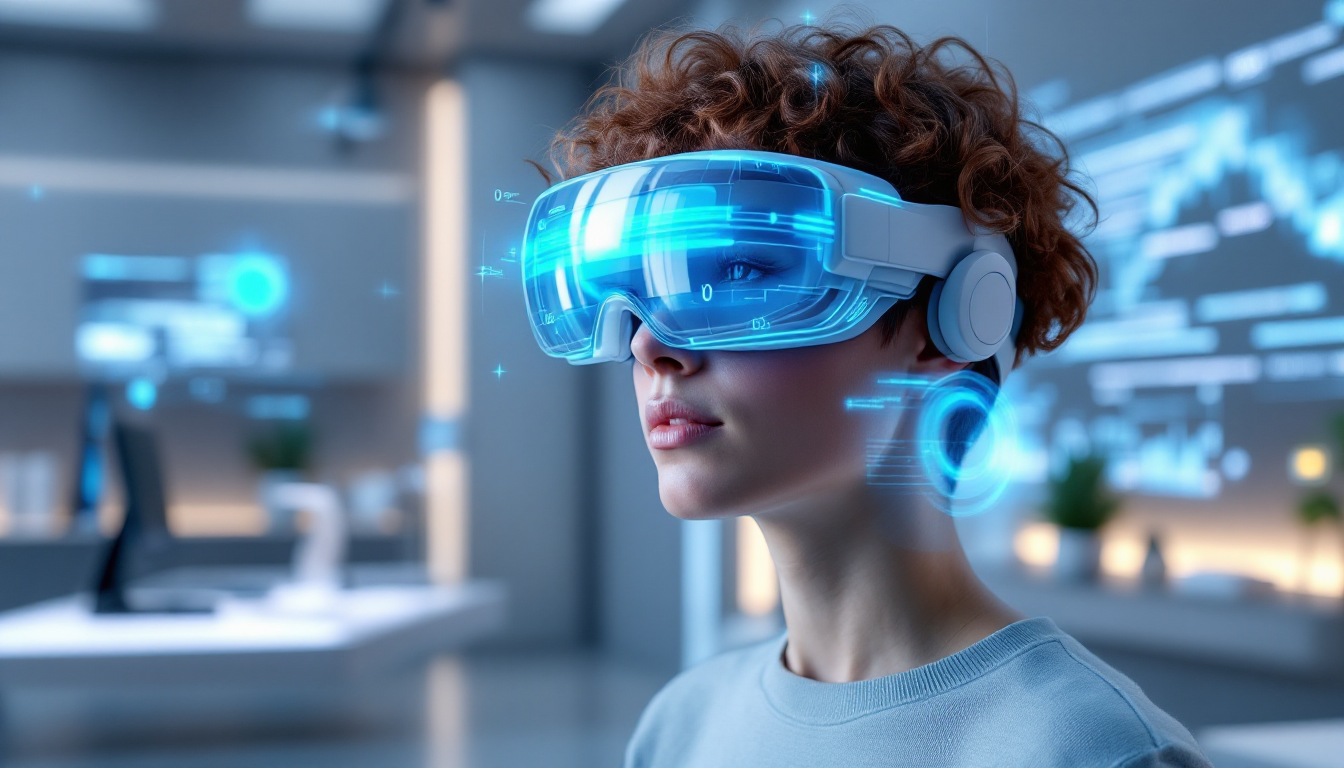
- Introduction to AI and AR in Hairstyling
The convergence of artificial intelligence (AI) and augmented reality (AR) is reshaping the haircare industry. AI hairstyling leverages machine learning models to analyze facial features, hair texture, and personal preferences, then proposes cuts, colors, and styles tailored to each user. AR overlays virtual hairstyles onto a live camera feed or uploaded photo, creating an immersive “try-before-you-commit” experience.
Together, AI and AR:
• Democratize professional-grade consultations—no salon appointment required.
• Reduce uncertainty around dramatic style changes, building consumer confidence.
• Drive ecommerce sales through interactive, personalized experiences.
Market momentum underlines this shift. The global virtual try-on market across beauty and fashion was valued at US$12.5 billion in 2024 and is projected to soar to US$48.8 billion by 2030 (CAGR 25.5 %) [https://freeyourself.com/blogs/news/virtual-try-on-beauty-technology-statistics?utm_source=openai]. Meanwhile, the AR beauty tech segment—encompassing virtual hair color, makeup, and accessories—generated US$20.15 billion in 2024 and is forecast to reach nearly US$53.91 billion by 2030 (CAGR 18.4 %) [https://www.grandviewresearch.com/horizon/statistics/beauty-tech-market/technology/augmented-reality-ar/global?utm_source=openai]. Within that, the virtual hair color try-on market alone hit US$1.16 billion in 2024, with estimates of US$3.5 billion by 2035 (CAGR 10.6 %) [https://www.wiseguyreports.com/reports/virtual-hair-color-try-on-market?utm_source=openai].
These figures signal not just consumer curiosity but a fundamental transformation in how we explore and purchase haircare services.
- The Evolution of Virtual Try-Ons
Virtual hairstyle try-on began with simple drag-and-drop overlays—static images of wigs and colors pasted onto user photos. Limitations were obvious: poor fit, no real-time feedback, and minimal personalization. As smartphone cameras and GPU performance improved, developers introduced AR filters that tracked head movements, letting users see a virtual style from multiple angles.
Key milestones:
• 2014: Launch of YouCam Makeup by Perfect Corp.; early 2D filters for hair color and makeup [https://en.wikipedia.org/wiki/YouCam_Makeup?utm_source=openai].
• 2016–2018: Integration of basic AI face landmarks enabling more accurate hairline mapping.
• 2020–2022: Rise of L’Oréal’s ModiFace and Style My Hair apps, combining AI-driven recommendations with AR preview.
• 2023–2025: Entry of startups like GlamAI and DRESSX, offering cross-platform try-ons (mobile, web) and generative AI style suggestions [https://en.wikipedia.org/wiki/GlamAI?utm_source=openai; https://en.wikipedia.org/wiki/DRESSX?utm_source=openai].
Today’s platforms fuse advanced 3D modeling, AI image processing, and cloud-based rendering to deliver real-time hair simulation—even capturing how virtual strands move with the user’s head [https://www.style3d.ai/blog/virtual-try-on-technology-market-trends-2026/?utm_source=openai]. A July 2025 research project, Neuralocks, demonstrated dynamic neural hair simulation that brings lifelike movement and shading to avatars, setting a new bar for immersion [https://arxiv.org/abs/2507.05191?utm_source=openai].
Yet not all virtual solutions are equal. A 2024 Professional Beauty Association study compared AI-only hair color simulators with AR salon mirrors. AI simulators achieved just 52 % accuracy within one shade of the salon result and prompted 39 % client regret, whereas AR mirrors hit 87 % accuracy and only 11 % regret [https://www.alibaba.com/product-insights/ai-hair-color-simulators-vs-augmented-reality-mirrors-which-predicts-salon-results-more-reliably.html?utm_source=openai]. This underscores the critical role of AR’s real-world overlay in aligning expectations with outcomes.
- Benefits of AR-Enhanced AI Hairstyling
Combining AI’s personalization with AR’s immersive preview delivers measurable business and consumer advantages:
• Higher Conversion Rates
– Virtual try-ons increase purchase likelihood by 2.4× and drive up to 90 % higher conversion rates for beauty brands [https://freeyourself.com/blogs/news/virtual-try-on-beauty-technology-statistics?utm_source=openai].
– In hair color applications, conversion can jump 2.5× when users preview shades via AR [https://gitnux.org/ai-in-the-hair-industry-statistics/?utm_source=openai].
• Extended Engagement
– Brands report 360 % longer user sessions; Aveda’s AR hair color tool yielded a 112 % increase in time spent on site [https://gitnux.org/ai-in-the-hair-industry-statistics/?utm_source=openai].
• Reduced Returns
– Virtual try-ons cut beauty product returns by up to 64 % [https://freeyourself.com/blogs/news/virtual-try-on-beauty-technology-statistics?utm_source=openai].
– For hair extensions and wigs, AR previews lowered returns by 20 % [https://gitnux.org/ai-in-the-hair-industry-statistics/?utm_source=openai].
• Increased Confidence & Satisfaction
– 56 % of shoppers say AR try-ons boost confidence in their color choice [https://gitnux.org/ai-in-the-hair-industry-statistics/?utm_source=openai].
– Two-thirds of consumers express enthusiasm for AR beauty features, especially U.S. shoppers and those aged 35–44 [https://freeyourself.com/blogs/news/virtual-try-on-beauty-technology-statistics?utm_source=openai].
– Among Gen Z, 32 % have used virtual hair makeover tools and 92 % want AR for e-commerce hair shopping [https://gitnux.org/ai-in-the-hair-industry-statistics/?utm_source=openai].
These benefits translate directly into stronger brand loyalty, higher average order values, and improved ROI on digital marketing spend.
- Case Studies: Success Stories in AI Hairstyling
• Ulta Beauty’s GLAMlab
– Since launch, GLAMlab has hosted over 200 million shade try-ons, boosting digital engagement and customer retention in Ulta’s loyalty program [https://market.us/report/virtual-try-ons-market/?utm_source=openai].
• Aveda Virtual Hair Color Tool
– Implementing AR previews led to a 112 % increase in on-site time and a 2.5× lift in checkout rates for hair color products [https://gitnux.org/ai-in-the-hair-industry-statistics/?utm_source=openai].
• Revieve & Shiseido Collaboration
– Finnish AI/AR specialist Revieve (founded 2016) integrated virtual hair color analysis for Shiseido, enabling precision shade matching and personalized recommendations [https://en.wikipedia.org/wiki/Revieve_%28company%29?utm_source=openai].
• Perfect Corp. & YouCam Makeup
– YouCam Makeup’s 1 billion+ downloads power AR try-ons across hair, makeup, and skin diagnostics—driving millions of virtual makeovers monthly [https://en.wikipedia.org/wiki/YouCam_Makeup?utm_source=openai].
• Hair Vision’s Secure AR Hairstyling
– A newer entrant, Hair Vision offers AI-powered AR hairstyling with secure photo uploads and rapid processing. Users preview dozens of trendy cuts and colors in lifelike detail, from subtle trims to dramatic transformations, all within an intuitive mobile interface.
These examples illustrate how leading brands harness AI+AR to deepen engagement, personalize at scale, and convert browsers into buyers.
- Future Prospects: Where Is This Technology Heading?
The road ahead for AI hairstyling in AR is defined by greater realism, deeper personalization, and tighter integration with the metaverse:
• Real-Time Neural Hair Simulation
– Building on Neuralocks research, future apps will render dynamic strand movement, shadows, and bounce—mimicking salon-fresh hair in AR [https://arxiv.org/abs/2507.05191?utm_source=openai].
• Generative AI Style Creation
– AI models will propose entirely new hairstyles by learning from runway trends, celebrity looks, and user preferences, enabling one-click transformation.
• Wearable AR Interfaces
– AR glasses and smart mirrors will bring virtual styling into salons and homes without a smartphone screen, creating hands-free, full-field immersion.
• Social Commerce & Virtual Salons
– Integrated livestream shopping where stylists guide virtual try-ons in real time; peer reviews and shared AR experiences will add social validation.
• Deeper E-commerce Integration
– Instant add-to-cart for recommended products (shampoos, color kits, styling tools) based on the user’s chosen virtual style—closing the loop from inspiration to purchase.
Market forecasts reinforce this trajectory: the U.S. virtual try-on market alone may grow from US$4.2 billion in 2024 to US$24.4 billion by 2034 (CAGR 23.4 %) [https://market.us/report/virtual-try-ons-market/?utm_source=openai]. By 2030, we’ll likely see hundreds of millions engaging with AI+AR hairstyling monthly, making it a standard retail touchpoint.
- Conclusion: Embracing the Future of Haircare with AI and AR
AI hairstyling in augmented reality represents the next frontier in personal grooming. It transforms uncertainty into exploration, melding the artistry of a salon with the convenience of your smartphone or mirror. As the underlying technologies—neural rendering, generative models, wearable AR—continue to mature, consumers will gain unprecedented control over their look and purchase journey.
For haircare brands and stylists, embracing AI+AR is no longer optional. It’s a strategic imperative to meet modern expectations, boost conversions, and reduce returns. Whether you’re a global beauty conglomerate or an indie startup, now is the time to integrate AI-driven recommendations and immersive AR previews into your digital ecosystem.
The future of hair lies at the intersection of pixels and protein—where code-driven creativity gives every individual the confidence to experiment, express, and evolve their style. Are you ready to join the revolution?