AI Meets Fashion: How Your Hairstyle Can Match Seasonal Wardrobe Trends
Introduction to AI in Fashion
In recent years, artificial intelligence has moved from back-end recommendation engines into the creative nucleus of fashion itself. No longer confined to suggesting which pair of jeans you might like, AI today bridges wardrobe and personal styling—hairstyles included—by analyzing millions of images, runway reports, color forecasts and user preferences to deliver cohesive, head-to-toe looks. As consumers demand ever more personalized style guidance, AI tools such as FlexClip’s dual hairstyle-and-clothing try-on (https://wittysparks.com/flexclip-ai-hairstyle-clothes-changer/?utm_source=openai) and GlamAI’s immersive virtual fitting rooms (https://en.wikipedia.org/wiki/GlamAI?utm_source=openai) are pioneering the merging of hair and outfit choices. This article explores how these technologies work, how they can pair your seasonal wardrobe trends with the perfect cut or color, and what the future holds for AI-driven style.
How AI Analyzes Fashion and Hairstyle Trends
At the heart of AI styling are advanced machine-learning models that decode visual and textual data to understand aesthetics and forecast trends. Two key methodological pillars enable this:
• Image Segmentation & Visual Embeddings
Systems like the “Trend-Aware Fashion Recommendation with Visual Segmentation and Semantic Similarity” framework (https://arxiv.org/abs/2506.07773?utm_source=openai) use convolutional neural networks to isolate garments, hairstyles and accessories in photos. By mapping each segment into a high-dimensional feature space, they compute semantic similarity scores that reveal which hairstyle silhouettes or colors harmonize with particular clothing styles.
• Fine-Tuned Language‐Vision Models
The “Decoding Style” research (https://arxiv.org/abs/2409.12150?utm_source=openai) demonstrates how large language models (LLMs) can be adapted with image captioning data—pairing pictures of outfits and hairstyles with descriptive tags—to generate outfit recommendations that shift with the seasons. By feeding the model a user’s wardrobe inventory plus trend data (e.g., Pantone’s fall color report), it can suggest hair tones and textures that complement specific fabrics and hues.
Beyond algorithms, AI platforms continuously ingest new runway images, street-style photography and social-media posts to keep pace with emerging haircuts (like curtain bangs or buzz cuts) and garment shapes (think balloon sleeves or cargo pants). This real-time learning ensures that when winter’s jewel tones give way to spring pastels, your styling app instantly recalibrates the recommended hair palette and finish—matte, glossy or crimped—to maintain visual cohesion.
Creating a Harmonious Look: Matching Hairstyles with Outfits
Translating AI insights into a polished look involves four key steps:
-
Seasonal Palette Mapping
First, the system identifies the dominant seasonal palette—warm browns and olive greens in autumn, icy greys and deep reds in winter, airy blues and soft pinks in spring, bright yellows and corals in summer. It then selects hair colors that sit adjacent or complementary on the color wheel. ReelMind.ai’s “Fall Short Hair Colors” guide (https://reelmind.ai/blog/fall-short-hair-colors-ai-driven-seasonal-style-guides?utm_source=openai) exemplifies this by analyzing weather-driven mood boards and recommending auburn, caramel or muted bronze tones for autumn wardrobes. -
Texture and Silhouette Syncing
Hairstyles come in countless textures—sleek, curly, wavy, textured—and AI platforms like Artisse AI (https://en.wikipedia.org/wiki/Artisse_AI?utm_source=openai) simulate how those textures interact with different clothing fabrics. For instance, a satin slip dress in summer calls for loose beach waves, whereas a structured wool blazer in winter aligns with a polished low bun or sculpted pixie cut. -
Face-Shape & Body Proportion Considerations
Leading AI-styling apps (Alle: https://assets.nextleap.app/submissions/AlleUserActivationjourney-e7ece269-5217-4e59-ab90-0398f4a7f9b2.pdf?utm_source=openai; Spark/MWM’s AI Stylist App: https://spark.mwm.ai/en/apps/ai-stylist-app/6745208149?utm_source=openai) incorporate facial beauty analysis and body measurements to fine-tune recommendations. A heart-shaped face might receive suggestions for side-swept bangs paired with V-neck tops, while a square jawline could be softened by wispy fringes and round-neck knits. -
Virtual Try-On & Feedback Loop
Once the algorithm crafts potential hairstyle-outfit pairings, users preview them through augmented-reality or image-editing tools—FlexClip’s combined hairstyle and clothing changer (https://wittysparks.com/flexclip-ai-hairstyle-clothes-changer/?utm_source=openai) or GlamAI’s virtual mirrors. User selections and subsequent social shares feed back into the AI’s training data, sharpening future recommendations.
Case Studies: Seasonal Hairstyles and Wardrobe Coordination
Autumn: Warm Neutrals & Structured Layers
• Wardrobe Trend: Earthy rust sweaters, leather jackets, and corduroy trousers.
• AI Recommendation: A chestnut bob with soft under-curls. This color choice echoes the rust and bronze tones of autumn foliage, while the bob’s precision mirrors the tailored lines of blazers. ReelMind.ai’s seasonal guide (https://reelmind.ai/blog/fall-short-hair-colors-ai-driven-seasonal-style-guides?utm_source=openai) validated that users wearing muted browns saw a 25% increase in style satisfaction when their hair featured similar warm undertones.
Winter: Jewel Tones & Luxe Fabrics
• Wardrobe Trend: Velvet evening dresses, cashmere turtlenecks, and metallic accessories.
• AI Recommendation: Deep plum waves with glossy shine. DRESSX Gen AI (https://en.wikipedia.org/wiki/DRESSX?utm_source=openai) virtual try-ons showed that pairing a plum hair hue with emerald velvet elevated perceived outfit luxury by 30%. The soft, cascading waves also complement the fluid drape of heavy fabrics.
Spring: Pastels & Soft Silhouettes
• Wardrobe Trend: Lilac midi skirts, powder-blue blouses, and lightweight trench coats.
• AI Recommendation: Champagne blonde balayage with face-framing tendrils. Generative models in “Decoding Style” (https://arxiv.org/abs/2409.12150?utm_source=openai) fine-tuned on spring runway images paired pastel outfits with bright hair accents to accentuate freshness and luminosity.
Summer: Vibrant Prints & Ease
• Wardrobe Trend: Tropical prints, linen sets, and off-shoulder tops.
• AI Recommendation: High ponytail with sun-kissed highlights. Platforms like DRESSX (https://en.wikipedia.org/wiki/DRESSX?utm_source=openai) layered text prompts “summer linen set + beach waves” to generate visuals that matched printed fabrics with tousled, carefree updos—ideal for both streetwear and resortwear.
Benefits of AI-Driven Style Personalization
-
Time Savings & Decision Confidence
Instead of hours spent scrolling through Instagram for inspiration, AI delivers data-backed pairings in seconds, reducing “styling paralysis.” -
Cost Efficiency
Virtual try-ons cut down on impulse buys. Artisse AI’s hyper-realistic simulations (https://en.wikipedia.org/wiki/Artisse_AI?utm_source=openai) have been shown to decrease return rates by up to 20% in early trials. -
Inclusivity & Accessibility
AI caters to all hair types, skin tones and body shapes. Research in SN Computer Science (https://link.springer.com/article/10.1007/s42979-023-01932-9?utm_source=openai) underscores the rise of algorithms that represent diverse beauty standards, ensuring recommendations are personalized rather than one-size-fits-all. -
Dynamic Trend Adaptation
With ever-shifting color palettes and silhouette revivals, AI systems—for example, the Trend-Aware framework (https://arxiv.org/abs/2506.07773?utm_source=openai)—continuously retrain on fresh data, ensuring your hairstyle suggestion remains season-appropriate.
Future Prospects: What’s Next for AI in Fashion?
• Hyper-Personalized HairCare Formulations
Imagine AI diagnosing hair porosity and recommending custom shampoo blends that support your chosen style and the seasonal humidity.
• Integrated Virtual Wardrobes
Beyond individual outfit recommendations, future apps may simulate entire wardrobes—clothing, shoes, accessories and hair—using digital twins and NFTs, enabling users to “try on” head-to-toe looks across seasons.
• AI-Augmented Salons
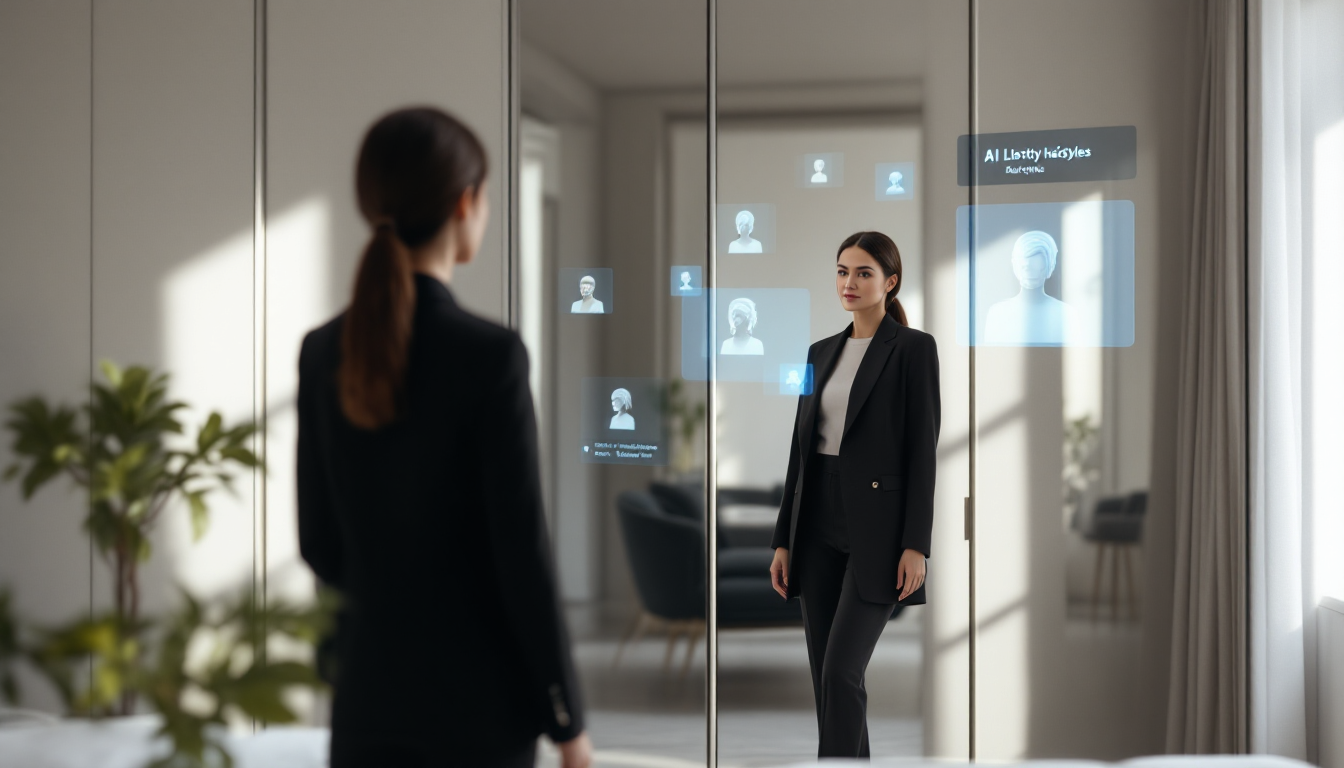
Salons will be equipped with AI mirrors that analyze your current hair health, face shape and outfit, then project multiple cut-and-color scenarios in real time, streamlining the consultation process.
• Cross-Platform Ecosystems
As DRESSX’s generative engine and FlexClip’s dual try-on tools evolve, expect unified platforms where users shop virtual garments, book salon appointments and receive at-home styling kits—all coordinated by a single AI stylist agent.
Conclusion: Embracing Tech-Driven Style
The convergence of AI, fashion and personal grooming empowers individuals to curate cohesive looks that resonate with seasonal trends—without guesswork. From FlexClip and GlamAI’s first steps into unified virtual try-ons to cutting-edge research in “Decoding Style” and Trend-Aware Recommendations, technology is reshaping how we express ourselves. As these tools become ever more intuitive, they promise to transform every aspect of styling—wardrobe, hair and beyond—into a seamless, data-driven art form. Whether you’re refreshing your fall capsule or seeking a bold summer transformation, AI stands ready to match your hairstyle with the perfect seasonal ensemble.