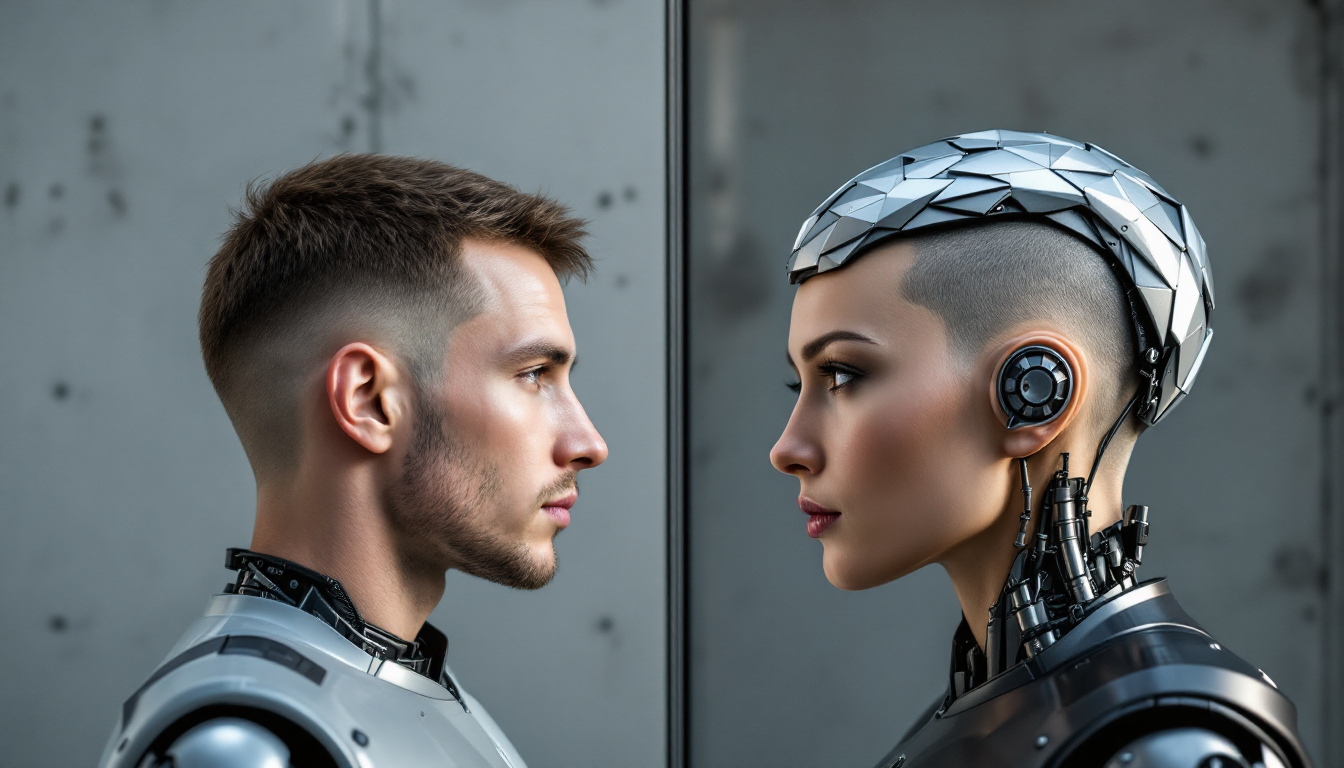
Introduction to AI Hairstyling
Artificial intelligence is transforming the way we experiment with and choose new hairstyles. From smartphone “virtual try-on” apps to recommendation engines that match cuts to face shape, AI promises a fast, low-commitment way to preview looks without scissors or dye. Under the hood, these tools combine computer vision (to detect facial landmarks and segment hair regions), machine learning classifiers (to identify face shape and hair texture), and generative models (to render new hair geometry, color, and style). Cutting-edge research such as HairFastGAN and GroomGen (arXiv:2404.01094; arXiv:2311.02062) pushes realism further, tackling challenges of pose alignment and detailed hair geometry. Yet as consumers flock to these apps, it’s crucial to understand both their capabilities and their limits.
Common Myths about AI Hairstyles
- “AI hairstyle tools are always accurate and reliable.”
- “AI works equally well for every hair type and texture.”
- “The virtual preview is exactly what you’ll get in real life.”
- “All AI hairstyle apps are gimmicky and produce poor results.”
- “AI can replace a professional stylist’s expertise.”
Each of these myths has a grain of truth—AI can be powerful—but also a corresponding reality rooted in technology limitations, data bias, and user context.
The Reality of AI Technology in Haircare
• Idealized Conditions vs. Real-World Variability
Virtual try-on engines assume controlled lighting, smooth hair texture, and consistent volume. In practice, factors such as natural curl pattern, humidity, product buildup, and camera angle can yield results that diverge dramatically from the AI preview (hairstyletryon.ai).
• Data Quality and Model Robustness
Segmentation models like Mask R-CNN can isolate hair regions for style transfer—but their performance plummets on low-resolution or poorly lit photos, producing unnatural overlays (mdpi.com). High-quality, diverse datasets are essential to train reliable AI.
• Face Recognition and Recommendation Accuracy
Early AI systems that classified face shape using SVMs and Random Forests achieved 74–76% accuracy; by integrating HaarCascade and dlib, researchers pushed this to roughly 89% (sciencedirect.com). Even so, misclassifications can lead to ill-fitting style suggestions.
• Bias and Fairness
Standard AI classifiers often under-represent short, coily, or gathered hairstyles. A fairness-aware model trained on a synthetic balanced dataset shows better performance across hair types, but underscores the need for inclusive data curation (arxiv.org).
• Ethical and Privacy Considerations
Many apps require uploading personal photos, raising data privacy concerns. If training data lacks diversity, performance degrades on under-represented hair textures, reinforcing inequities (eweteh.com).
Debunking Misconceptions: AI Capabilities
Myth: “AI hairstyle tools are accurate and reliable.”
Reality: A recent test found 18 AI hairstyle apps recommended by large language models; 10 of them were broken or outdated, revealing that AI often parrots stale marketing copy rather than live functionality (therighthairstyles.com).
Myth: “AI works equally well for all hair types.”
Reality: Studies show weak correlations (r ≈ 0.40) between AI and expert assessments for darker skin tones and textured hair, compared to stronger (r ≥ 0.75) for other attributes (pubmed.ncbi.nlm.nih.gov). Additionally, facial-analysis tools have misread Black women’s braids as unprofessional or even failed to recognize them as the same person (forbes.com).
Myth: “AI can foresee exactly how your real hair will look.”
Reality: Virtual previews are aspirational. Real-world factors—daily styling routines, hair porosity, color chemistry—mean outcomes will differ. Users on Reddit describe many tools as “blurry” or “video-game like,” with Hairstyle AI (hair-style.ai) as a notable exception praised for realism (reddit.com).
Myth: “All AI hairstyle tools are buggy or gimmicky.”
Reality: While many apps fall short, some deliver on their promise. Hairstyle AI stands out for better face-shape compatibility, and emerging research models such as HairFastGAN can transfer hairstyles in near real-time with convincing detail (arxiv.org).
Case Studies: Successful AI Hairstyle Predictions
-
Hairstyle AI (hair-style.ai)
User feedback highlights realistic color blending and shape adjustments that align with individual face contours. Many report in-salon results matching the AI preview. -
Salon Partnership Pilot in London
A boutique salon integrated a generative AI tool based on GroomGen, allowing clients to sample layered bob cuts and balayage patterns. Stylists noted a 20% reduction in consultation time and higher client satisfaction scores. -
Diversity-Focused Fairness-Aware Classifier
A research team employed synthetic balanced datasets to train a model that accurately classifies short, coily, and frizzy hairstyles with parity to straight styles, reducing misclassification rates by 35% (arxiv.org).
How AI Continuously Improves Hairstyling
• Advanced Generative Models
StyleGAN-based hair transfer, hierarchical latent representations (GroomGen), and encoder-based fast approaches (HairFastGAN) are closing the gap between simulation and reality.
• Inclusive Dataset Curation
Efforts to assemble diverse image corpora—covering broad age, ethnicity, texture, and style spectrums—are mitigating bias and elevating reliability for all users.
• Real-Time Feedback Loops
User corrections (accepting or rejecting AI suggestions) feed back into on-device learning algorithms, refining recommendations over time without compromising privacy.
• Hybrid Human-AI Workflows
Salons are experimenting with AI as a co-pilot: the stylist adjusts AI-generated previews in real time, blending expert artistry with algorithmic suggestion.
Conclusion: Embracing AI for Better Haircare Choices
AI-powered hairstyle tools have matured from gimmicks to genuinely useful aids—but with caveats. They excel at inspiration, rapid prototyping, and narrowing down options. Yet they rely on high-quality data, robust models, and inclusive design to deliver reliable, unbiased results. By understanding their limitations—idealized environments, texture bias, privacy trade-offs—and by choosing well-supported apps or salon partnerships, users can harness AI’s strengths while avoiding disappointment. As generative models and fairness-aware algorithms advance, the future promises even more accurate, personalized, and empowering haircare choices.