Introduction to Hair Textures and Patterns
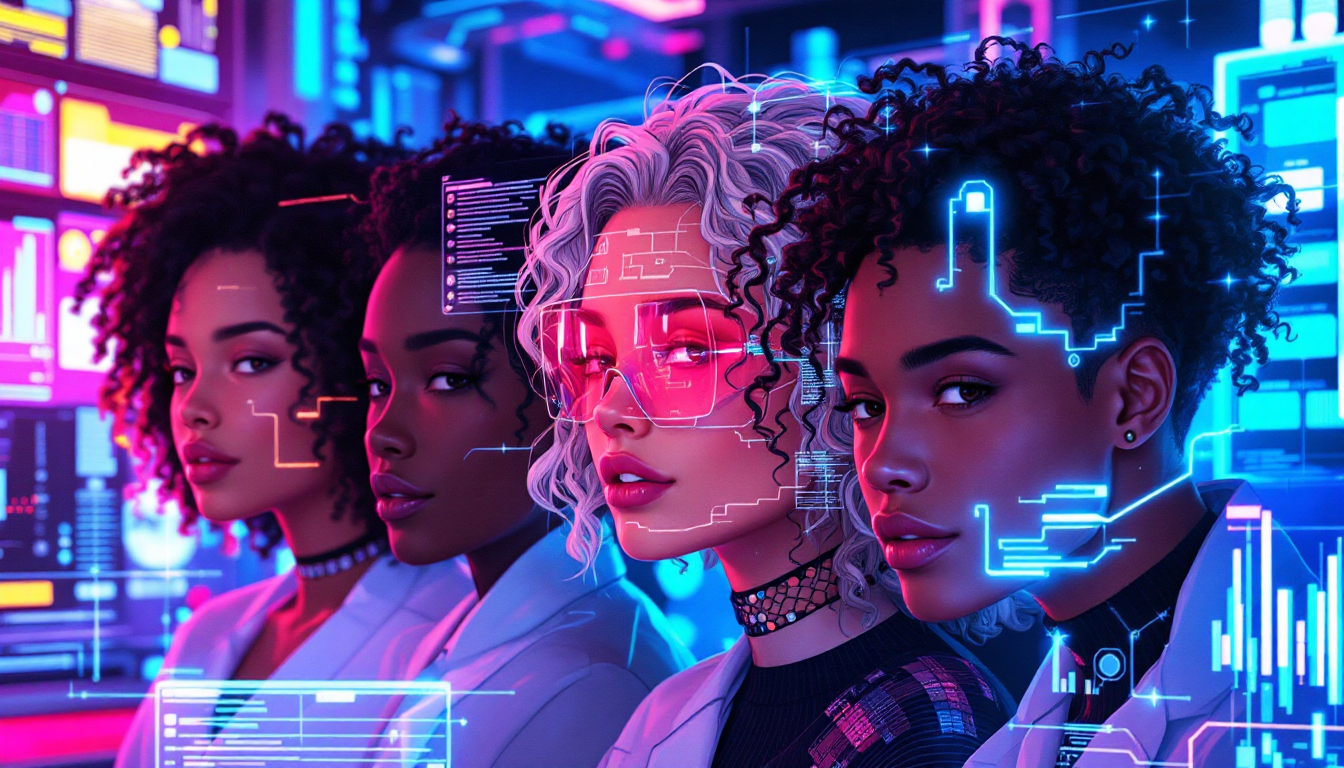
Human hair exhibits an astonishing variety of textures and growth patterns, shaped by genetics, environment and hair care practices. At its core, hair texture refers to the cross-sectional shape of individual strands (round, oval or flattened) and how they grow (straight, wavy, curly or coiled). Pattern describes the overall arrangement—whether hair springs into tight corkscrews, cascades in S-shaped waves or falls in uniform, straight shafts. Understanding these distinctions is essential not only for effective hair care but also for personalized styling. Traditional salons rely on visual inspection and client history—an approach that can miss subtler characteristics like strand volume, porosity and micro-curl patterns. AI steps in to quantify and analyze these fine details at scale, ushering in a new era of hyper-personalized hairstyling.
The Role of AI in Analyzing Hair
Advances in computer vision and generative modeling have transformed how we study hair. Research frameworks now simulate and transfer hairstyles with unprecedented realism:
• Stable-Hair: A two-stage diffusion-based system that first “removes” existing hair via a Bald Converter, then transfers a target hairstyle while preserving identity and color fidelity (Stable-Hair, arxiv.org).
• GroomGen: Employs hierarchical latent representations to control individual strands and global style, enabling highly nuanced generative styling (GroomGen, arxiv.org).
• HAAR: A text-conditioned, strand-based 3D model that captures internal hair structure for high-fidelity rendering in graphics pipelines (HAAR, arxiv.org).
• NeuralHDHair: Reconstructs detailed 3D hair geometry from a single image using implicit neural representations and a GrowingNet strand generator, achieving lifelike results from minimal input (NeuralHDHair, arxiv.org).
These research breakthroughs lay the technical foundation for consumer-facing and salon-grade tools that analyze texture, predict style suitability and simulate transformations in seconds.
Differentiating Hair Types: Curly, Wavy, Straight, Coiled
AI systems must first categorize a user’s natural hair type to deliver realistic previews and recommendations. Key characteristics:
• Straight (Type 1): Round cross-section, no natural bend. Reflects light uniformly—often appears shiny.
• Wavy (Type 2): Slightly oval cross-section; forms loose S-shaped waves. Prone to frizz along the wave crest.
• Curly (Type 3): More flattened cross-section; defined springy curls. Varying diameters—3A (loose curls) to 3C (tight corkscrews).
• Coiled/Kinky (Type 4): Highly flattened cross-section; tight coils or zigzag patterns. Highest shrinkage, fragile strands.
Consumer platforms employ convolutional neural networks (CNNs) and specialized classifiers to detect these patterns from a single selfie or multiple angles. For instance, AIHairstyles analyzes facial structure, hairline and lighting to determine hair type before generating style simulations (AIHairstyles, aifindertools.com).
Importance of Understanding Hair Texture for Styling
Accurate texture analysis yields multiple benefits:
• Realistic Simulations: Matching strand thickness, curl pattern and volume ensures AI-generated previews look natural.
• Product Recommendations: Porosity and density assessments guide choices in conditioners, styling creams and heat-protection tools.
• Style Durability: Understanding if hair holds shape (e.g., curls vs. straight) predicts how long a cut or color will “stick.”
• Preventing Damage: AI diagnostics like HairMetrix® quantify hair count, anagen/telogen ratios and growth rate to monitor health and tailor treatments (HairMetrix®, gethairmd.com).
By integrating diagnostic insights with styling predictions, platforms can suggest not just a look but a care regimen that maintains hair integrity.
How AI Predicts Suitable Hairstyles
Once texture and pattern are mapped, AI leverages generative and recommendation models to propose flattering hairstyles:
-
Face-Shape & Feature Analysis
• Measures jawline, forehead height, cheekbone width
• Maps hairline (widow’s peak, straight, receding)
• Matches styles to balance or accentuate features -
Texture-Driven Rendering
• Uses frameworks like Stable-Hair and GroomGen to transfer chosen styles onto the user’s hair canvas while preserving natural curl or strand flow.
• Ensures color consistency and shadow-highlight interplay. -
Style Recommendation Engines
• Rank hairstyles by predicted fit score (e.g., compatibility with curl tightness, hair volume).
• Factor in user preferences: length, maintenance level, occasion.
GetHairVision exemplifies this pipeline: users upload a single photo, its AI engine analyzes hair texture and facial features, then renders dozens of hairstyles in seconds, enabling side-by-side comparisons before booking a salon appointment (Get Hair Vision, gethairvision.com).
Case Studies: Real Users and Diverse Hair Textures
• Curly Hair Makeover
– User with Type 3C hair tried 15 styles via AI Hair Lens (95% accuracy in simulation) and discovered a layered bob that enhanced curl spring without bulk (AI Hair Lens, aihairlens.com).
• Transition to Natural Coils
– A client with over-processed straight hair used NeuralHDHair-based previews to visualize a return to natural Type 4 coils, building confidence to embrace texture.
• Fine, Wavy Hair Boost
– AIHairstyles recommended a beach-wave lob with curtain bangs for a user with fine Type 2A hair, predicting improved volume at roots and minimal frizz.
• Diagnostic-Driven Treatment
– Through HairMetrix®, a patient tracked thinning (terminal vs. vellus ratio) over six months, then applied tailored topical treatments, seeing a 20% density increase.
These real-world examples highlight AI’s ability to adapt styling advice to diverse textures and individual goals.
Expert Tips for Enhancing AI-Generated Hair Visuals
To get the most accurate and useful AI previews, follow these best practices:
• Lighting & Background
– Use diffuse, even lighting (avoid harsh shadows).
– Choose a neutral, uncluttered background for clear hair-facial separation.
• Image Quality
– High-resolution, in-focus shots—include full hairline and shoulders.
– Capture multiple angles if the tool allows multi-photo input (front, side, back).
• Hair Preparation
– Detangle and lightly moisturize hair to reveal true texture.
– Avoid heavy styling products that alter natural pattern.
• Tool Selection
– For 3D-like previews or professional portfolios, explore strand-based models (HAAR, NeuralHDHair).
– For quick consumer try-ons with privacy guarantees, use AI Hair Lens (auto-deletes images after 30 days) or AIHairstyles.
• Feedback Loop
– Most platforms improve accuracy over time—rate simulations and provide feedback.
– Keep your profile updated with new photos as your hair grows or changes texture.
Conclusion: Personalized Hairstyling with AI
AI-driven analysis of hair textures and patterns marks a paradigm shift in hairstyling—from one-size-fits-all recommendations to data-backed, hyper-personalized consultations. Research frameworks like Stable-Hair, GroomGen, HAAR and NeuralHDHair underpin the technical leaps in realism, while consumer tools such as GetHairVision, AIHairstyles and AI Hair Lens bring these capabilities to your smartphone. Diagnostic platforms like HairMetrix® and IQONIC.AI add a health-focused dimension, ensuring that style transformations go hand in hand with hair integrity. By understanding your unique texture, leveraging AI’s predictive power and following expert tips for image capture, you can explore bold cuts, vibrant colors and new textures with confidence—knowing the preview you see is a true reflection of what awaits in the salon chair.