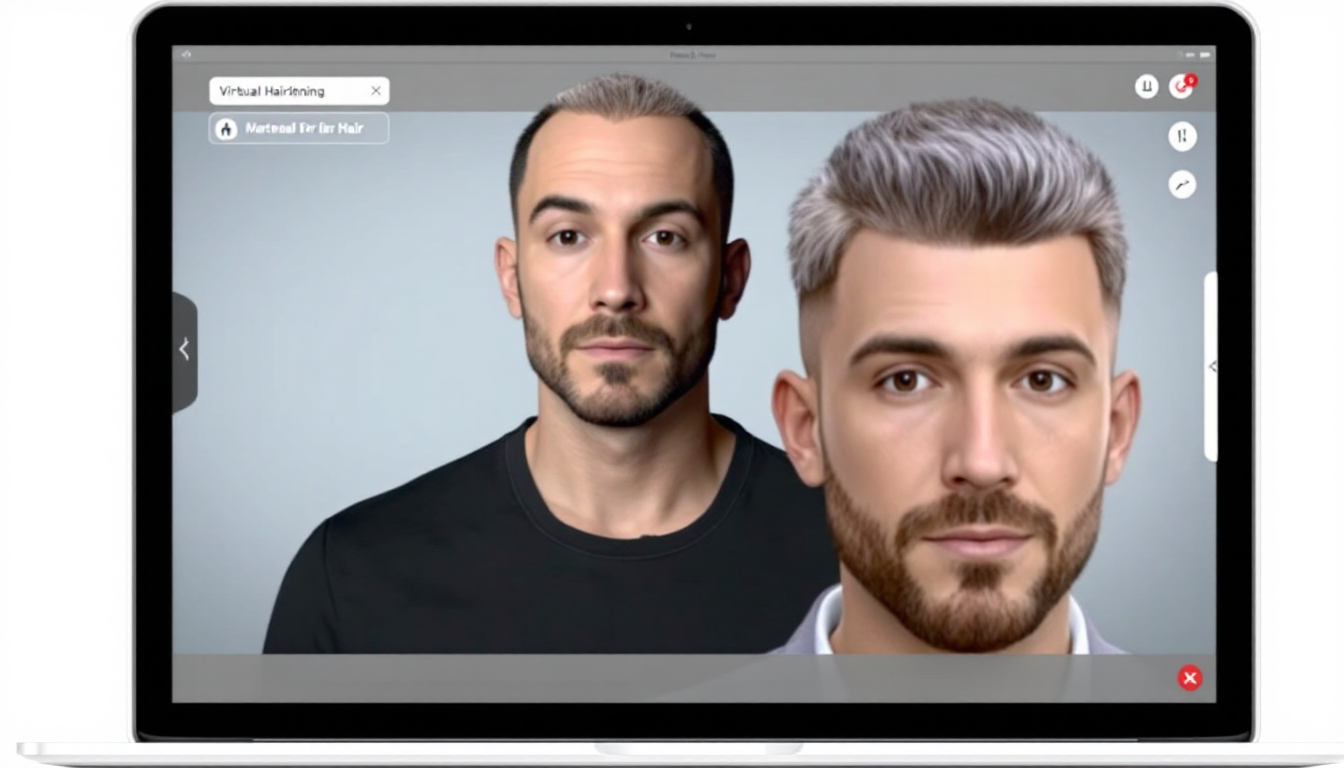
Title: AI and Hair Loss Solutions: Previewing Styles for Thinning Hair
Introduction to AI in Haircare
Haircare has entered a new era, driven by advances in artificial intelligence (AI). From smart shampoos that adapt to scalp condition to virtual styling assistants, AI is transforming how we understand and manage our hair. For millions experiencing thinning hair or hair loss—whether due to genetics, stress, medical treatments, or aging—AI-powered tools now offer an unprecedented ability to visualize potential outcomes before committing to a cut, color, or even a surgical procedure. By blending computer vision, machine learning, and generative modeling, these innovations empower individuals to explore flattering hairstyles, predict restoration results, and personalize treatment plans with confidence and clarity.
Understanding Hair Thinning and Loss
Hair thinning and loss affect up to 50% of men and women by age 50, influencing self-esteem and quality of life. Common patterns include androgenetic alopecia (male and female pattern baldness), telogen effluvium (stress- or illness-triggered shedding), and alopecia areata (autoimmune-driven patchy loss). Beyond the physical changes—receding hairlines, diffuse thinning, patchy spots—many suffer psychological impacts: anxiety, social withdrawal, and diminished confidence. Addressing hair loss effectively requires both medical insight into underlying causes and aesthetic strategies that restore a sense of normalcy and personal style.
How AI Analyzes Hair for Personalized Solutions
At the core of AI haircare tools lies advanced image analysis. After a user uploads a photo or selfie, algorithms detect facial landmarks (jawline, forehead, ears), estimate face shape (oval, round, square), map existing hairlines and density, and analyze color tones. This data drives two key capabilities:
• Personalized Styling Previews: By aligning virtual hair models to an individual’s unique facial geometry, AI ensures that overlays of pixie cuts, bobs, beach waves, or layered trims look realistic and proportionate.
• Health and Treatment Insights: Apps like HairMaxx combine face-shape analysis with scalp imaging to detect early thinning, scalp dryness, or frizz, then recommend tailored regimens—shampoos, serums, supplements—based on local processing and strict privacy safeguards (spark.mwm.ai).
Clinical research underscores AI’s therapeutic potential. In a six-month trial of 38 women with hair thinning, AI-driven personalization of topical serums, shampoos, and supplements led to a 37% reduction in hair shedding by week 12 and 32% by week 24, plus significant improvements in scalp barrier function; over 85% reported better hair and scalp health (Journal of Drugs in Dermatology, March 2025) (https://jddonline.com/articles/artificial-intelligence-based-personalization-of-treatment-regimen-hair-loss-6-month-clinical-trial-S1545961625P8611X/?utm_source=openai).
Previewing Hairstyles: AI Tools and Platforms
A vibrant ecosystem of consumer-facing apps now lets users experiment with looks in seconds:
• HairIsEverything (https://hairiseverything.app/?utm_source=openai): Upload a photo to preview dozens of styles with realistic texture and clean hairline blending. Ideal for fine or thinning hair, it reveals which silhouettes add volume and which might accentuate sparse areas.
• TryHair (February 2026 launch): A free tool offering instant previews of 20+ styles—from pixie cuts to beach waves—via a selfie interface that preserves facial features (https://www.reddit.com/r/buildinpublic/comments/1r1tr8v/launched_tryhair_ai_hairstyle_preview_tool_built/?utm_source=openai).
• MyHairMagic (iOS): Focused on wig try-ons, it uses face-shape detection and color analysis to display multiple wig looks side by side—empowering those seeking non-invasive style changes to compare lengths, cuts, and hues before purchase (https://www.reddit.com/r/WigTalk/comments/1rhtihu/we_just_launched_myhairmagic_on_the_app_store/?utm_source=openai).
• GetHairVision: An AI platform that enables instant previews of trending hairstyles on thinning hair, letting users visualize real transformations and identify the most flattering cuts for their unique profile.
For those contemplating surgical restoration, specialized simulators offer preoperative insights:
• Maxim Hair AI Hair Preview Tool (https://www.maximhairrestoration.com/ai-hair-generator/?utm_source=openai) and HairSimulate (https://hairsimulate.com/?utm_source=openai) generate personalized before-and-after images with up to 98% clinical accuracy in under 60 seconds.
• Hairgen.ai (https://www.tellit.ai/tools/hairgen?utm_source=openai) provides five distinct hairline and style variations per photo for a one-time fee of ~$29, with secure image deletion policies.
• PeekAi™ by Saraswat Hospital (https://www.saraswathospital.com/sh/peek-ai-app/?utm_source=openai) uses a database of 1,500+ real cases to predict transplant outcomes—densities and hairline shapes—delivered via email within 24 hours.
• AIhairtransplant.io (https://www.aihairtransplant.io/?utm_source=openai) and the HairSim.ai embed tool (https://www.hairsim.ai/simulator?utm_source=openai) offer free, no-signup simulations that have been shown to increase clinic bookings fivefold.
Success Stories: Real-Life Transformations
• “After uploading my photo to HairIsEverything, I discovered that a layered lob added fullness around my temples,” says Laura, a 42-year-old marketing manager. “I felt more confident walking into the salon, and the final cut brought back the volume I thought was gone forever.”
• Raj, a 35-year-old banker, used Maxim’s AI simulator to preview a graft plan targeting his receding hairline. “Seeing the projected outcome beforehand made me comfortable with the procedure—and the results mirrored exactly what the AI showed,” he reports.
• In the clinical trial from the Journal of Drugs in Dermatology, participants overwhelmingly praised their AI-guided regimens: “I noticed less scalp dryness and fewer hairs on my brush by week 8,” one subject noted, illustrating how visual and health-oriented AI tools can work in tandem.
Challenges and Considerations
While AI haircare tools hold great promise, users and providers should be mindful of:
• Accuracy Limits: Lighting, image resolution, and diverse hair textures can affect preview realism. Not every curly, coily, or highly textured hair type is equally represented in training datasets.
• Privacy and Data Security: Photo uploads and biometric data must be handled with stringent encryption and clear deletion policies to protect user identity.
• Managing Expectations: Simulations are heuristics, not guarantees. Users should consult qualified stylists or surgeons to align AI previews with practical feasibility.
• Accessibility and Bias: Many tools are free or low-cost, but some premium simulators may pose financial barriers. Ongoing efforts are needed to ensure AI models are trained on diverse populations to avoid biased outputs.
The Future of AI in Hair Loss Solutions
Emerging research and technologies hint at even more compelling capabilities:
• HairFastGAN (April 2024, https://arxiv.org/abs/2404.01094?utm_source=openai): Enables near real-time, high-resolution hairstyle transfers—potentially powering live virtual try-ons during video calls.
• GroomGen (November 2023, https://arxiv.org/abs/2311.02062?utm_source=openai): Encodes hairstyles at the individual-strand level, allowing ultra-fine editing of volume, curl tightness, and strand color.
• ControlHair (September 2025, https://arxiv.org/abs/2509.21541?utm_source=openai): Introduces physics-informed video diffusion for dynamic, controllable hairstyle transitions—envision virtual “bullet-time” hair showcases to evaluate movement and bounce.
• Expanded Health Integration: As AI health apps like HairMaxx refine scalp imaging and regimen personalization, we can expect more holistic solutions that combine visual previews with proactive thinning detection and treatment tracking.
Conclusion: Embracing Technological Help
For those facing thinning hair or hair loss, AI offers more than novelty—it provides a data-driven framework to explore styles, anticipate treatment outcomes, and regain confidence. By leveraging consumer apps, clinical simulators, and emerging research, individuals can make informed decisions, minimize guesswork, and tailor solutions to both aesthetic preferences and health goals. As AI models grow more sophisticated and inclusive, the future promises seamless, realistic, and medically integrated experiences—transforming haircare from art and intuition into a precise, personalized science. Whether you’re curious about a new bob, weighing a transplant, or seeking an optimized scalp regimen, now is the time to let AI guide your journey toward a fuller, more vibrant you.