Introduction to AI in Hair Extensions
The hair extensions market has long been driven by the promise of instant length, volume and color transformation. Yet even with high-quality wefts, tapes and clip-ins, consumers wrestle with two core anxieties: “Will this shade really match my base color?” and “How will these extensions look on me before I commit?” Artificial intelligence is now reshaping that decision process. By harnessing computer vision, deep learning and augmented reality, brands can offer virtual try-ons and ultra-precise color matching—eliminating guesswork, boosting confidence and reducing costly returns. In this post, we’ll explore how AI is transforming every stage of the hair extensions journey, from virtual previews to tailored shade recommendations, and why early adopters are reporting dramatic uplifts in engagement and sales.
The Role of AI in Virtual Try-Ons
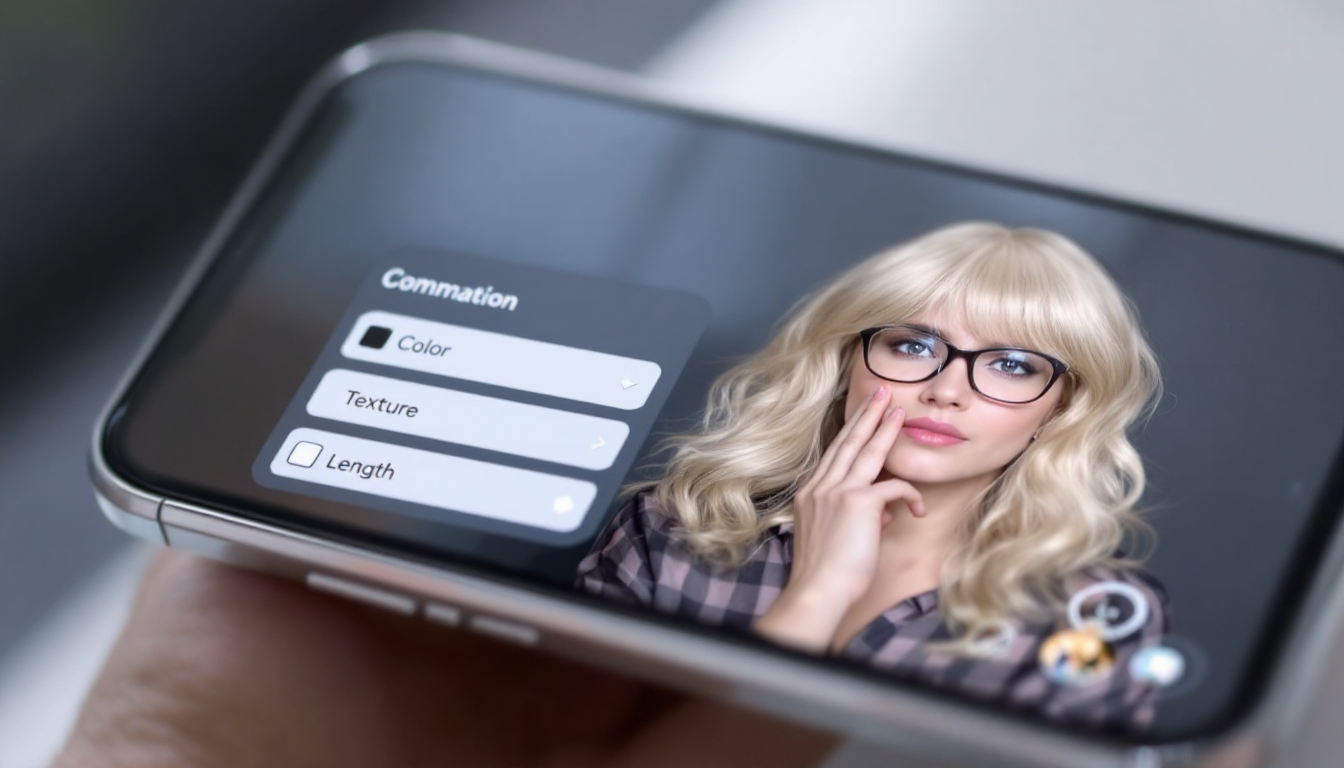
Virtual try-on (VTO) technology overlays digital hair extensions onto a live webcam feed or uploaded photo, enabling real-time experimentation with length, style and color. AI’s contribution begins with hair detection and segmentation: convolutional neural networks isolate the customer’s hair shape and background, then render extensions in correct perspective, scale and motion.
Key engagement and conversion impacts:
• Virtual hair color try-ons can boost conversion rates by up to 2.5× (gitnux.org).
• Sites featuring VTO see users spending 360% more time exploring options (gitnux.org).
• Aveda reported a 112% increase in time on site after introducing a hair color try-on feature (gitnux.org).
• Madison Reed’s AR-enhanced hair color quiz drove a 38% rise in conversions (gitnux.org).
Leading solutions:
• Revieve AI Hair Color Artist (BeautyML + Google Cloud) delivers hyper-realistic live and still-image try-ons, driving 300% higher conversions, 30% larger baskets and 2.5× longer engagement (https://www.revieve.com/platform/ai-hair-color-artist?utm_source=openai).
• GlamAR’s web-based hair color changer supports curly and dark hair detection, offers 16+ shades and yields a 94% conversion lift with a 40% return reduction (https://www.glamar.io/solutions/virtual-hair-color-try-on/?utm_source=openai).
• Banuba AR Hair Color Changer adapts to varied lighting, tracks hair movement, and now includes multi-colored strand dyeing for social and e-commerce (https://www.banuba.com/hair-color-changer?utm_source=openai; https://www.businesswire.com/news/home/20230504005617).
How AI Achieves Precise Color Matching
Color matching for extensions must account for base hair shade, undertones, lighting conditions and the material’s reflectance. AI pipelines typically include:
- Hair segmentation. Deep-learning models separate hair pixels from skin and background (Orbo Virtual Hair Color Try-On uses proprietary segmentation networks: https://www.orbo.ai/virtual-haircolor?utm_source=openai).
- Skin undertone analysis. By analyzing facial regions, algorithms infer warm, cool or neutral undertones, ensuring complementary extension hues.
- Shade recommendation engines. Self-supervised learning on large hair image datasets maps user photos to the closest extension shade. Vex Hair’s Virtual Color Match uses a selfie-based recommender to align extensions seamlessly with natural hair (https://www.vexhair.com/color-match?utm_source=openai).
- Color rendering. GAN- or diffusion-based models (e.g., HairFastGAN (2024) and Stable-Hair (2024)) transfer realistic color and style in under a second, even with varied head poses (https://arxiv.org/abs/2404.01094; https://arxiv.org/abs/2407.14078).
Benefits of AI in Personalizing Hair Extensions
Personalization is vital in a beauty category where individual attributes vary widely. AI-driven tools deliver:
• Heightened confidence. 56% of shoppers say AR gives them more assurance in hair color quality (gitnux.org).
• Fewer returns. VTO adoption eliminates about one-fifth of returns for extensions and wigs (gitnux.org).
• Gen Z appeal. 32% of Gen Z consumers have tried a virtual hair makeover, and 92% want AR in hair e-commerce (gitnux.org).
• Data-driven upselling. Behavioral insights—preferred styles, shades and session duration—feed personalized marketing, cross-sell bundles (extensions + styling tools) and loyalty programs.
Real-World Applications and Success Stories
• Aveda: After integrating virtual hair color previews, site engagement more than doubled, enabling Aveda educators to drive online-to-in-salon appointments (gitnux.org).
• Madison Reed: Their AR hair quiz reduced shade selection anxiety, lifting conversions by 38% (gitnux.org).
• Ulta Beauty: Using NVIDIA StyleGAN2, GLAMlab Hair Try-On generates new hairstyle and color visuals in 5 seconds for first styles—and 1 second thereafter—guiding shoppers from selfie to purchase (https://blogs.nvidia.com/blog/ulta-beauty-stylegan2/?utm_source=openai).
• Perfect Corp’s YouCam Makeup app (1 billion+ downloads as of 2025) underpins many hair and beauty VTO solutions, exemplifying scalable AR integration across mobile and web (https://en.wikipedia.org/wiki/YouCam_Makeup?utm_source=openai).
• GetHairVision (internal): Users upload selfies, select from dozens of extension styles and colors, and see ultra-realistic previews—eliminating guesswork and boosting order confidence.
Future Trends in AI-Driven Hair Extension Services
The next frontier blends deeper personalization, richer realism and seamless omnichannel experiences:
• Real-time mobile VTO in 3D/AR glasses. Imagine window shopping via smart glasses, previewing extensions as you pass salon storefronts.
• Strand-level customization. GeomHair (2025) reconstructs individual hair strands from 3D scans, enabling hyper-realistic extension previews in AR/VR avatars (https://arxiv.org/abs/2505.05376).
• AI-powered in-salon kiosks. Stylists and clients can co-create bespoke shades via diffusion-based tools like Stable-Hair, then mix custom extension orders on demand.
• Metaverse hair plug-ins. As avatars become expression of identity, extension brands will sell virtual hair packs, backed by the same AI color-matching engines used for real-world orders.
• Automated inventory optimization. Predictive analytics align shade stock with local demographic trends, reducing waste and out-of-stock scenarios.
Conclusion: Embracing Technology for Better Hair Choices
AI-powered virtual try-ons and precise color matching are no longer futuristic experiments—they are core differentiators for brands in the competitive hair extensions market. By boosting engagement up to 360%, lifting conversions by as much as 2.5×, slashing returns by 20%, and earning the trust of Gen Z, AI tools deliver measurable ROI and enhanced customer satisfaction. Whether you’re a salon owner seeking to modernize the in-store experience or an e-tailer aiming to stand out online, investing in AI-driven hair extension services is a strategic imperative. Embrace the technology today, and empower consumers to play, preview and personalize their perfect hair transformation with confidence.