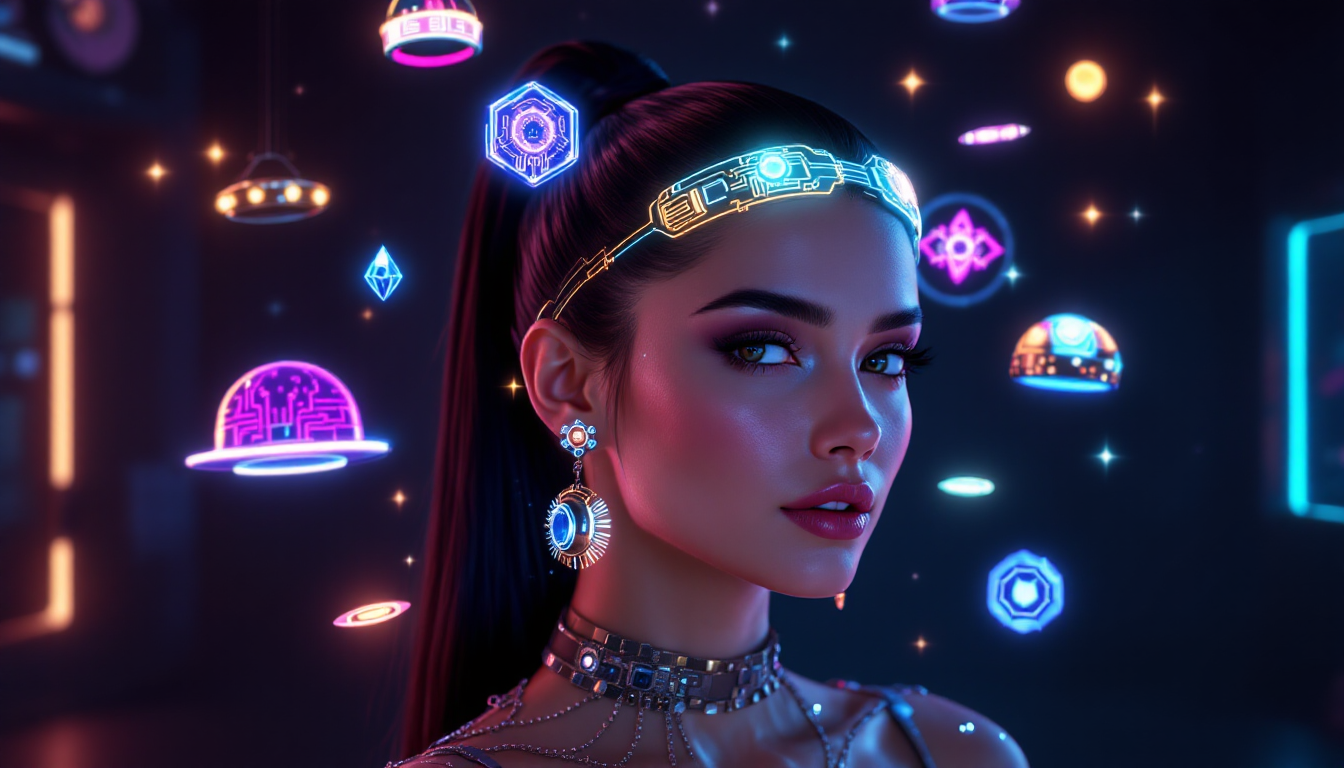
Introduction to AI in Hairstyling
The world of hairstyling has always been at the intersection of art and technology—from precision cutting shears to ceramic-coated irons. Today, artificial intelligence is the latest tool transforming how we conceive, preview, and perfect our looks. No longer must you commit to a daring cut or color and hope for the best: AI-driven platforms can analyze your facial structure, hair texture, and personal preferences to recommend styles, colors, and even accessories that best suit you. Virtual try-on apps like LayR (https://layr.style/en/virtual-try-on-app?utm_source=openai) and AI Hair Style Changer: Try On (https://apps.apple.com/us/app/ai-hair-style-changer-try-on/id6755359940?utm_source=openai) have democratized professional‐grade previewing—users simply upload a selfie and, within seconds, experiment with hundreds of looks. Brands and developers now integrate these capabilities via SDKs such as Banuba Hair AI (https://www.banuba.com/hair-ai?utm_source=openai), enabling on-device performance and privacy. This proliferation of AI in hairstyling invites us to reimagine our relationship with our hair—shifting from reactive corrections to proactive co-creation of our signature style.
The Role of Accessories in Personal Style
Hair accessories—hats, headbands, clips, turbans, and more—are far more than afterthoughts. They frame the face, signal mood, and add texture, color, or contrast to an outfit. A sleek silk headband can elevate a minimalist look; a statement barrette or claw clip transforms a ponytail into a runway-ready style. Accessories also offer practical benefits: clips secure hair away from the face during workouts; turbans protect delicate curls overnight; wide-brimmed hats provide sun protection. Psychologically, accessories allow rapid reinvention without committing to a haircut or color change: you can go from bohemian festivalgoer to polished professional simply by swapping a floral headscarf for a leather-accented fascinator. In an era when personal branding matters as much as personal styling, accessories provide vital flexibility.
How AI Visualizes Hairstyles with Accessories
At the core of today’s AI styling revolution lies virtual try‐on technology. These platforms combine computer vision, augmented reality (AR), and deep learning to render realistic hair and accessory simulations on a user’s photo or live video feed. Key players include:
• LayR (iOS) analyzes facial landmarks and hairline geometry to overlay hairstyles, glasses, hats, and headbands in real time; its AR engine adjusts for lighting and perspective (layr.style).
• AI Hair Style Changer: Try On (iPhone) seamlessly integrates a “virtual accessory booth,” letting users trial glasses alongside hair colors and cuts (apps.apple.com/us/app/ai-hair-style-changer-try-on/id6755359940).
• RE/STYLE offers a B2B platform for brands to embed virtual hair and accessory try-on on their e-commerce sites—accentuating accurate rendering of diverse textures and headwear shapes (restyle.ai).
• Hippist AI focuses on headwear marketing, transforming selfies or mannequin shots into polished product images—ideal for hats, turbans, and hairbands—eliminating costly photoshoots (hippist.com/ai-headwear-photography).
• Banuba Hair AI delivers an SDK supporting on-device processing for haircuts, coloring, and accessory layering across iOS, Android, and web (banuba.com/hair-ai).
• Clipt specializes in AI-driven recommendations for hair accessories like claw clips—scanning hair type, density, and coil pattern to suggest the optimal size and style, complete with care tips (clipt.org).
• Artisse AI leverages generative models to produce full-body, high‐resolution images from selfies—users can not only change hairstyles and colors but also add headwear and styling accessories with photorealistic fidelity (en.wikipedia.org/wiki/Artisse_AI).
• Stable-Hair, an academic diffusion-based framework, achieves identity-preserving hair transfers via a two-stage pipeline (Bald Converter + Hair Extractor) and Latent ControlNet, demonstrating the near-future potential for flawless virtual try-ons (arxiv.org/abs/2407.14078).
Together, these tools let you experiment virtually with:
• Hats and beanies—explore shapes and brim sizes without ever picking up a tape measure.
• Headbands and scarves—test widths, materials, and patterns against your skin tone and outfit.
• Clips and barrettes—evaluate sizes and placements to accentuate updos or half-up styles.
Impact of Accessory Choices on Overall Styling
Selecting the right accessory can make or break your look. AI visualizers help you understand how factors like face shape, hair density, and color contrast interplay with accessory design:
• Face Shape Harmony: Oval faces can afford wide bands and large brim hats; heart-shaped faces benefit from volume near the chin—a floppy fedora or cluster of barrettes at the nape. Square faces look softened by curved headbands; round faces gain length from tall, volumizing hats.
• Hair Texture & Density: Clipt’s AI scanning (clipt.org) reveals that fine, straight hair may require slim, lightweight clips to avoid slip; thick, coiled hair demands robust, wide-toothed claws or textured grips.
• Color Contrast & Coordination: Virtual try-on apps let you preview complementary or analogous color pairings—pair a jewel-toned velvet headband with muted earth-tone outfits, or contrast pastel hair clips against a monochrome palette.
• Material & Occasion: You can preview the sheen of silk scarves for eveningwear, the matte texture of woven straw for daytime, or the leather finish of headbands for edgy street style, all within seconds.
By visualizing combinations virtually, you avoid costly trial-and-error in stores or salons—saving time, money, and reducing returns.
User Experiences and Testimonials
- “I tested five different headbands in under two minutes on LayR—it feels like playing dress-up,” reports fashion blogger Emma L. “I nailed the color match to my new trench coat before even leaving home.”
- Clipt customer Manu G. shared, “The AI suggested a jumbo claw clip for my 4C coils; I’d never tried one that large—it actually holds all my hair without slip.” (clipt.org)
- “We integrated Banuba Hair AI into our e-shop, and saw a 30% increase in accessory add-to-cart rates,” says e-commerce director at TrendHive. “Customers feel empowered to mix and match virtually before buying.”
- Artisse AI’s founder notes that over 5 million personalized images have been generated since launch, with users particularly enjoying swapping out hair accessories to craft unique mood boards (en.wikipedia.org/wiki/Artisse_AI).
Future Trends in AI Hair Styling
The CES 2026 showcase underlined how AI will continue reshaping both tools and styling:
• Smart Styling Tools: L’Oréal’s Light Straight + Multi‐Styler uses infrared sensors to adjust heat based on hair condition, minimizing damage while enabling smooth finishes suitable for subsequent headwear (thedailybeast.com/the-future-of-hot-hair-tools-straight-from-ces-2026).
• Robotic Hair Dryers: Dreame’s Pilot 20 AI Intelligent Luxury Hair Dryer employs robotic arms to scan scalp health in real time—optimizing airflow and temperature for gentle, efficient drying that preps hair perfectly for accessories (thedailybeast.com/the-future-of-hot-hair-tools-straight-from-ces-2026).
• Holistic Styling Ecosystems: Expect platforms that integrate haircuts, color, accessories, and wardrobe into unified AI-driven style profiles—recommending, for example, a corduroy newsboy cap to complement newly dyed auburn waves and your spring capsule wardrobe.
• Sustainability & Customization: AI will enable on-demand 3D-printed accessories tailored to your precise head measurements and aesthetic preferences—reducing waste and guaranteeing perfect fit.
Conclusion: Embracing AI for a Stylish Future
AI is no longer a futuristic novelty—it’s a practical, empowering partner in the pursuit of personal style. From virtual try-ons of barrettes and bandanas to AI-driven accessory recommendations tailored to your hair type and face shape, technology is elevating how we experiment, select, and showcase hair accessories. As hardware evolves to deliver healthier, more precise styling, and as generative models advance into seamless real-time AR, your next signature look—hat, clip, or headband—will be just a few clicks away. Embrace AI, and let your accessories tell your story.