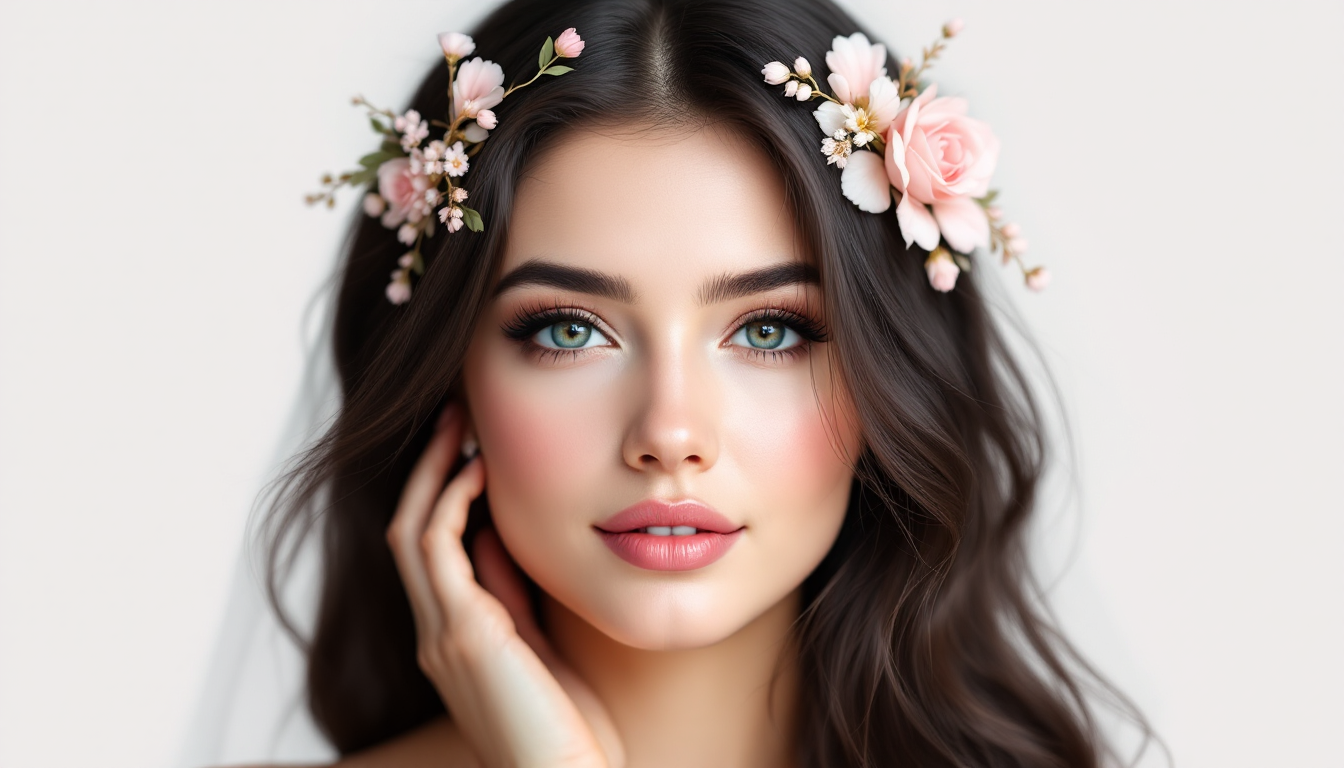
AI and Hair Accessories: Visualizing Your Look with Digital Add-Ons
Introduction to AI in Hairstyling
Artificial intelligence has transformed how we shop for fashion and beauty, and hairstyling is no exception. Just as AI-driven makeup apps let you experiment with lipsticks and eyeshadows in real time, today’s virtual-try-on platforms enable you to preview hairstyles, hair colors, wigs, and—crucially—hair accessories before making any commitment. From hats and headbands to clips, scarves, and jewelry, AI is powering hyper-realistic simulations that match lighting, perspective, texture, and scale. This means you can experiment risk-free, boost pre-purchase confidence, and get instant feedback on what suits your facial features and personal style. In this post, we’ll explore the rise of digital hair accessories, how AI visualization works, the benefits of trying accessories virtually, the leading tools in the space, real-world user experiences, and what the future holds for AI and hair fashion.
- The Rise of Digital Hair Accessories
– Expansion Beyond Haircuts and Colors
• In the early days of beauty AI, most virtual-try-on tools focused on makeup or hair color alone. But consumers today expect end-to-end styling solutions: haircuts, color changes, wigs, and—just as importantly—hair accessories.
• Major beauty retailers and startups have answered this demand by integrating accessory-specific modules into their platforms, allowing users to add hats, headbands, scarves, clips, and jewelry.
– Key Players Driving Accessory Simulation
• Musely’s AI Accessory Virtual Try-On: Upload any portrait and overlay scarves, hats, earrings, necklaces, and more with photorealistic blending that automatically adapts to the image’s lighting and perspective (musely.ai/tools/accessory-virtual-try-on).
• Bandy AI: Transforms flat product images of accessories into realistic lifestyle visuals on AI models, preserving true color, texture, and scale (bandy.ai/ai-virtual-try-on-accessories).
• HuHu.ai Virtual Jewelry Try-On: Supports manual or automatic placement of rings, bracelets, scarves, and more on user photos for a wide range of accessory categories (huhu.ai/virtual-jewelry-try-on).
– Market Adoption
• YouCam Makeup, one of the pioneers in AR beauty simulations, surpassed 1 billion downloads by October 2025, illustrating massive consumer interest in virtual beauty tools (YouCam Makeup, Wikipedia).
• In 2019, Sally Beauty introduced “ColorView” hair-color try-on in 500 stores and via mobile, setting a precedent for in-store AI-AR hair experiences (allure.com).
• Google’s expansion of AR beauty features into mobile search in 2023 underscores how major tech firms see virtual try-on as integral to future e-commerce (vogue.com).
- How AI Visualization Works
– Core Technologies
• Computer Vision: Detects facial landmarks (eyes, nose, chin) and hair boundaries to ensure accessories are precisely placed.
• Deep Generative Models: GANs (Generative Adversarial Networks) and diffusion models synthesize photorealistic overlays that blend seamlessly with the underlying photo.
• 3D Modeling & Tracking: Some advanced platforms reconstruct a low-poly 3D approximation of your head to allow dynamic rotations and real-time adjustments.
– Workflow Steps
- Image Input: User uploads a selfie or live camera feed.
- Face & Hair Segmentation: AI separates hair, skin, background, and facial features.
- Accessory Fitting: Virtual items are resized, rotated, and positioned based on 2D landmarks or 3D mesh data.
- Photorealistic Blending: Lighting, shadows, and textures are computed to ensure the accessory looks “real” on the user.
- Rendering & Delivery: Final image or video is generated—usually within seconds—for download or social sharing.
– Video-Based Styling
• Sora 2’s Cameo Feature: Takes static prompts and outputs realistic AI videos of users wearing different hairstyles, colors, outfits, and accessories. Multiple variations can be generated in a single video clip, adding motion and dynamic perspective to the virtual-try-on experience (sora2.ink).
-
Benefits of Trying Accessories Virtually
– Hyper-Realistic Experimentation
• Photorealistic overlays remove uncertainty about how an accessory will look under different lighting conditions and angles.
– Personalized Recommendations
• Many platforms analyze your face shape, skin tone, and even wardrobe style to suggest accessories that complement your features.
– Reduced Returns & Higher Conversions
• Retailers see fewer product returns—customers know exactly what they’re getting—and higher purchase confidence.
– Time & Cost Savings
• No need to physically buy multiple accessories; trial and error happens entirely on screen.
– Social Sharing & Feedback
• Users can share virtual looks on social media or with friends to crowdsource opinions before committing. -
Top AI Tools for Hairstyling & Accessories
-
HeyBeauty
– Features: Virtual try-on for clothes, hairstyles, eyewear, and accessories. Hyper-realistic AI image enhancement in seconds.
– Impact: Aims to boost pre-purchase confidence and reduce returns (heybeauty.ai). -
LookTry (Nano Banana AI)
– Features: Try on multiple fashion items—hair, glasses, jewelry—simultaneously. Accuracy over 90% for sizing and placement.
– URL: https://www.looktry.app/?utm_source=openai -
Musely.ai
– Hairstyle Try-On: Over 100 hairstyles and colors tailored to facial features (musely.ai/tools/hairstyle-virtual-try-on).
– Accessory Try-On: Photorealistic blending for scarves, hats, jewelry (musely.ai/tools/accessory-virtual-try-on). -
Bandy AI
– Transforms product images into realistic lifestyle visuals on AI models. Ideal for e-commerce catalogs (bandy.ai/ai-virtual-try-on-accessories). -
HuHu.ai
– Virtual jewelry and accessory try-on with manual/automatic placement (huhu.ai/virtual-jewelry-try-on). -
Pixelcut
– Virtual wig try-on with AI-rendered images of different wig styles and colors. Fast, personalized, download-ready (pixelcut.ai/create/virtual-wig-try-on). -
BasedLabs
– Risk-free hairstyle and color experimentation with personalized recommendations (basedlabs.ai/tools/virtual-hair-try-on). -
Sora 2
– AI video-based styling for dynamic previews of hair, outfits, and accessories (sora2.ink). -
User Experiences and Testimonials
– “I was skeptical at first, but using Musely’s accessory try-on, I found the perfect silk scarf that matched my autumn wardrobe. It looked so real I almost forgot it was digital!” – Priya, 28, Fashion Blogger
– “With LookTry, I layered a headband, aviator sunglasses, and a clip in under ten seconds. The AI’s 90% placement accuracy is no joke.” – Marcus, 35, E-commerce Manager
– “Pixelcut’s virtual wig try-on let me test colors I’d never dare try in real life—electric blue and rose gold! I downloaded the images to show my stylist.” – Hannah, 22, College Student
– “Sora 2’s AI videos helped me visualize myself hosting a virtual event. Seeing my hair bounce as I turned my head sold me on a glam clip.” – Daniel, 30, Content Creator -
Future Trends in AI and Hair Fashion
– Augmented Reality Glasses & Mirrors
• AR-enabled smart mirrors in salons and retail stores will let customers “step into” different looks in full 3D.
– AI-Driven Recommendation Engines
• Beyond simple try-on, AI will analyze purchase history, social media style, and even mood data to suggest curated accessory sets.
– Real-Time Video Call Styling
• Virtual styling sessions where AI dynamically swaps accessories on your feed while you chat with a stylist or friend.
– Sustainability Integration
• AI will recommend second-hand or rental accessories based on virtual try-on results, reducing waste and extending product lifecycles.
– Deeper Personalization via 3D Scans
• Smartphone LiDAR and depth sensors will create accurate 3D head scans, enabling flawless accessory scaling and dynamic shadowing. -
Conclusion and Final Thoughts
AI-powered virtual try-on for hair accessories is rapidly moving from novelty to mainstream. By merging advanced computer vision, generative modeling, and 3D tracking, tools like HeyBeauty, Musely, Bandy, and Sora 2 deliver lightning-fast, photorealistic previews that empower consumers to experiment boldly and shop confidently. The benefits—fewer returns, greater personalization, and enriched social sharing—are already reshaping how we approach hairstyling. As AR glasses, AI recommendation engines, and sustainability features emerge, the next chapter of digital hair fashion promises even deeper immersion and more responsible consumption. Whether you’re a fashion enthusiast, stylist, or retailer, embracing AI-driven accessory visualization today will be key to staying ahead in the ever-evolving world of beauty tech.