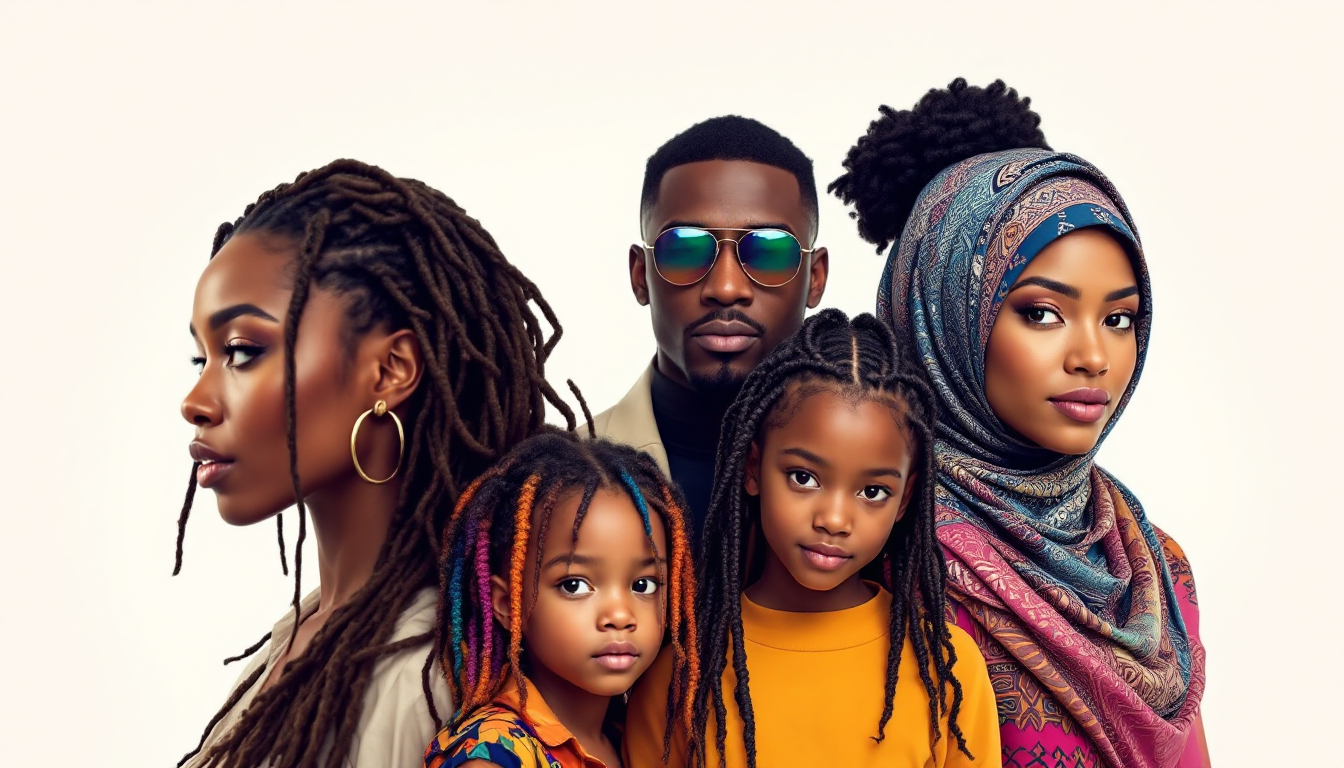
- Introduction: The Rise of AI in Hairstyling
The past decade has seen artificial intelligence transform industries from finance to healthcare—and hairstyling is no exception. AI-powered tools now enable virtual try-ons, personalized style recommendations, and automated salon scheduling. Apps like ModiFace and YouCam Makeup let users experiment with cuts, colors, and textures in real time, while generative platforms such as MidJourney, Stable Diffusion, and DALL·E 3 can conjure entirely new hair-art concepts on demand. This wave of innovation promises creativity at scale, lower costs, and more personalized experiences.
Yet as AI’s role expands, important questions arise about its cultural sensitivity. Hairstyles are not merely aesthetic choices; they carry deep social, historical, and spiritual meaning. When an AI system misinterprets—or worse, censors—cultural expressions in hair, it risks erasing identity and perpetuating bias. In this post, we explore how AI can both misstep and succeed in honoring cultural heritage through hairstyle design, highlighting research, real-world impacts, and promising paths forward.
- Understanding Cultural Significance in Hairstyles
Across societies, hair has long signified community, status, spirituality, and protest.
- In many West African cultures, braiding patterns communicate lineage, age group, and marital status.
- The Sikh dastar (turban) embodies devotion and equality.
- Hijabs carry layers of religious observance and personal choice.
- Bantu knots, Fulani braids, and locs each encode stories of resistance, resilience, and beauty traditions stretching centuries.
Reducing these styles to generic labels like “curly” or “braided” erases their nuance. As Dr. Chinelo Onwugbenu (cultural anthropologist) puts it, “Hair is living history. Each coil and twist holds memory” (Dinkins, 2025). Recognizing this significance is the first step toward culturally aware AI.
- The Role of AI in Cultural Sensitivity
AI can either propagate bias or help dismantle it. Key dynamics include:
• Biased Moderation Filters
Generative-art platforms often misflag culturally specific hairstyles—cornrows, Fulani braids, hijabs, Sikh turbans—as policy violations. These filters trigger because underrepresented or mislabelled images in training sets get associated with “risk” or “violence.” One Alibaba-commissioned analysis found that major AI-art systems disproportionately censor these styles, disrupting creative freedom (Why Do AI Art Platforms Flag Culturally Specific Hairstyles As ‘Inappropriate’?, Alibaba.com).
• Representational Gaps in Training Data
A 2023 audit by the Algorithmic Justice League revealed that in the LAION-5B dataset, natural Black hairstyles appeared 3.7 times more often with tags like “arrest,” “protest,” or “gang-related,” compared to white women’s hairstyles—biases baked into classifiers thereafter (Alibaba.com). Another study across five major diffusion-model datasets showed fewer than 4.2% of portrait images depicted Black subjects—and of those, under 18% featured natural Black hairstyles (Alibaba.com).
• Prompt Engineering as Short-Term Fix
Some creators use precise descriptors (“Ghanaian Fanti knot crown,” “Punjabi jhoomar bun”) and neutral contexts (“library study session”) to bypass moderation blocks. Initiatives like the “Unfiltered Roots” prompt library document such workarounds—but they remain brittle solutions (Alibaba.com).
• AI Avatar Simplification
Avatar-generation tools often collapse rich styles into generic textures (“curly,” “coily”) without honoring structure or meaning. This flattening erases cultural detail and undermines identity integrity (How To Create AI Avatars That Reflect Cultural Hairstyles Without Stereotyped Textures Or Proportions, Alibaba.com).
• Real-World Consequences
A Forbes-backed study (August 2025) showed that AI systems such as Clarifai and Amazon Rekognition rated braids on a Black woman as less professional or intelligent—and sometimes failed to recognize her across different images. White women’s hairstyles faced no such penalties. These biases can derail job applicants when companies employ AI-driven screening or verification (Forbes.com).
- Case Studies: Successful Culturally Aware AI Hairstyling Solutions
Despite these challenges, pioneering projects demonstrate what culturally sensitive AI can look like:
• Microsoft Research’s Hairmony
Hairmony is a fairness-aware hairstyle classification system built on synthetic data annotated via a taxonomy co-developed with domain experts. It represents short, frizzy, and coily textures more robustly than traditional parametric models, significantly reducing misclassification rates for natural Black hairstyles (Hairmony: Fairness-aware hairstyle classification, Microsoft.com).
• “If We Don’t, Who Will?” by Stephanie Dinkins
Brooklyn artist Stephanie Dinkins’s 2025 exhibit centers Black and brown narratives through AI-generated images, using community story inputs to democratize representation and challenge white-dominated AI frames. The work highlights how participatory design can yield more inclusive AI outputs (The Guardian, July 2025).
• Academic-Industry Collaboration in MENA
A peer-reviewed perspective on AI-powered cosmetic systems in the Middle East and North Africa calls for datasets reflecting regional phenotypes, practitioner collaboration, and cultural competency assessments. Early pilots have begun integrating local hairstylists into model-training loops, yielding tools that honor MENA aesthetic diversity (DovePress.com).
- Challenges and Limitations of AI in Understanding Cultural Nuances
Key obstacles remain:
- Data Scarcity and Mislabeling: Underrepresentation of non-Western styles in major datasets leads to skewed models and censorship (Alibaba.com).
- Taxonomy Complexity: Codifying thousands of culturally embedded styles into a neat hierarchy risks oversimplification or erasure.
- Resource Constraints: Many AI startups lack the budgets or expertise to engage community advisors.
- Persistent Bias in Commercial Tools: Prominent avatar and screening systems continue to misrender locs, Fulani braids, and often—absurdly—depict a “pineapple” hairstyle when asked for a “pineapple” up-do, as documented by scholar Blanca Burch (ShineMyCrown.com).
- Ethical and Legal Dimensions: Misclassification that brands a hairstyle as “unprofessional” can have tangible economic and reputational harms, raising questions of liability and redress.
- Future Prospects: Enhancing AI’s Cultural Sensitivity
To build truly inclusive hairstyling AI, stakeholders should pursue:
• Inclusive Data Practices
– Expand collection of high-quality images across cultural contexts.
– Use synthetic augmentation informed by domain experts (as in Hairmony).
• Collaborative Taxonomy Development
– Engage historians, stylists, community leaders to define hairstyle categories.
– Regularly update taxonomies to reflect evolving trends.
• Cultural Competency Evaluation
– Incorporate metrics measuring fidelity to style, context, and meaning.
– Audit moderation filters for disparate impacts (Algorithmic Justice League model).
• Participatory Design and Governance
– Embed community feedback loops in product roadmaps.
– Establish advisory councils representing diverse hair cultures, akin to Dinkins’s approach.
• Transparency and Accountability
– Publicly document dataset composition and model performance by style and ethnicity.
– Offer recourse for misclassification or censorship incidents.
Industry, academia, and regulators must coordinate to integrate these pillars. Only then can AI become an ally in celebrating hair cultures rather than erasing them.
- Conclusion: Celebrating Diversity with AI
Hairstyles are living testaments to heritage, identity, and resilience. AI holds immense potential to amplify this diversity through personalized design, virtual try-ons, and new creative frontiers. Yet without conscious effort, AI risks perpetuating the very biases it could overcome. By addressing data gaps, fostering collaborative taxonomies, and centering community voices, we can build hairstyling AI that honors every braid, knot, and coil. In doing so, technology becomes not just a tool, but a platform for cultural celebration—proof that when AI meets empathy, creativity flourishes across all hair textures and traditions.