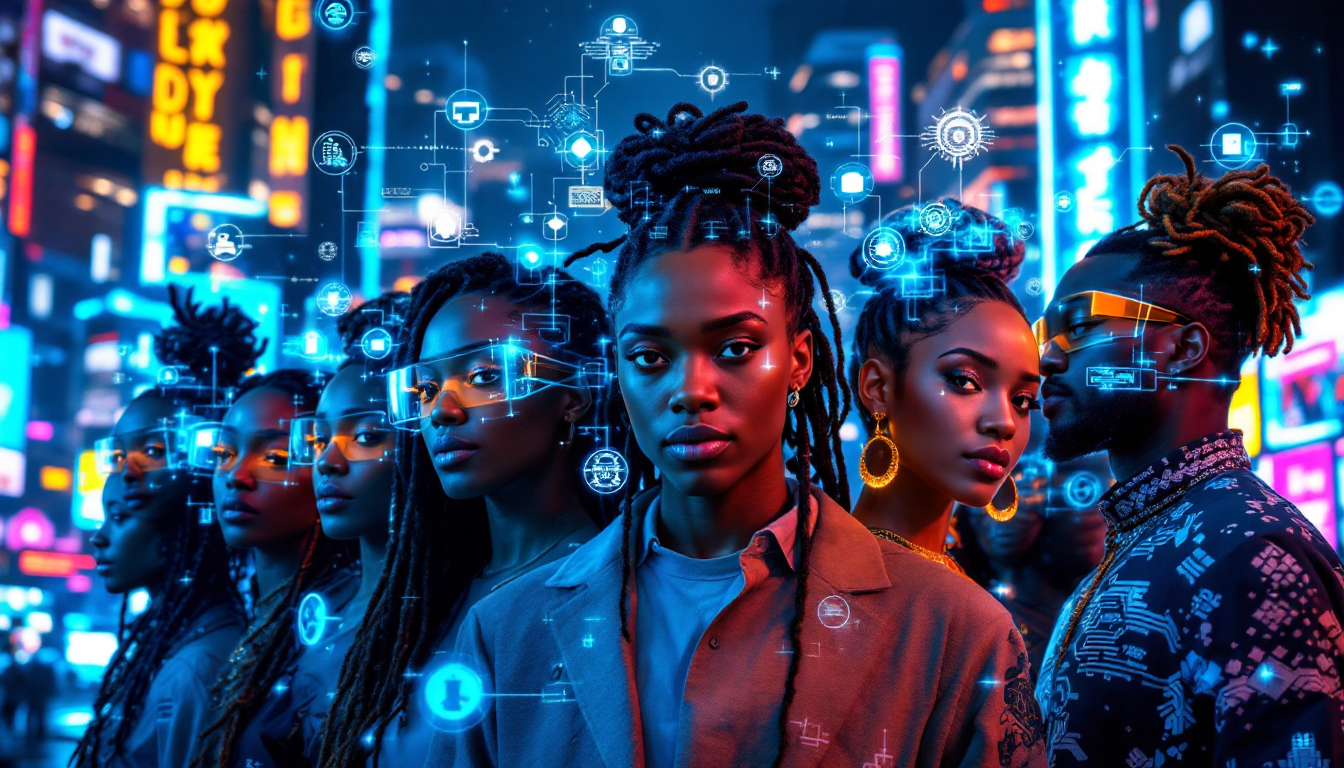
Introduction to Cultural Hair Identity
Hair has long served as a visual language of identity, a canvas upon which communities paint their histories, beliefs, and social bonds. From the intricate Fulani braids of West Africa to the sacred Sikh turban, traditional hairstyles carry meanings that extend well beyond aesthetics. They signal lineage, marital status, religious affiliation, social rank, or coming-of-age rites. Yet as globalization accelerates and diasporic movements disperse culture-bearers around the world, many of these hair practices face the risk of dilution or erasure. In this context, “cultural hair identity” refers to the collective knowledge, techniques, symbolism, and narratives embedded in hairstyles passed down through generations. Preserving this form of intangible heritage demands not only documentation of physical patterns but also safeguarding the stories, ritual contexts, and communal knowledge that give them life.
The Rise of AI in Hair and Beauty
Artificial intelligence is transforming the beauty and hair-care industries on multiple fronts. Companies like Myavana leverage computer vision and machine learning to analyze billions of textured hair strands, categorizing them into 972 distinct profiles to deliver personalized care recommendations (Source: This App Uses AI to Analyze Textured Hair). Beyond consumer applications, AI’s capacity to detect subtle patterns in images and datasets positions it to capture the minute details of traditional hairstyling techniques—curl geometry, braiding sequences, thread-wrapping motifs—and to build searchable, interoperable archives. At the same time, optical character recognition (OCR), deep learning, augmented reality (AR), and 3D modeling—tools already employed in the digitization of manuscripts, folk rituals, and architectural ornamentation—are now primed to document hairstyles as a form of visual culture (Source: AI and Cultural Preservation — Blockchain Council).
AI Tools for Documenting Traditional Hairstyles
-
Image Classification and Pattern Recognition
• Convolutional neural networks (CNNs) trained on meticulously labeled photo collections can distinguish and catalog regional styles—such as Ghanaian Fanti knot crowns, Nubian cornrows, or Japanese eri-waon topknots—by learning their defining visual features.
• Once trained, these models can process historical photographs, museum collections, and community-submitted images to populate digital repositories with metadata on style origin, symbolic meaning, and technique. -
3D Modeling and Augmented Reality
• Photogrammetry and 3D reconstruction tools transform multiple photographs of a single hairstyle into interactive, rotatable models. These digital twins preserve the volumetric nuances of braids, twists, and threading.
• Augmented reality apps can overlay these models onto a user’s live camera feed, enabling learners to practice styling techniques step-by-step in real time—a virtual apprenticeship that circumvents geographical and generational divides. -
Generative Archives and Virtual Museums
• Generative adversarial networks (GANs) can interpolate between documented styles to create high-fidelity visualizations of lost or incomplete variants, effectively “reanimating” styling traditions that have fallen out of use.
• Digital platforms can curate these assets into virtual exhibitions, embedding oral histories and multimedia commentary to honor the ritual contexts behind each look (Source: “AI in Heritage: Bridging Tradition and Technology” by Kholoud Ghaith).
Connecting Heritage with Modern Technology
Creative practitioners across Asia and beyond are already pioneering ways to fuse AI with traditional arts—offering blueprints for hair heritage. In Japan, AI-powered suggestion systems assist artisans in Edo-era kimono and hairstyle restorations, ensuring color palettes and coiffure shapes remain faithful to historical records (Source: Cultural heritage in the digital age — Tatler Asia). In Hong Kong, robotics equipped with coding informed by Chinese ink brushstroke dynamics replicate centuries-old painting techniques; similar approaches could guide robotic braiding arms or thread-wrapping machines to execute complex African hair-threading designs (Source: Cultural heritage in the digital age — Tatler Asia). Kazakh artist Almagul Menlibayeva embeds embroidery motifs and archival photographs into layered AI-enhanced video installations, reanimating nomadic hair ornamentation narratives for contemporary audiences (Source: Cultural heritage in the digital age — Tatler Asia). These projects illustrate how AI can animate hairstyle heritage in immersive, emotionally resonant formats.
Challenges and Opportunities in AI-driven Hair Preservation
Bias in training data and moderation systems poses significant hurdles. AI art platforms often mislabel culturally specific coiffures—Yoruba cornrows, Afro puffs, Sikh turbans—as “inappropriate” or “crime-related,” reflecting Eurocentric norms embedded in datasets (Source: Why Do AI Art Platforms Flag Culturally Specific Hairstyles As 'inappropriate' — Bias Patterns And Workarounds). An audit of the LAION-5B dataset found natural Black hairstyles were 3.7 times more likely to co-occur with negative contexts such as protests or gangs. To counteract these distortions, creators are adopting equity-centered strategies:
• Using precise cultural descriptors (“Ghanaian Fanti knot crown”) rather than generic terms (“braided updo”) to guide models.
• Referencing museum-grade visuals and community-vetted archives during prompt engineering.
• Incorporating neutral, everyday settings in AI prompts to bypass moderation filters (Source: How To Stop Your AI Art Platform From Auto-censoring Culturally Specific Hairstyles).
Visual artist Fatoumata Diakité’s “Fulani Futures” project exemplifies how refined prompting and archival referencing can yield AI outputs that honor the expressive power of Fulani braiding traditions without triggering censorship.
Future Perspectives: AI and Cultural Continuation
Looking ahead, culturally informed AI systems hold promise for more than static documentation. They can become active partners in heritage transmission:
• Interactive storytelling avatars equipped with localized hairstyle customization options can teach young community members not only how to braid or thread hair but also the stories and ceremonies intertwined with each style.
• Predictive models could identify at-risk traditions—styles with few living practitioners—and prioritize them for documentation or revival initiatives.
• Language-and-narrative AI frameworks, similar to those used in preserving endangered languages, could integrate hair lore into dynamic digital archives where users contribute oral histories, tutorials, and personal reflections (Source: AI could be the future for preserving marginalized cultures, say experts).
Conclusion: Embracing Technology to Honor Tradition
AI offers unprecedented tools to preserve, document, and revitalize the rich tapestry of cultural hair identities. From high-precision image classifiers and 3D-modeling pipelines to AR learning environments and generative archives, these technologies can safeguard styling traditions once threatened by displacement and cultural homogenization. Yet the ultimate success of AI-driven preservation depends on centering community voices, addressing algorithmic biases, and co-creating systems that respect the living contexts behind each hairstyle. By marrying technological innovation with cultural stewardship, we can ensure that future generations access not only the visual patterns of their ancestors’ hair but also the deep stories and rituals that imbue each braid, knot, and thread with meaning.