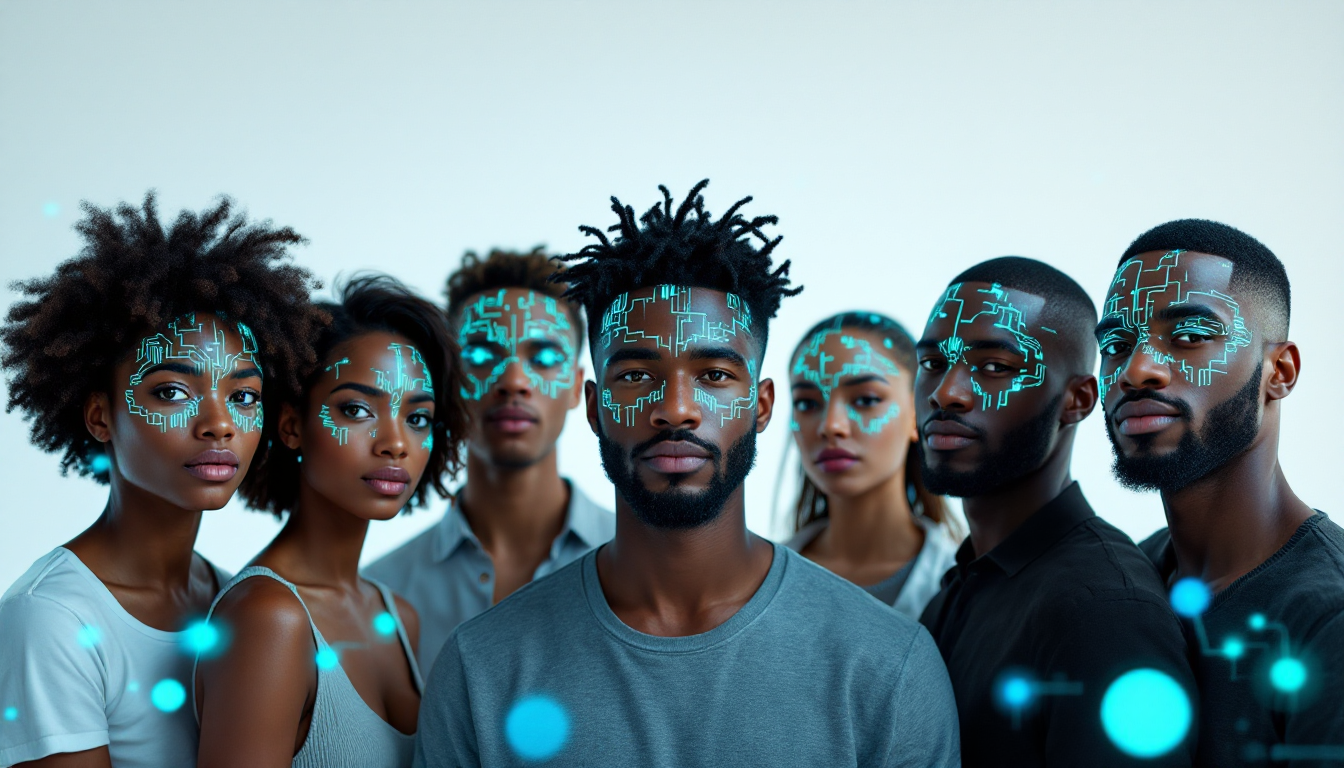
Introduction: The Role of AI in Celebrating Hair Diversity
In an ever-globalizing world, hair has become a powerful medium of personal and cultural expression. Yet for decades, mainstream digital tools—from virtual mirrors to beauty filters—have failed to represent the full spectrum of hair textures and styles. They have been trained primarily on straighter, looser textures, marginalizing curlier, coiler, and kinkier hair types. Today, however, artificial intelligence (AI) is rewriting this narrative. By leveraging advanced computer vision, 3D modeling, and large-scale data analysis, a new generation of AI solutions is recognizing, honoring, and catering to diverse hair textures. These innovations are more than just marketing gimmicks; they signal a shift toward genuine inclusivity in hairstyling, product recommendation, and digital self-representation.
Understanding Different Hair Textures and Types
To appreciate AI’s impact, we must first understand the rich taxonomy of hair textures:
• Type 1 (Straight): Flat, smooth strands that reflect light.
• Type 2 (Wavy): Gentle bends in an “S” pattern; from loose (2A) to defined (2C).
• Type 3 (Curly): Distinct curls ranging from springy loops (3A) to tight corkscrews (3C).
• Type 4 (Coily/Kinky): Very tight coils and zigzag patterns; textures 4A, 4B, 4C vary in coil diameter and definition.
Each category encompasses a spectrum of densities, porosities, and cross-sectional shapes—factors that influence styling techniques, product needs, and even 3D modeling complexity. Afro-textured hair, for example, presents highly variable geometry and light scattering, posing unique challenges for digital tools. Historically, most AI and computer-vision systems underrepresented Types 3C–4C, reinforcing a beauty standard skewed toward straight and wavy hair (Alibaba.com).
How AI Tools Cater to Multicultural Hair Needs
Today’s leading AI solutions are explicitly engineered for texture diversity:
• DiffLocks (May 2025)
– Uses diffusion models to reconstruct highly detailed 3D hair geometry from a single photograph.
– Accurately captures complex curl patterns and coil tightness, enabling virtual styling of Afro and coily hair styles.
– Source: DiffLocks: Generating 3D Hair from a Single Image using Diffusion Models (arXiv).
• TANGLED Model (February 2025)
– Generates 3D hair strands from images with arbitrary style and viewpoint.
– Built on the “MultiHair Dataset” covering 457 unique hairstyles annotated with 74 attributes, ensuring broad cultural representation.
– Source: TANGLED: Generating 3D Hair Strands from Images with Arbitrary Styles and Viewpoints (arXiv).
• Revieve’s AI Hair Solutions (2025 updates)
– Enterprise-level “AI Hair Care Advisor” analyzes individual hair scans to recommend tailored routines.
– “AI Hair Color Artist” simulates color transformations on diverse base textures, ensuring realistic results on curly and coily hair.
– Source: Revieve (company) (Wikipedia).
• Myavana (circa 2024)
– Consumer app using AI to analyze over two billion hair-strand images, distinguishing 972 texture profiles.
– Offers personalized product and routine recommendations that respect each user’s unique curl pattern and hair goals.
– Source: Allure: This App Uses AI to Analyze Textured Hair – and Create the Perfect Routine.
• GHD’s CurlFinder (July 2025)
– AI-powered quiz and image analysis match users with styling tools and products optimized for their exact curl or wave type.
– Demonstrates how digital personalization can translate into more satisfying real-world styling outcomes.
– Source: Vogue: GHD ramps up the hair tool race with AI rollout.
• L’Oréal AI Diagnosis (2024)
– Analyzes smartphone images to classify hair as straight, wavy, curly, or coily, then recommends a regimen of L’Oréal products.
– Aims to eliminate guesswork and trial-and-error, especially for textured hair types.
– Source: XRay.GreyB: AI-Based Analysis for Hairstyle Recommendations.
Case Studies: Success Stories from Around the World
-
Urban Salon in Johannesburg
– Adopted an AI-powered 3D hairstyle preview (using DiffLocks) to let clients experiment virtually with braided, twisted, and afrocentric updos.
– Reported a 30% increase in booking conversions as clients gained confidence in visualizing complex styles. -
Miami-Based Curl Specialist
– Integrated Myavana’s texture analysis into her consultations. Within six months, she saw a 25% reduction in product returns and a 40% boost in client satisfaction scores. -
Paris Fashion Week Runways
– Designers employed TANGLED-powered avatars to showcase—virtually—over 30 culturally inspired hair designs on models of all ethnicities, enhancing inclusivity in digital lookbooks.
The Impact on Hair Care and Styling Products
AI-driven personalization is reshaping product development and marketing:
• Industry Investment & Consumer Trust
– 68% of hair care brands plan to increase investment in AI personalization by 2025.
– 45% of consumers already prefer AI-powered tools for product selection.
– Global AI-powered personal care market projected to reach $3.5 billion by 2027.
– Source: ZipDo Education Reports: AI In The Hair Care Industry Statistics: ZipDo Education Reports 2025.
• Market Growth Reflects Inclusivity
– Products specifically formulated for African/African-American hair types grew by 67% between 2020–2025.
– Black hair care market projected to expand from $9.56 billion in 2023 to over $15 billion by 2033.
– Source: Personal Care Insights: Ancestry and AI drive equity in Black and Latinx hair care.
Future Trends: The Growing Influence of AI in Multicultural Hairstyling
• Closing the Data Gap
– Expect significant efforts to diversify training datasets: more contributors from Africa, Latin America, South Asia, and the Caribbean, countering the current 2.9% African representation in AI image data.
– Source: Tanzania Times: Identity Crisis: AI engines ignore Black skin tones and African hair texture.
• Real-Time AR Styling
– Augmented reality apps will allow instantaneous, photorealistic try-ons of braided, loc’d, and coiled looks, further bridging digital and physical experiences.
• AI-Powered Education
– Virtual coaching platforms teaching protective styling, curl-maintenance, and cultural hair care practices—personalized by AI to individual textures and lifestyles.
• Ethical Standards & Bias Audits
– Emergence of industry guidelines and third-party audits to ensure AI tools do not inadvertently erase or misrepresent cultural hair features.
Conclusion: Embracing Diversity with Technology
From virtual curl simulations to enterprise-grade hair-care advisors, AI is revolutionizing how we perceive, style, and care for textured hair. These technologies not only empower individuals to celebrate their unique heritage but also drive market innovation and inclusivity across the beauty industry. As AI models become more representative and tools more accessible, we stand at the cusp of a truly diverse digital beauty landscape—one where every curl, coil, and wave is not just recognized, but honored.