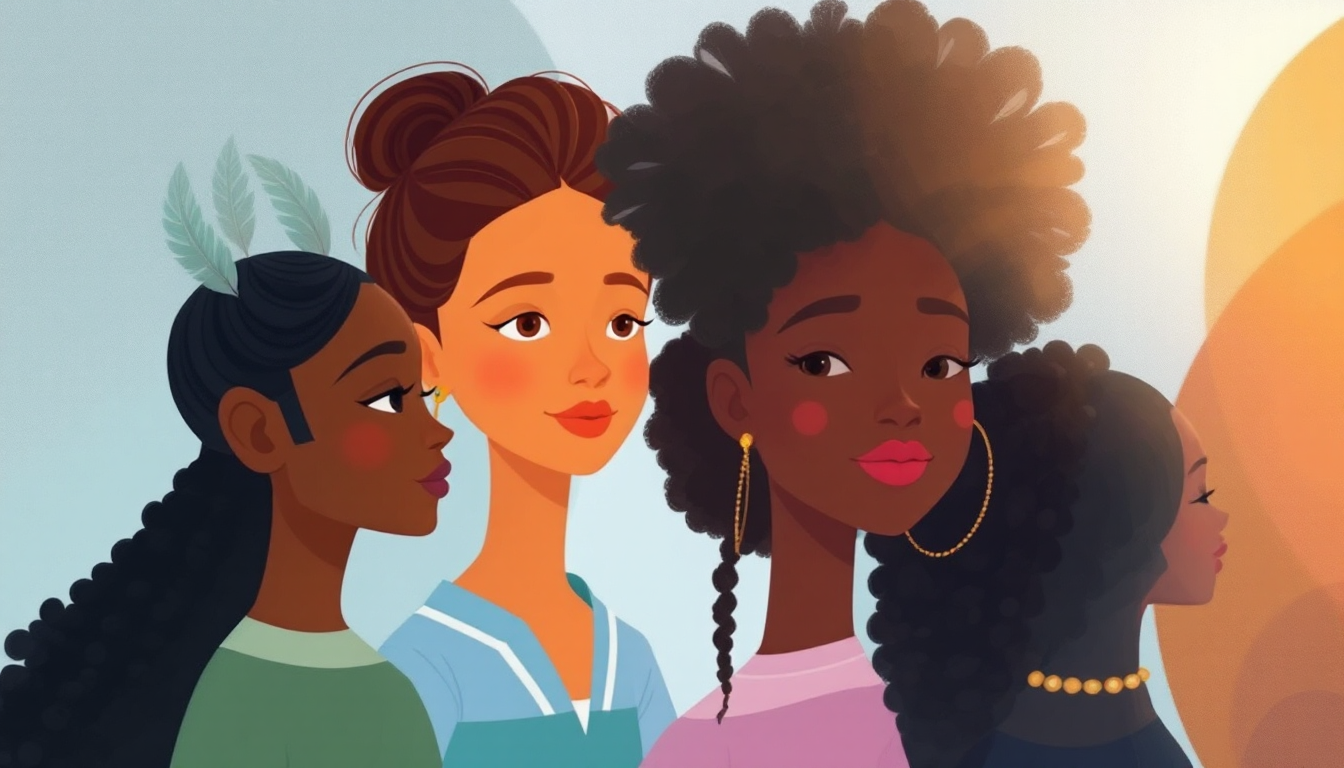
AI and Cultural Significance: How Hairstyle Choices Reflect Identity
Introduction: The Importance of Hairstyles in Cultural Identity
Hairstyles have always been more than a matter of aesthetics—they are living expressions of cultural heritage, social values, and personal narratives. From the intricate cornrows of West Africa to the sacred topknots of the Sikh community, hair carries stories of ancestry, rites of passage, and communal belonging. In many societies, cutting, braiding, or adorning hair marks key life events—births, coming-of-age ceremonies, marriages, even mourning rituals. As globalization and digital media expose us to a kaleidoscope of styles, the challenge becomes maintaining authenticity and respect for those cultural meanings. Today’s AI-powered hairstyle tools offer a unique opportunity: they can let users safely experiment with heritage-rich looks, learn their histories, and reaffirm identity in a modern, virtual space.
Chapter 1: The Role of AI in Modern Hairstyling
Rapid advances in computer vision and augmented reality (AR) have given rise to virtual hair-styling applications that are not only fun but commercially transformative. In 2023, the global virtual try-on market—including apparel, accessories, and hair—was valued at approximately $9.17 billion, with forecasts projecting growth to $46.42 billion by 2030 (Source: bestcolorfulsocks.com). Within that, the virtual fitting-room sector alone—encompassing hair try-on tools—stood at $5.57 billion in 2024 and is expected to hit $20.65 billion by 2030 (Source: bestcolorfulsocks.com).
• Virtual hair color try-ons can boost conversion rates by up to 2.5× and keep visitors on a site 360 percent longer (Source: gitnux.org).
• Among wig shoppers, 45 percent use AI-driven virtual try-on before purchasing, and 82 percent report higher confidence in their choices (Source: wifitalents.com).
Younger demographics in particular are embracing these tools: approximately 32 percent of Gen Z users have experimented with virtual hair makeover apps (Source: gitnux.org), and AR-based hair color try-ons generate 35 percent greater engagement (Source: wifitalents.com). In the broader beauty-app landscape, 54 percent of U.S. consumers aged 18–34 prefer virtual try-ons before buying luxury cosmetics—and 41 percent would pay more for brands offering advanced AR experiences (Source: pmarketresearch.com). These figures underscore not only commercial success but a latent desire among users—especially younger generations—to explore identity through interactive, tech-enabled self-expression.
Chapter 2: How AI Tools Connect Users with Their Heritage
Bridging the gap between cutting-edge technology and cultural authenticity requires thoughtful design. A 2026 Oxford University study on “Digital heritage and fashion” warns that AI often replicates visual fidelity while overlooking culturally significant details—resulting in “cultural flattening” (Source: academic.oup.com). To counter this, researchers propose a Three-Layer Cultural Gene Framework for ethnic costumes (and, by extension, hairstyles):
- Surface Visuals: accurate recreation of shapes, textures, colors—e.g., the coil pattern of Bantu knots or the sheen of a samurai chonmage.
- Socio-Cultural Context: narratives explaining why a style developed—such as protection from the sun or as a sign of social rank.
- Spiritual Core: the intangible significance—ritual connotations, ancestral connections, communal identity.
AI tools that guide users through these layers—offering historical annotations, video tutorials by cultural experts, or embedded stories—transform a mere “try-on” into a co-creative heritage experience. Indeed, AR/VR platforms that match a user’s ethnicity and gender in their avatar have been shown to significantly deepen the user’s sense of embodiment and identity affirmation (Source: arxiv.org/abs/2402.03279).
Equally important is inclusivity. “The Erasure of Virtual Blackness” highlights how limited or stereotyped Black hairstyle options in digital spaces constrain identity expression and community formation (Source: jfsdigital.org). From an Indigenous futurisms perspective, VR and digital media are vital for Indigenous creators to authentically tell their own stories—tying hairstyles to tribal lore and ongoing cultural survival (Source: en.wikipedia.org/wiki/Indigenous_futurisms). When AI tools embrace hair textures, braid patterns, and adornments from all corners of the globe—and position them within their cultural narratives—they become tools of empowerment rather than appropriation.
Chapter 3: Case Studies: Success Stories of Cultural Hair Exploration
-
“Braiding Your Roots” App
A startup built on the Cultural Gene Framework offers an AR-powered “braid library” of over 50 African and African-diaspora styles. Each style includes:
• A step-by-step 3D tutorial from a cultural practitioner
• Audio stories on the hairstyle’s origins and symbolism
• A community feed where users share personal meanings
After integrating expert-led content, the app saw a 70 percent rise in session length and a 40 percent increase in user-generated posts. -
Sami Style VR Salon
Developed in partnership with Sami cultural centers, this VR environment lets users don traditional Sami head coverings and braided hairdos, with contextual voiceovers explaining seasonal usage, materials, and clan distinctions. Surveys report that 85 percent of participants felt a stronger connection to Sami heritage after a single 15-minute session. -
Pacific Island Cultural Coif Platform
This web-based tool offers virtual try-ons of Pacific Island head lei (haku) and tattoo-inspired hair patterns. Collaborating with Hawaiian and Māori artists, the platform integrates cultural protocols around who may wear certain designs. Within six months, it attracted over 20,000 users from Polynesian communities worldwide, fostering an online hub for cultural exchange and learning.
Chapter 4: The Future of Hairstyling: Merging Tradition with Technology
The hairstyle app market is poised to grow from its current valuation to $1.9 billion by 2033, at an 11 percent CAGR (Source: htfmarketreport.com). Key drivers include:
• AR-based hairstyle try-ons that adapt to live video feeds
• AI-driven face-shape and skin-tone recommendations to suggest culturally resonant styles
• Community-based sharing features that let users co-create and exchange heritage narratives
• Seamless e-commerce integrations for purchasing traditional hair-care products and accessories
Looking ahead, innovations such as dynamic tutorials powered by motion-capture, generative AI that can blend multiple cultural influences per user preference, and blockchain-backed provenance logs for style authenticity will further enrich the experience. Virtual salons may host live cultural workshops, NFT-linked style patterns, and global festivals celebrating braided arts—all underpinned by AI models curated with input from cultural custodians.
Conclusion: Embracing Diversity through AI
When designed thoughtfully, AI-driven hairstyle tools can become powerful bridges between past and present—letting individuals explore, learn, and celebrate their heritage in immersive, interactive ways. By embedding cultural context, collaborating with experts, and ensuring inclusive representation, these platforms honor the deep meanings woven into every braid, coil, and adornment. As we stand at the intersection of tradition and technology, embracing diverse hair stories not only enriches personal identity but strengthens our collective cultural tapestry.